
Archviz Web App-Realistic Rendering, Website Performance and Photorealism
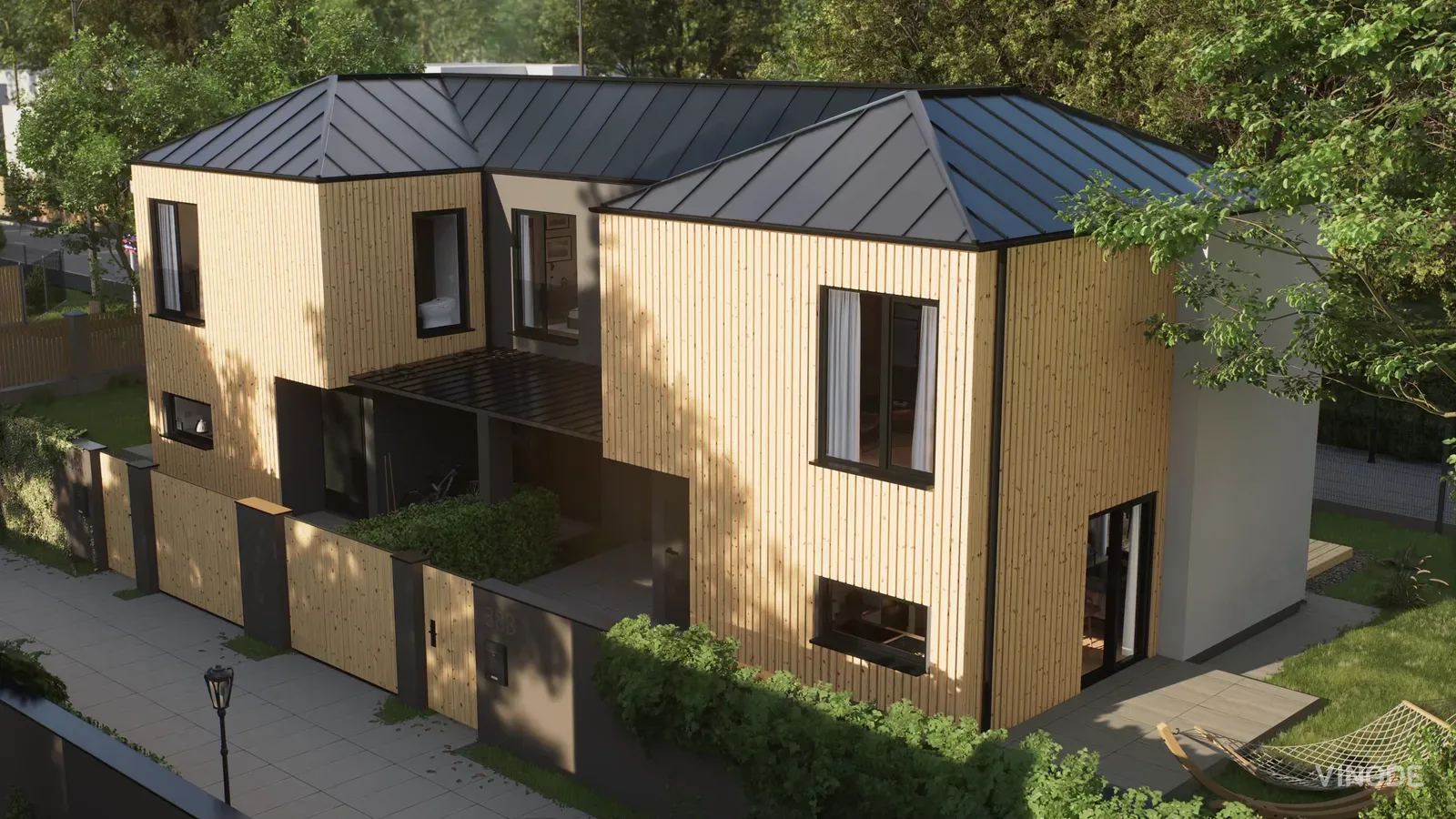
3D web applications are becoming an increasingly important tool in real estate marketing. This article explains how performance, photorealistic rendering and optimized 3D delivery influence user experience, brand perception and sales effectiveness. Using Vinode as an example, we outline the key technical factors that make modern 3D solutions fast, immersive and accessible across devices.
Introduction
3D applications are gaining popularity every year as a sales tool. Already one in two buyers prefers to view a property comfortably, from their own home, and developers are eager to implement such solutions. But building one is a serious undertaking: it takes a team of specialists - programmers, designers and testers - and can cost up to 200,000 euros.
That's why we built Vinode, which produces a 3D imitation app at a fraction of that price. Our technology leverages the existing materials used in traditional 2D visualization, turning them into video clips for each interaction with the property.
Many factors determine whether such a web application performs well, so in this article we walk through the technical aspects of the solution.
Breaking down the technical parts tied to site performance shows why our app loads so fast, why its visuals are so realistic, and why the renders look professional - the qualities that make it immersive.
Website performance
Reading this article's headline probably took you about 2 seconds - which is also the maximum time a visitor will wait for a site's content to load. That may not sound like much, but with content plentiful and attention scarce, it's a long time. Each extra second of delay reads as friction and, in practice, costs conversion.
With that in mind, we enhanced our real estate app with Pixel Streaming, a technology that delivers 3D content to a website as a live stream.
The aim was to run Vinode as fast as possible: we reached a page load time of around 1 second, while loading the application itself through Pixel Streaming takes about 10 seconds.
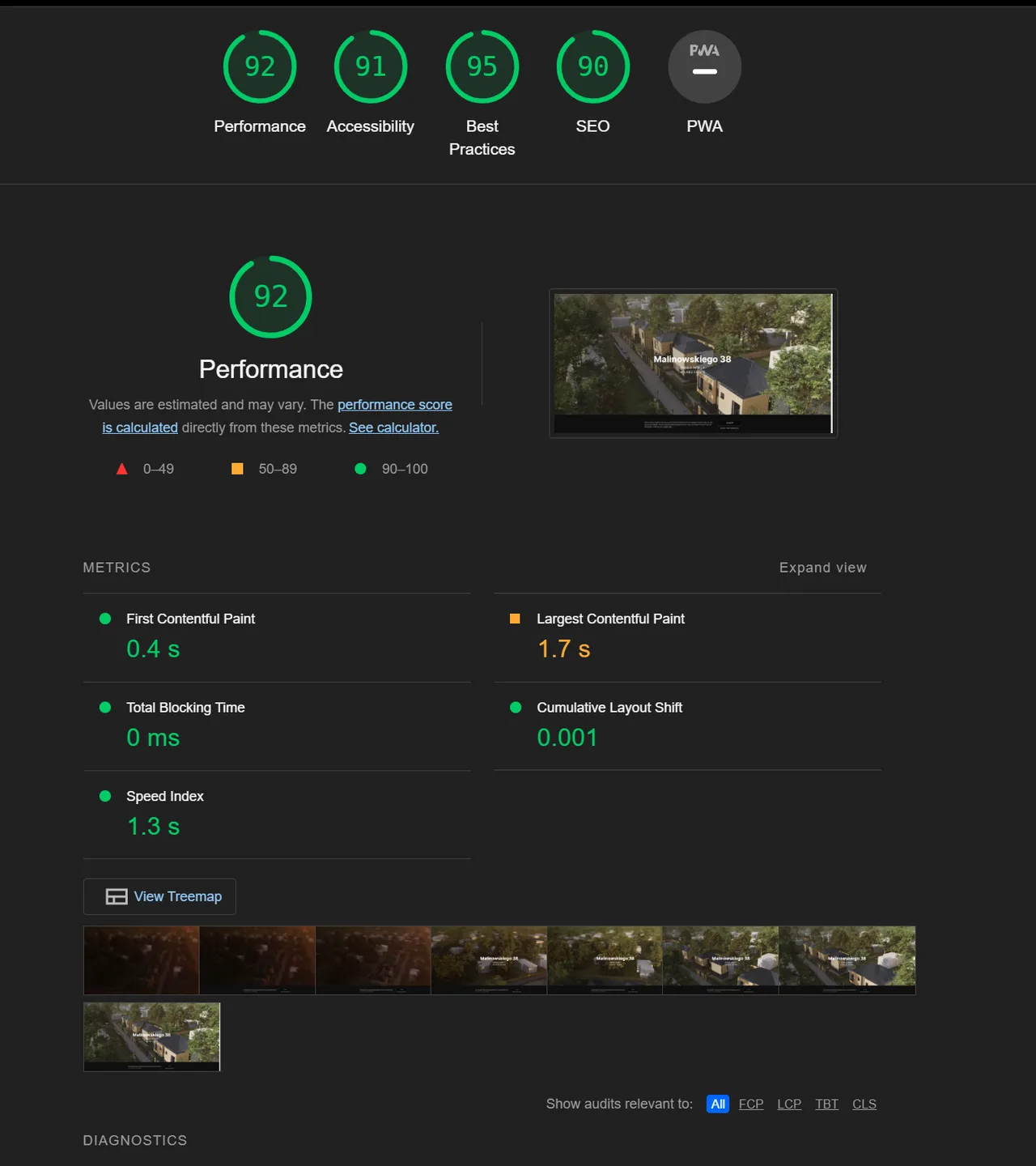
Page load speed impacts everything - user interaction, brand perception, conversion rates, even revenue. Like almost any solution, Pixel Streaming has its trade-offs. But for an industry like real estate, where viewing buildings and interiors from multiple angles matters with 3D views, the technology is worth refining. Beyond loading speed there's stream quality: offline compression yields better image quality, because we can spend more time compressing the video.
State-of-the-art rendering
Rendering starts by building an output image from provided materials (sketches, photos), which is then processed in a 3D graphics rendering program - in our case, Unreal Engine - accounting for physical phenomena such as refractions and shadows.
With Unreal Engine we generate state-of-the-art visuals from high-quality 3D models of buildings. Varied textures, advanced exterior and interior lighting techniques, and considered perspectives further sharpen the user journey.
The key technique is ray tracing, which generates an image by following the path of light and simulating how it interacts with virtual objects. It excels at photorealism because it can simulate light's effect on different materials and surfaces.
There is also no need to compute 3D on the device: all 3D is pre-rendered and plays on any device - the only thing required from the client is an internet connection.
Photorealism
Freedom from detail restrictions matters when you want to show your buildings and their whole surroundings at their best.
The properties look their best on every device, regardless of its specs - the whole point is identical quality everywhere. We achieve this by manipulating light sources, adjusting camera angles, and applying textures to surfaces, as noted above. Light plays a major role in creating 3D visuals, and Unreal Engine's lighting tools let us highlight specific details in a 3D image - useful when you want the viewer to focus on a particular aspect.
Three steps lead to a photorealistic image:
- 3D building import to Unreal Engine
- 3D building modeling and texturing
- Hand-made modeling - polishing and adding details
Conclusions
Across these three parts of how Vinode works, the takeaway for real estate agents and other professionals is that a web app with comprehensively built views can be a powerful marketing tool.
Strong performance comes from weighing speed throughout the design phase, and it leads to higher ROI. On photorealism and rendering, a property's unique features get the chance to be presented well on the web.
Compared with competing full-3D apps, Vinode offers a more predefined experience without full freedom of movement. That apparent compromise brings real advantages - it reduces customer confusion, and by dropping interactive 3D it allows photorealistic graphics and instant loading on any device without a dedicated GPU.
If our solution interests you, we would be glad to get in touch. For more information, visit our contact section.
FAQ
Why are 3D applications becoming popular in real estate sales? 3D applications allow potential buyers to explore properties remotely in a realistic and immersive way, helping them better understand space, layout and surroundings before making a decision.
How does website performance affect user experience and conversion? Fast loading times reduce frustration and keep users engaged. Even small delays can negatively impact perception, trust and conversion rates.
What makes 3D visualizations more effective than traditional photos? Unlike static images, 3D visualizations allow users to view properties from multiple angles and better understand proportions, depth and spatial relationships.
Do users need powerful hardware to view 3D real estate applications? No. Because the 3D content is pre-rendered and streamed, users only need a stable internet connection, not a dedicated GPU or advanced device.
How does photorealistic rendering support decision-making? High-quality lighting, textures and realistic materials help users focus on key details and create a more accurate impression of the property.
Is a simplified 3D experience better than fully interactive 3D apps? In many cases, yes. A more guided experience reduces confusion, improves usability and ensures fast loading while maintaining visual quality.

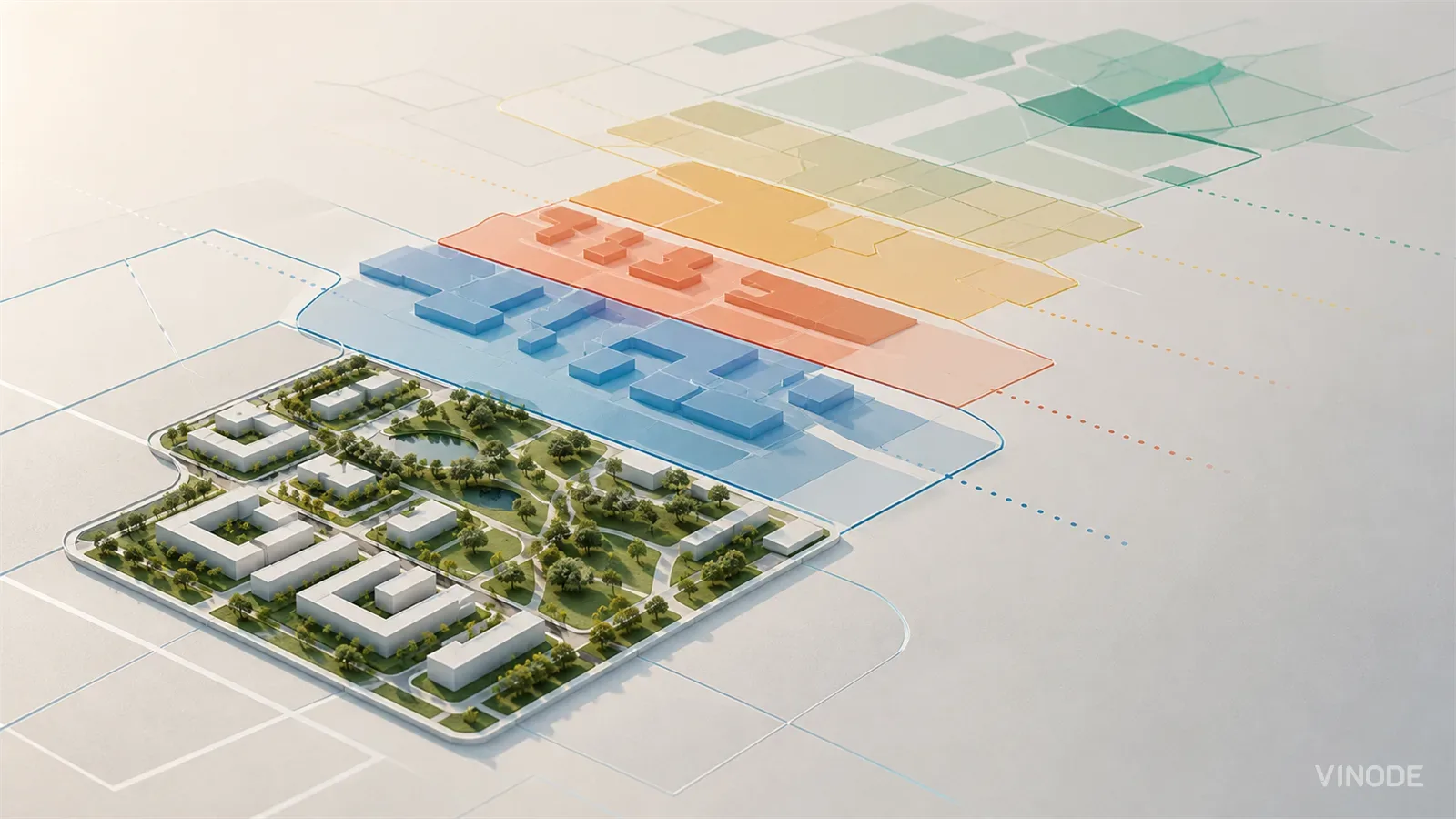
Masterplan 3D for Phased Estates: How to Show Phase One Without Overselling Later Phases
A phased estate contains several levels of certainty at once. The masterplan should make that difference visible, then absorb a later-zone redesign without discrediting the phase-one material buyers already saw.

Why rendered glass façades read as fake: the optics of IGU deflection
Archviz glass reads as fake for a reason no roughness slider reaches. Real curtain-wall panes are slightly bowed, each one differently, so adjacent panes reflect the sky at slightly different angles. A render's panes stay flat because the CAD geometry is flat, and that flatness is what the eye catches.
Off-Plan Rendering: What Reaches the Buyer
A new marketing manager inherits 140 JPEGs, one MP4 and no model. Everything the 3D model knew about the units stayed on an artist's workstation, and three vendors are about to rebuild it by hand. What reaches the buyer depends on what leaves the studio.