
The Importance of Spatial Awareness in Real Estate-Using 3D Rendering to Showcase Not-Yet-Built Properties
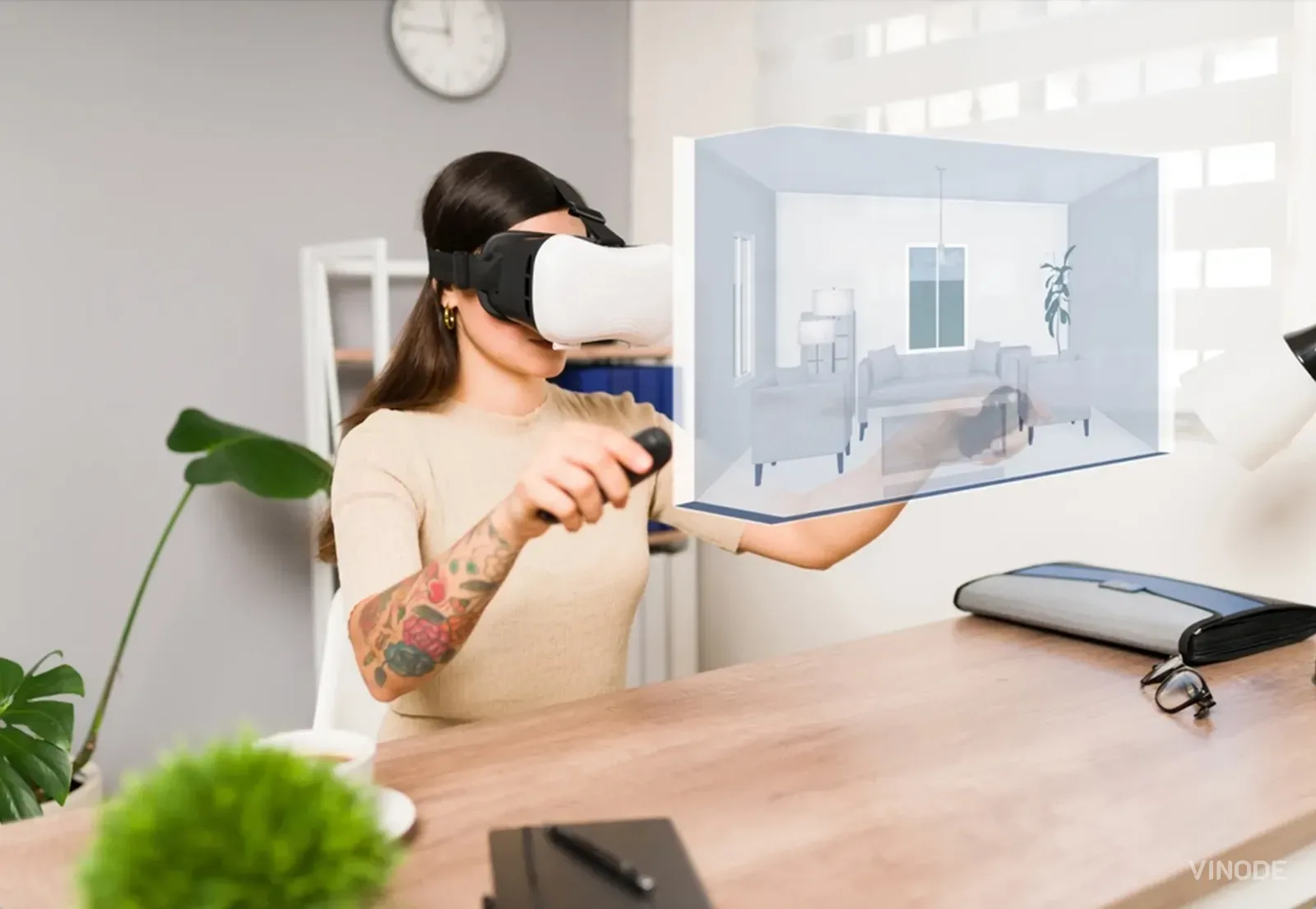
Image co-authored with help of AI for illustrative purposes
Key Takeaways
- 3D house tours give buyers real spatial awareness of layout, size and volume, which 2D floor plans and photos struggle to convey.
- That matters most for not-yet-built properties, where buyers cannot visit and must decide from the presentation alone.
- Exploring a space at their own pace builds an emotional connection and a cognitive map, which speeds up the decision.
- For developers, early interest in a 3D preview also signals which units the market wants before construction finishes.
3D visualization has reshaped how properties are presented and perceived. This article explains how immersive 3D house tours improve spatial understanding, emotional engagement and decision-making, and why that helps developers and agents win more interest and sales.
Introduction
How attractive a property looks depends heavily on how it is presented.
3D technology now lets us build convincing 3D house tours. 3D rendering has become essential to real estate marketing: presenting houses photorealistically raises client engagement and, in turn, results.
Below we describe how 3D changes the way people perceive space, how we use it to showcase properties under construction, and what a developer can expect from this kind of visual marketing.
Why 3D visualization?
Over the past few decades, 3D visualization has grown into its own design industry, changing how we create, perceive and interact with digital content.
Its power lies in producing lifelike, immersive content, which is why more and more industries rely on it. Real estate is one of them, and it is a field where standing out from the competition is hard.
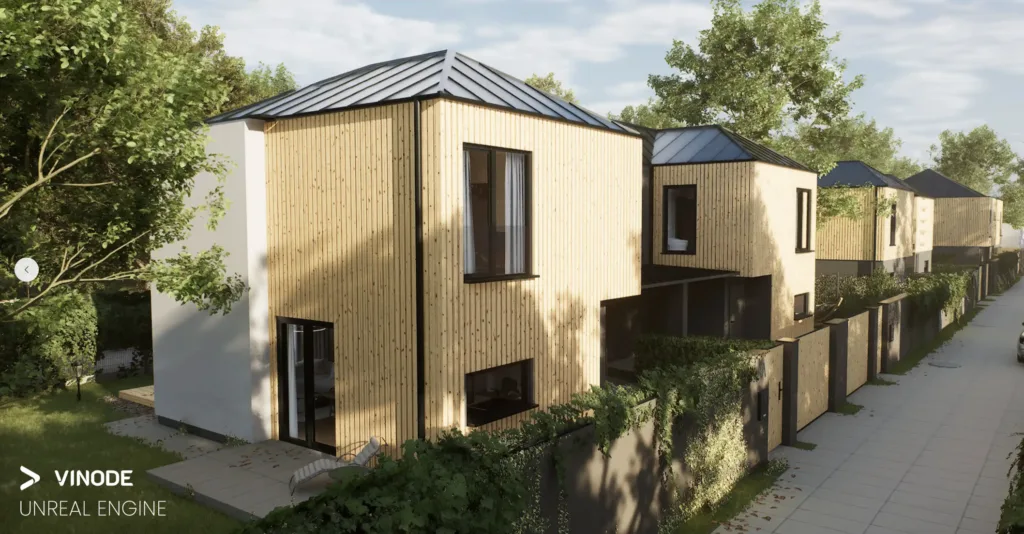
As a 3D studio, we have spent years perfecting the craft of building visual elements in 3D software to meet the rising demand in real estate. Producing top-notch 3D content for developers and agents taught us how to manage it effectively.
The benefits of 3D house tours for real estate
3D house tours help both developers and their clients.
Engaging experience
An immersive, interactive 3D house tour helps buyers grasp a property's layout better than flat 2D images can. Clients explore on their own and get immediate answers, all from home.
Efficiency in time and energy
Virtual visits remove the need for draining travel. Buyers can review tours of several houses, settle on a favourite, and revisit it anytime, anywhere. Every customer values the time saved on something as demanding as house-hunting.
Creating a personal connection
Exploring a house at their own pace lets buyers picture themselves living there, which deepens their attachment and speeds up the decision, as we explain below.
Boosting website traffic and brand awareness
3D house tours give you a competitive edge, draw more visitors to your site and improve your search rankings. That builds recognition and credibility, and drives more sales. Even simple 3D product configurators can lift your ROI.
Improved customer service
By reducing in-person meetings, 3D house tours let agents manage their time better and focus on buyers. And there is no need to describe every feature by hand; each one is shown in the 3D app.
The value of spatial awareness in real estate
In real estate, spatial awareness means understanding how much space a property occupies and how it is organised: the layout, dimensions and relationships between areas such as rooms, hallways and outdoor spaces. It also covers the perception of volume, depth and size, which is what lets a buyer judge how furniture will fit.
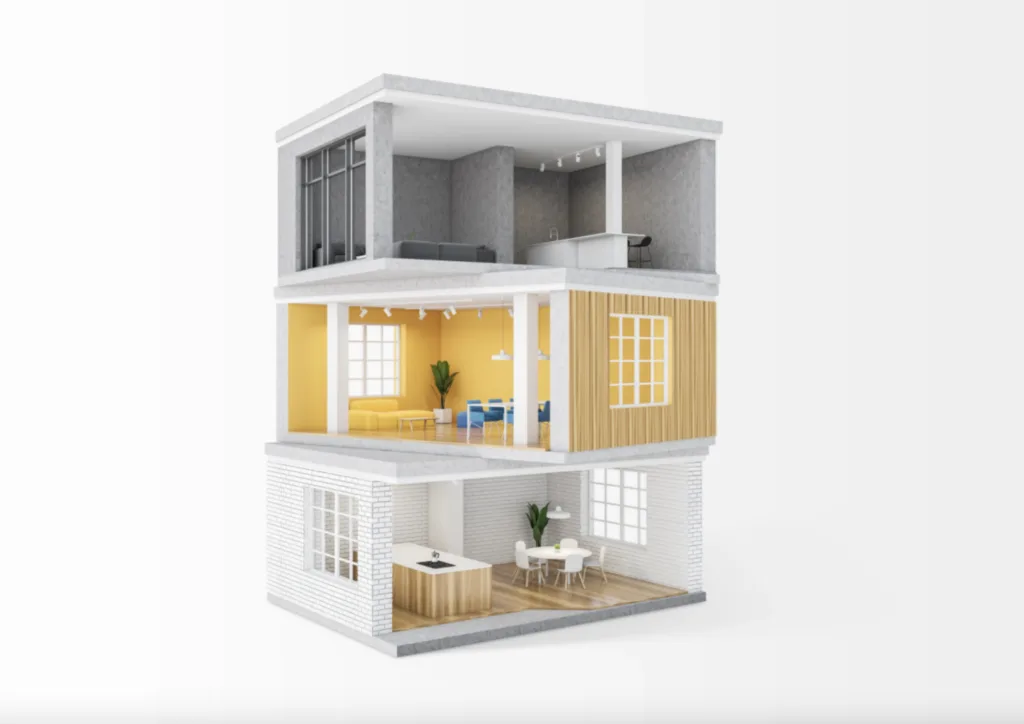
Buyers who can feel and combine all of these elements have a solid basis to judge whether they are genuinely interested, with or without an agent, since the tour reaches them directly.
Enhanced understanding of layout
2D floor plans are hard to read for anyone not used to them. A 3D house tour gives a more intuitive sense of the layout, letting viewers virtually "walk through" the space and feel its flow.
Accurate perception of size and volume
Many buyers worry about whether a space will meet their needs. Being able to feel its size and volume matters most for not-yet-built projects.
Cognitive mapping
Navigating a 3D tour builds a cognitive map of the property, so viewers remember its features and layout far better than they would from static images.
Emotional importance
People decide faster when they are emotionally convinced. A 3D house tour lets buyers feel they already know the house, and exploring it themselves builds more confidence than being guided: no need to ask to see something again, or for an agent to repeat information. That freedom to explore on their own is what makes the difference.
Previewing the final look of unfinished properties
For properties still under construction or renovation, 3D designs and tours show buyers the finished building, supporting faster decisions and sometimes shaping the final design. For developers this is invaluable: it reveals how much interest a project will draw before it is ready, which can shape real business decisions about that project's future.
When 3D isn't the answer
In fairness, a 3D tour isn't the right spend for every unit. If the property is already built and the buyer can visit in person, their own walkthrough tells them more than any render can. If the layout is a simple, easy-to-read box, a clear floor plan and a few good photos may be enough. And some decisions turn on things a screen cannot carry: the feel of a worktop, the noise of the street, the light in the late afternoon. In those cases 3D helps narrow a shortlist rather than close the sale, and it is worth being honest about that.
Conclusions
3D visualization is more than a design tool; it is a communication medium that bridges the gap between concept and understanding, especially in real estate, where spatial awareness is vital. Knowing a space before you can visit it in person is a real chance to decide earlier.
If you would like to see how immersive property tours could work for you, please get in touch.
FAQ
Why is property presentation so important in real estate? Because buyers form their first impressions visually. Clear, immersive presentations help them understand the space and build confidence in their decision.
How do 3D house tours differ from traditional photos? 3D house tours let users explore properties interactively, giving a realistic sense of layout, size and flow that static images cannot fully convey.
Can 3D visualization increase buyer engagement? Yes. Interactive, immersive experiences keep users engaged longer, encourage exploration and help them connect emotionally with the property.
Why is spatial awareness crucial when choosing a property? Understanding proportions, volume and layout helps buyers judge whether a property fits their needs, especially for not-yet-built projects.
Are 3D house tours useful for properties under construction? Absolutely. They let potential buyers preview the final look of a property, supporting earlier decisions and helping developers gauge market interest.
How do 3D tours improve the sales process? They reduce repeated explanations and in-person visits, streamline communication and let agents focus on the most interested buyers.

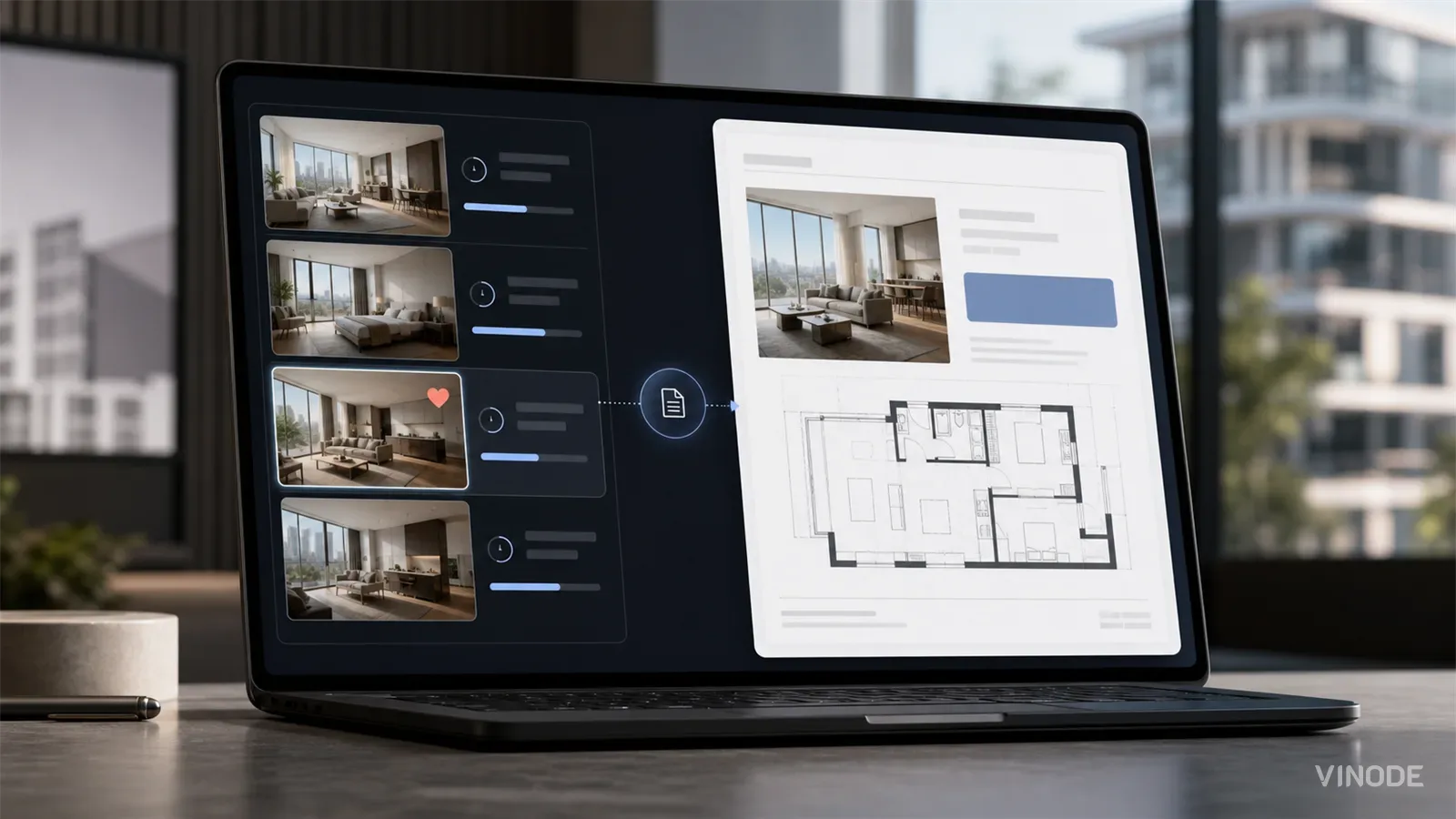
The Unit-Specific PDF a Buyer Actually Asked For
A buyer spends nineteen minutes on one two-bed, saves it, and gets the forty-one-page development brochure the next morning. Once a sales platform records the unit a buyer chose, the generic brochure becomes a decision to ignore that choice.
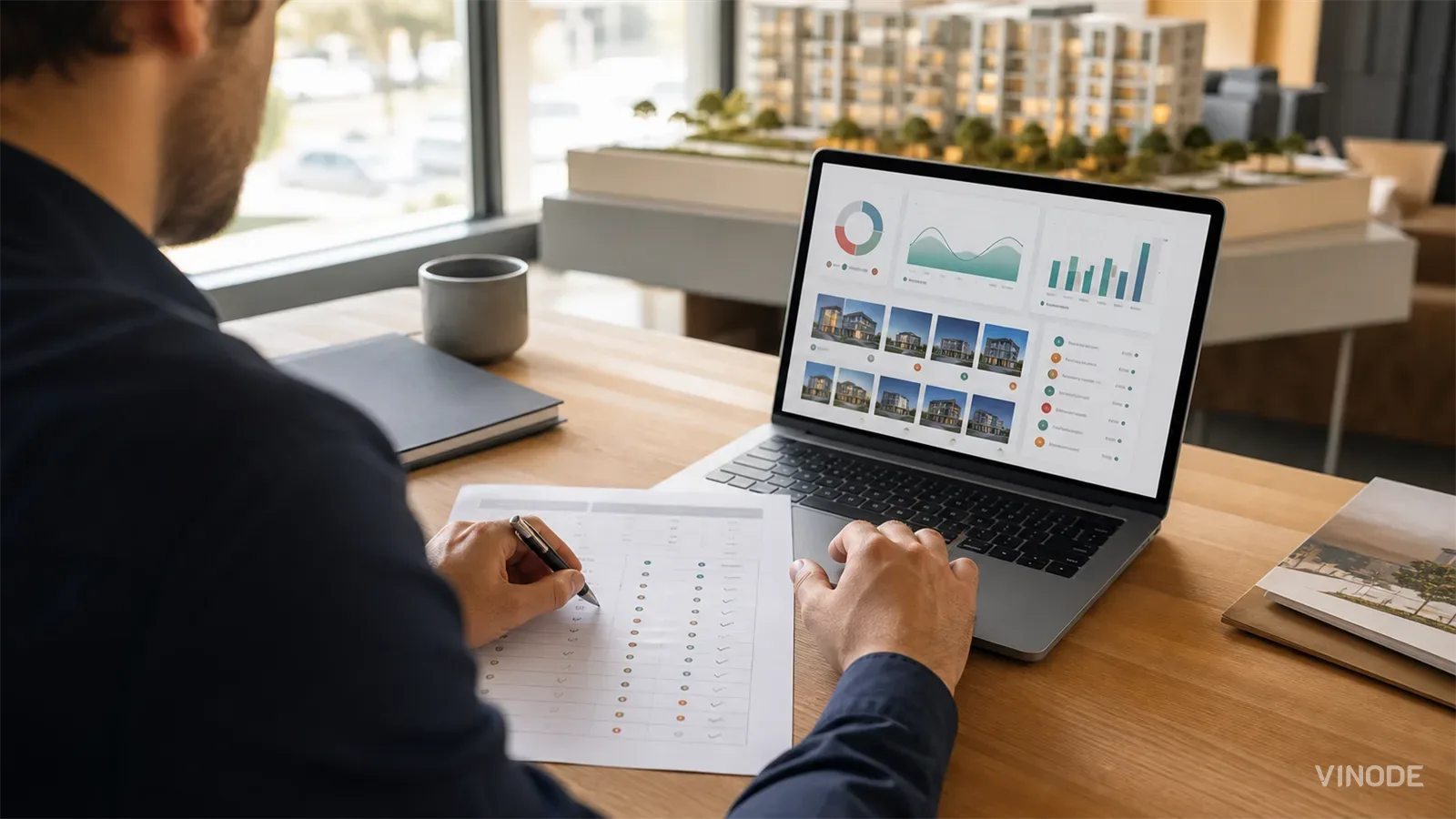
Expression of interest before release day: capture unit demand
640 names and no idea which side of the building they want. An expression of interest campaign pays off when the form is joined to the units each buyer explored, and each of these checks has a pass, a fail and a cost.

We measured when a pipeline crosses the presale line, not just whether it will
When GTHA opening-quarter absorption averaged 66%, the sold percentage was enough to forecast a presale crossing date. Then absorption fell to 17%. Three pipeline inputs produce the crossing date your lender asks for: stage-conversion rates, a cancellation haircut, and remaining inventory.