
Brand Kits for Development Sites: Questions Vendors Should Answer
Key Takeaways
- Brand drift is a platform problem when every later editor has to remember shared design choices page by page.
- A useful vendor demo shows which choices the kit controls, where a shared change appears, and what an editor can still alter.
- Central control costs some local freedom, so exceptions need a named owner and a deliberate review.
- Change one approved brand value in the demo and check every relevant page type before you choose the platform.
A marketing lead at a developer with four projects live put two versions of the same site side by side on the screen in her office for me. The launch site an agency had built in the spring, and the same project six months later, after her own team had added a phase two page and a promotions page. The button on the new pages was a slightly different blue. The heading was in the agency's typeface on one page and in the system default on the next, because the person who built the phase two page, a junior who had joined her team over the summer, had picked the nearest thing in a dropdown and had no way of knowing it was the wrong one. The other three projects had drifted the same way, and the agency's quote to bring all four back into line was, again, for a page-by-page pass.
Ask the vendor this before anything else: if we change one approved brand value tomorrow, which project pages will still need a person to update them? A platform with a real brand kit answers that directly. Approved colours, type, logo and spacing are inherited by every page as the team adds pages and edits content, so consistency stops being a memory test for whoever is editing that week. A settings panel with a colour picker and good intentions cannot answer the question. The demo is where you find out which one you are looking at.
The first four vendor tests
Control
Ask the vendor to name every kind of brand choice the kit governs and show each one on a live page.
Cascade
Edit a shared value and inspect every page that should inherit it.
Editing
Let a second person add content without a style guide open beside the editor.
Exceptions
Ask who may depart from the shared kit, how that choice is recorded, and how it is reversed.
Ask what the kit controls, and make them point at it
Start with scope. A vendor should be able to name the design decisions the kit holds, then point to the components on a live page that use them. Vinode's brand kit covers colour palettes and design tokens, fonts and typography, and the logo. It themes a project from one place, and one edit there updates every connected page.
Do not accept a logo upload and one colour field as proof of anything broader. Those settings are useful, but the claim has to match the mechanism. Have the presenter change a heading treatment, a button and one repeated page element, then look at where each change appears. A good demonstration makes the boundary visible: these choices come from the kit, those others still live on the page. If the vendor cannot name the properties the kit governs, I would not take any claim of design-system control seriously, however good the prepared page looks. The weak version is convincing on one prepared page. The difference shows up on the next page somebody creates, which is exactly where the marketing lead's junior came unstuck.
Make the vendor prove the cascade
A cascade means a shared change reaches every page that depends on it. Change a value held in the kit, save it, and open several different page types. Nobody should have to find and repair each page by hand.
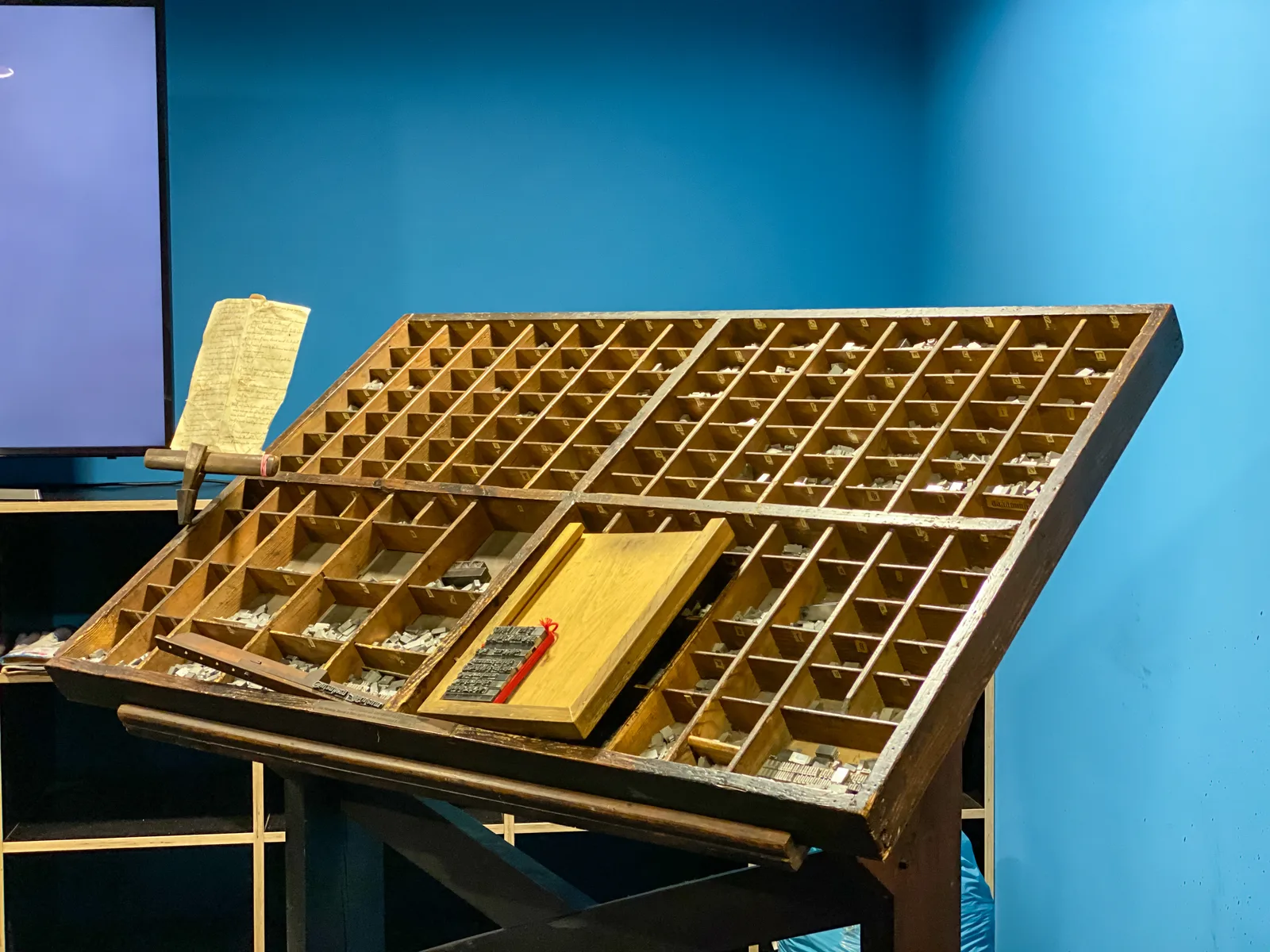
The type case in the picture above is worth a small digression, because it is the oldest version of this idea I know of. A compositor setting a page in 1890 did not choose a letterform for each word. The case held one typeface sorted into compartments, and whoever set the next column reached into the same compartments as the compositor before them, so a newspaper set by twelve people over one night still looked like one newspaper. The consistency lived in the furniture rather than in anyone's discipline. Anyway, back to the demo. A brand kit does the same job for a page: the recurring choices sit in one place, and an editor reaches for them without having to remember them.
Vinode states that brand-kit changes cascade across every page. Require that behaviour in the live evaluation rather than on a slide. Check a standard page, a listing, a form and any repeated section that matters to your launch. If one surface sits outside the system, you want to know before content production starts, because that surface is where the drift will begin.
Bring a real logo, a difficult brand colour, and one page that does not fit the normal template. A prepared demo proves the happy path. Your exception reveals the operating model.
Put a second editor in the demo
The first editor knows the system and the script. The second editor is the real test. Ask another person, ideally someone from your own team, to add a heading, a button and a repeated content section without a brand guide open beside them. Watch which choices the platform supplies and which the person has to remember.
Do not coach them through the styling. Let the default workflow show itself. If they have to copy a value from another page, open a separate guide, or ask which button treatment is current, the platform has handed governance back to memory. The page may still come out right because the editor was careful. It has to come out right when the next editor is rushed, and for most teams it does not.
Actually, I should be more precise about what a good result looks like, because consistency is not the same as sameness. A sales page, a unit listing and a lead form have different jobs and should not become identical panels wearing one colour. The kit should govern the recurring brand choices and leave the page its purpose. So the thing to look for in the second editor's page is shared identity with meaningful variation: the same type and colour system, and a layout that fits the content.
Evidence to request in the demo
A live change
One brand-kit edit appearing on several relevant pages.
A fresh editor
A second person adding content without choosing raw styles by hand.
A real exception
One page or project need that differs from the normal treatment.
A reset path
A clear way to remove an exception and return to the approved shared choice.
Ask how the kit handles setup and refinement
Vinode describes three levels for its brand kit: quick setup, fine-tune and advanced. Ask the vendor to show the shortest route from your approved brand inputs to a usable project, how a designer then adjusts the result, and where the deeper controls begin.
We do not have a verified setup-time figure, so time your own case in the meeting with your own files. The more important question is who can finish the work. If ordinary brand changes still need a developer, the no-code claim has a narrow boundary. If every editor gets every advanced control, governance becomes fragile in the other direction. You are looking for the middle, where a designer can refine and an editor cannot wander.
Who should not use central brand control
A governed kit removes some local freedom. That is the trade, and it is worth naming as one rather than hiding it. An editor cannot treat every page as a blank canvas if shared choices are meant to survive, exceptions need an owner, and a broad brand change deserves a review because it lands on many pages at once.
This is not for a team whose identity still moves every week. A team still exploring its colours, type and visual direction will spend more time overriding the kit than benefiting from it, and a one-off site kept under close agency control may also need less governance than this. In both cases the platform can be perfectly capable and still be the wrong operating model for the moment.
For the right team, the reduced freedom is the point. Marketing decides which choices recur, editors work inside them, and the discipline moves from every future page edit into the earlier act of setting and approving the kit once.
Decide from the live test
A brand kit does not create an identity. It cannot decide what the development should stand for, repair an unsettled logo, or replace the designer who makes those calls. It stores and applies decisions that have already been made, and that limit tells you when to buy it: after the core identity is settled, before many people and pages begin interpreting it.
Choose the platform after the vendor has proved four things with your material. The shared rules cover the decisions that matter to your team. One central edit updates the connected page types. A second editor can work without rebuilding the style by hand. Exceptions are deliberate and reversible. If those pass, consistency becomes part of the platform instead of another item on the launch checklist. If they fail, you are buying repeated manual review, which may still be acceptable as long as everyone knows that is the operating model. The marketing lead with four drifting projects did not know, and that is what the page-by-page quote was really charging her for.
Test the Vinode brand kit against your own guidelines
Bring your palette, fonts, logo, and one difficult page. We will show which choices are governed and where one shared change appears.

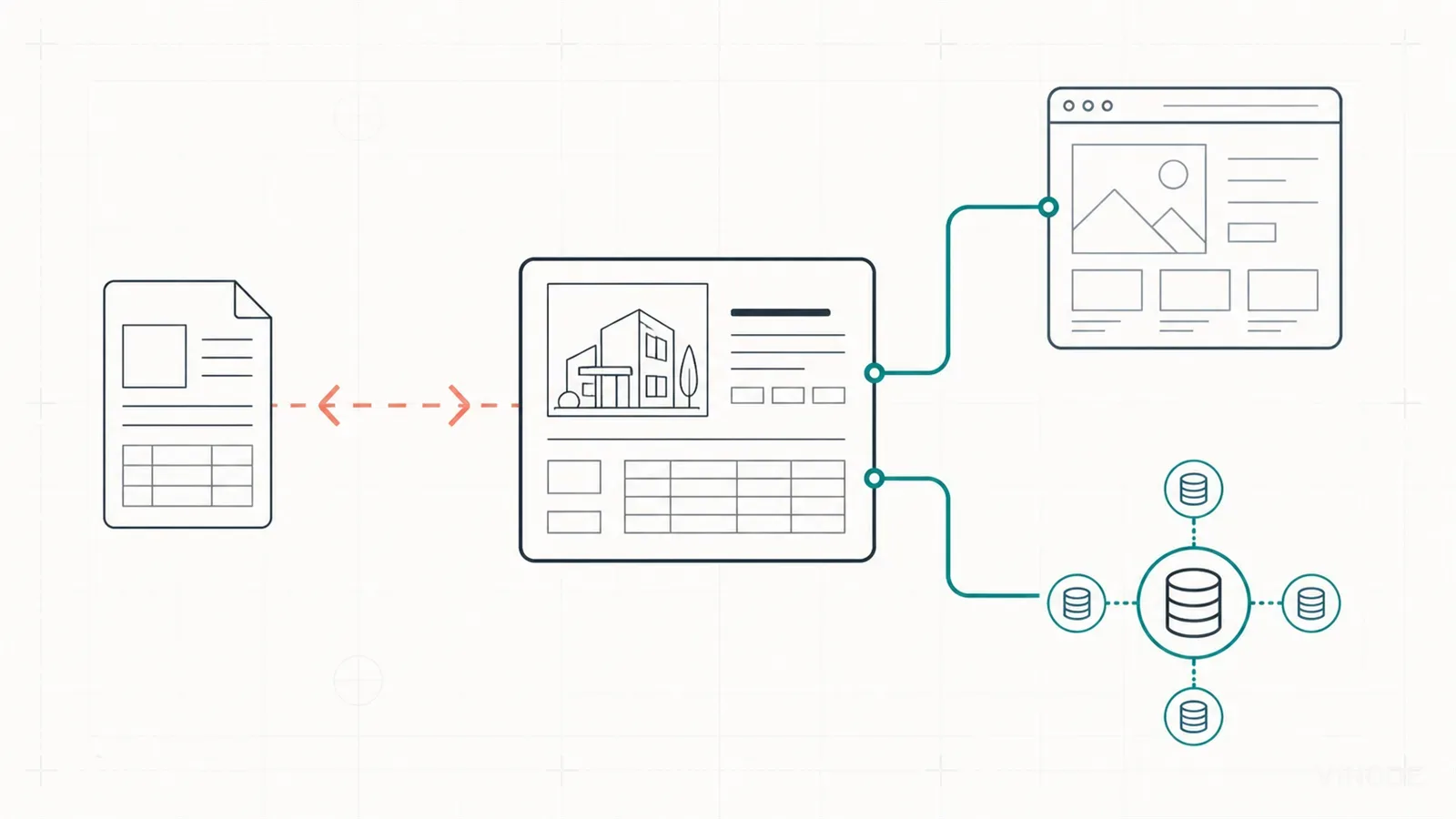
Three kinds of price list drift, and which one responds to speed
A stale PDF, a stale web page and a stale feed look like the same problem from the sales desk. Only the web page gets better when you update faster. The other two need a different fix, and the cleanest one is a single record every surface reads live.

One Development, Four Audiences: What Each One Needs
Three service charge figures for one two-bed in four days, from a team with a working owner-occupier site. Owner-occupiers, investors, brokers and committees can share one development platform. What changes is the fields, documents and access each one gets.

What a build-to-rent unit selector actually costs
The build is one invoice. Filters, sub-types, pre-leasing, channel sync and a status model with no way back from sold add costs that recur at every turnover for the life of the building. The largest is the void day, and it appears on no invoice.