
Why Do Brokers Stop Showing Your Development?

Image co-authored with help of AI for illustrative purposes
Key Takeaways
- Agents stop showing a development when they cannot verify stock, and a stock list emailed on Monday is stale by Thursday.
- The shared link carries live unit status, the 3D model, floor plans and a per-unit PDF; pricing, commission and lead registration stay behind an agency login.
- Unit status on the link reads from the developer's CMS on every page view, while the rest of the page only changes when someone republishes.
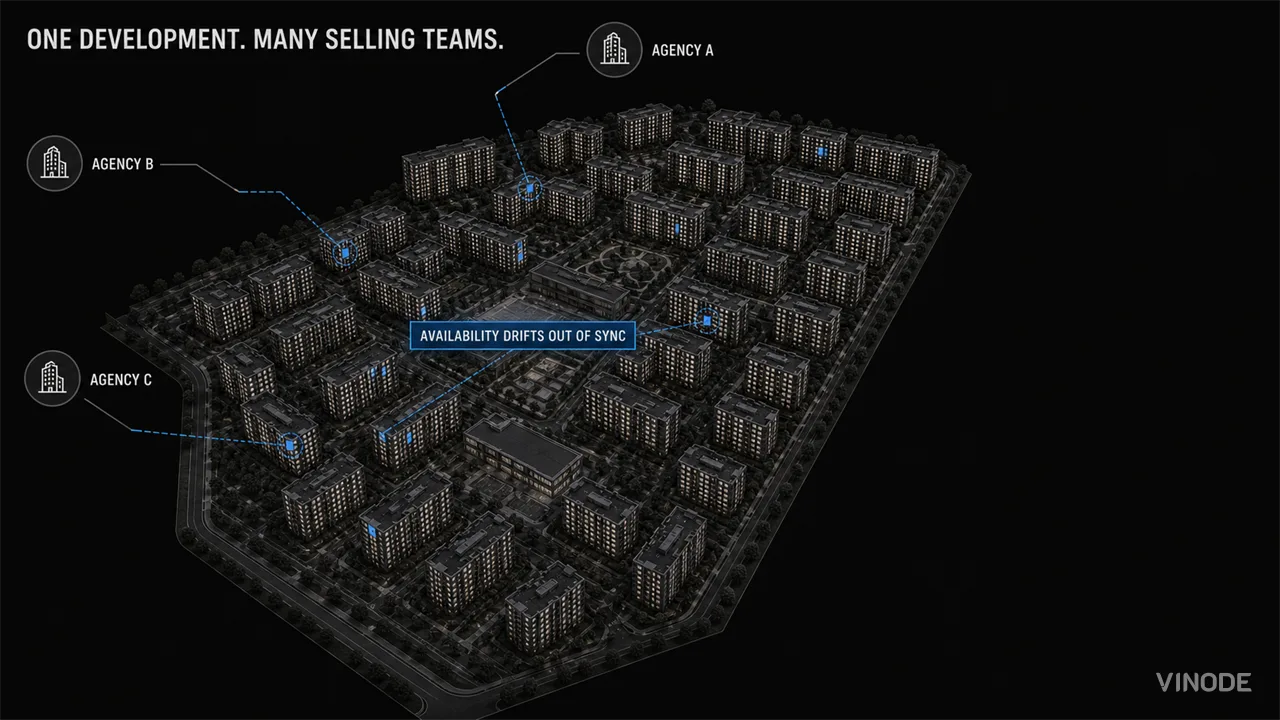
One of the five agencies selling a client's development had an agent, a woman who had brought them three buyers that spring, who took a couple out to a corner unit on a Thursday. The unit had been reserved on the Tuesday through a diffrent agency. She was working from the stock list the developer's sales coordinator had emailed on Monday, wich was the newest one she had. She found out when she rang the sales desk from the car to reserve it, with the couple in the back seat. She did not bring the developer another buyer for two months, and when the sales lead finally asked her about it she said she could not put a client in front of a unit she could not verify.
Agents keep showing a development when they can check stock on the spot. That takes one thing on the link they forward to buyers, unit status that updates from the developer's own record with no republish step, and it takes keeping pricing and commission off that link and behind an agency login. Most multi-agency setups fail on where that line is drawn, and the line usually gets drawn by accident.
The item most developers put on the wrong side
Pricing is the item most developers assume goes in whatever they hand to agents, and that assumption breaks the setup in one of two ways. Either a PDF with prices attached goes out and is forwarded within hours, so by the end of the first week the developer's numbers sit in inboxes nobody chose. Or the developer locks everything down, hands agents a brochure with no live data, and an agent ends up in the car with a couple and a reserved unit. Neither agent is being disloyal when they stop showing your units. They are managing thier own risk.
What goes on the shared link
Live unit status, the 3D model, the floor plans, and a per-unit PDF the agent can generate from the page. Unit status reads from the developer's CMS on every page view, so when the coordinator marks a unit reserved in the back panel, the colour on the link changes for whoever opens it next, with no republish and no rebuild. The rest of the page, the photos, the copy, the layout, is baked at publish time and only changes when someone republishes. That distinction is worth saying out loud to a technical evaluator, because the availability layer is live and the rest of the page is not.
From the buyer's side it is one link. They open it on a phone, browse the units, check a floor plan, maybe pick finishes, with no app and no login.
What stays behind the login
Pricing strategy. The commission structure. Lead registration with a protection window. Per-agency access the developer can grant and take away. We keep those in the back panel behind an agency login, and they do not go on the public link.
The link is what an agent forwards to a buyer. The login is the managed relationship: leads get registered there, commission gets tracked there, access gets cut there. Put pricing in the link and the developer loses control of who sees their numbers. Leave lead tracking out of the login and there is no way to run five agencies without a spreadsheet of who brought whom, and the spreadsheet is where the arguments start.
The two arguments we have every time
Two boundaries get argued at every setup, and both are worth arguing properly.
First, whether prices belong on the shared link at all. Developers want agents to show units without forwarding a price list. The feature this market keeps asking for is per-role price gating, where an agent sees plans and availability and a price needs a login. Most platforms today show prices to everyone or to no one, and per-role gating is not fully built anywhere yet, so ask the vendor exactly what an agent without a login sees. Until it exists, the boundary is a process decision: the agent gets the link, and prices come from a conversation with the sales desk.
Second, who owns the lead when two agencies bring the same buyer. In many jurisdictions the agent who introduced the buyer has a valid commission claim even if a seperate agency closed the sale, because entitlement turns on the effective cause of the sale rather than on who signed last (Property24). Lead registration with a timestamped protection window turns that from a phone argument into a record both sides can read.
When a phone call and a PDF are enough
This is not for a developer with one exclusive agent. The trust relationship handles pricing, a phone call covers availability, and a portal would not earn its cost back. A scheme under ten units, where the developer knows every buyer by name, is the same, and I would not talk anyone out of the spreadsheet at that size.
The problem starts around thirty units, when more than one agency sells the same stock and the boundary has been drawn by default rather than on purpose. The agent in the car was one of five agencies on the same stock, and the default there was everything in the PDF and no live status anywhere. Draw it on purpose instead: status and plans on the link, prices and commission behind the login, and one record that both of them read from. The price gate is the boundary worth paying to move when a vendor can move it, because it is the one that lets an agent show more while the developer gives away less.
See what the shared link looks like
Open a live Vinode project on your phone. No login, no app.

Brand Kits for Development Sites: Questions Vendors Should Answer
Four projects, four slightly different blues, and an agency quote for another page-by-page pass. These vendor questions show whether a platform's brand kit enforces the brand or just displays settings.

What presale evidence will a lender accept?
The Monday sales meeting said 60% sold. The bank said 35%. Both came from the same CRM. Lenders count qualifying contracts, and reservations, waitlists and page views show demand without proving an enforceable sale.
Three kinds of price list drift, and which one responds to speed
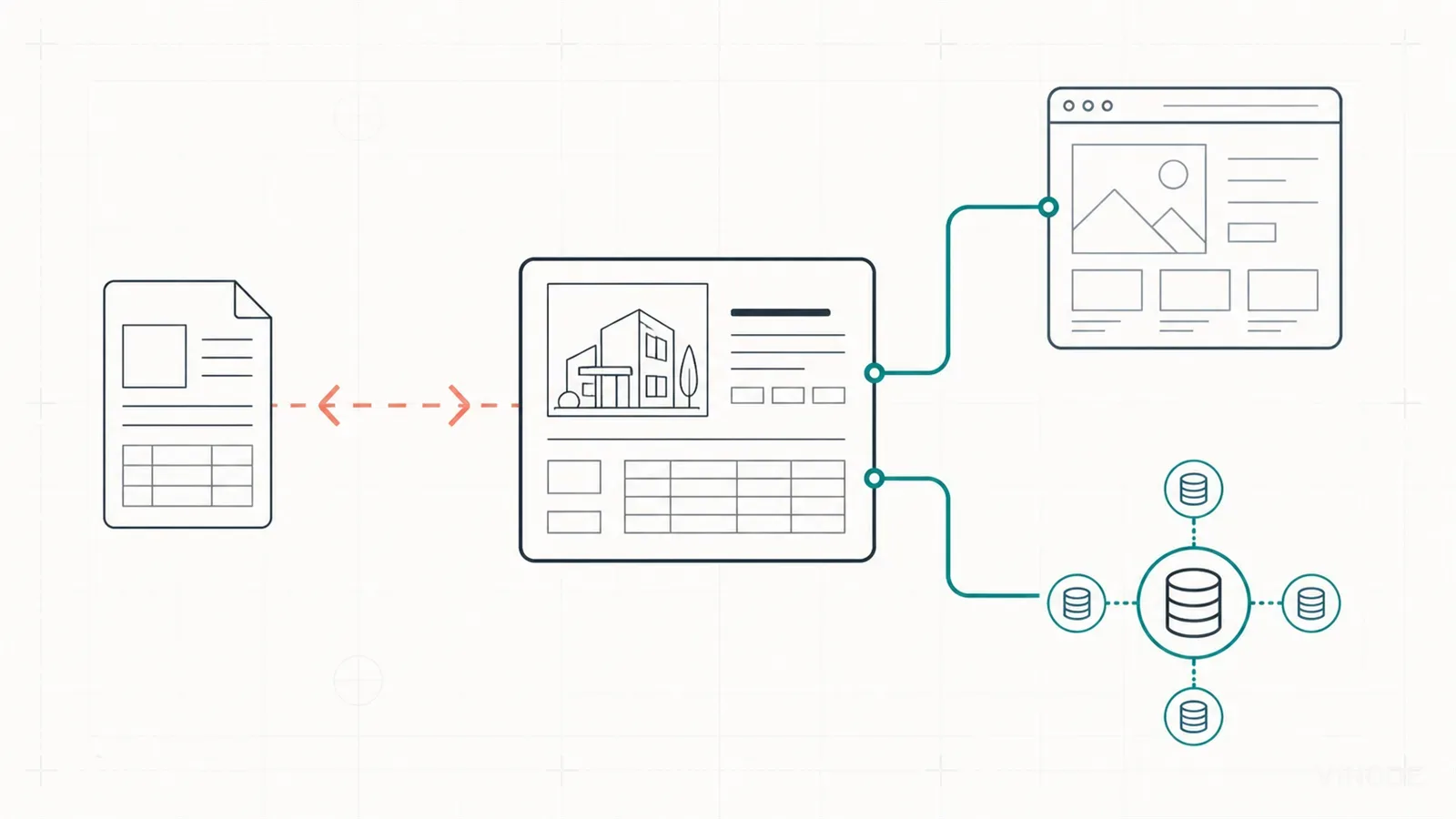
A stale PDF, a stale web page and a stale feed look like the same problem from the sales desk. Only the web page gets better when you update faster. The other two need a different fix, and the cleanest one is a single record every surface reads live.