
What presale evidence will a lender accept?

Key Takeaways
- A qualifying presale usually needs an unconditional contract, a 10% deposit in solicitor's trust, and an arm's-length buyer.
- The gap between reserved and exchanged in one live project ran 60% to 35%, and that is the distance between a sales report and a lending decision.
- A 5% deposit offered to attract buyers can disqualify the presale when the facility requires 10% non-refundable in trust.
- Marketing evidence enters the lending assessment through the sell-down assumption, and stays out of the presale count.
Midway through one project in our portfolio, the client's finance director asked me, in the week before his construction facility was due to release a tranche, why the bank and his own sales team disagreed about how sold the project was. The Monday sales meeting said 60%. The bank's review said 35%. Both figures came out of the same CRM. The 60% counted every unit with a reservation against it. The 35% counted contracts that had exchanged with the full deposit sitting in the solicitor's trust account. The 25 points between them were real buyers with real intent, and as far as the facility letter was concerned they did not exist yet.
A lender accepts qualifying sale contracts as presale evidence. Reservations, expressions of interest, waitlists, page views and lead totals can show demand, and not one of them satisfies a presale covenant. Below is what qualifying means, where a deal that looks signed still fails, and how to keep two totals so the Monday meeting and the bank stop surprising each other.
What a qualifying presale usually means
Three tests recur, and the 10% deposit is the one that catches most sales teams. The Australian and New Zealand facilities described by Feasly and Lateral Partners share a frame: an unconditional contract, a 10% non-refundable deposit held in solicitor's trust, and an arm's-length buyer. A Speirs Ryan note on Australian development finance shows how deposit and contract defects can remove a sale from the count. The exact test still comes from your facility letter, and a lender may add limits by buyer type, contract wording, location or concentration. Use this as an audit frame to take to lending counsel. It is not legal advice, and I would be suspicious of any blog post that claimed to be.
The credit test
- Contract status decides whether the sale counts.
- Deposit mechanics can invalidate an otherwise signed deal.
- Demand signals belong outside the qualifying presale total.
The 25 points between reserved and exchanged
The project above is the clearest example I have. Midway through its sales cycle, 60% of units were reserved while 35% had reached exchange, so the same development looked 60% sold in the Monday sales meeting and 35% sold in a lending review. The sample is one project measured from its own pipeline, and the method and its limits sit in our pipeline forecast.
A gap of that size can decide whether a construction facility releases. Any dashboard that folds reserved and exchanged into one sold total is unsafe for a finance deadline, because it hides the one transition that matters most to the person deciding whether to fund the next floor.
The 5% deposit that looks like a sale
The deposit is where a deal that looks complete can still fail the test. A sales team accepts 5% because a smaller payment reduces friction for the buyer. The CRM records a signed deal and the unit leaves availability. Yet a facility requiring the full 10% can assign that contract no value at all toward its minimum.
The Speirs Ryan note carries the operational warning: financiers often require the full 10%, and a reduced deposit may stop the contract counting. It also describes rescission rights and foreign-buyer limits as reasons a signed contract may fail a lender's eligibility review.
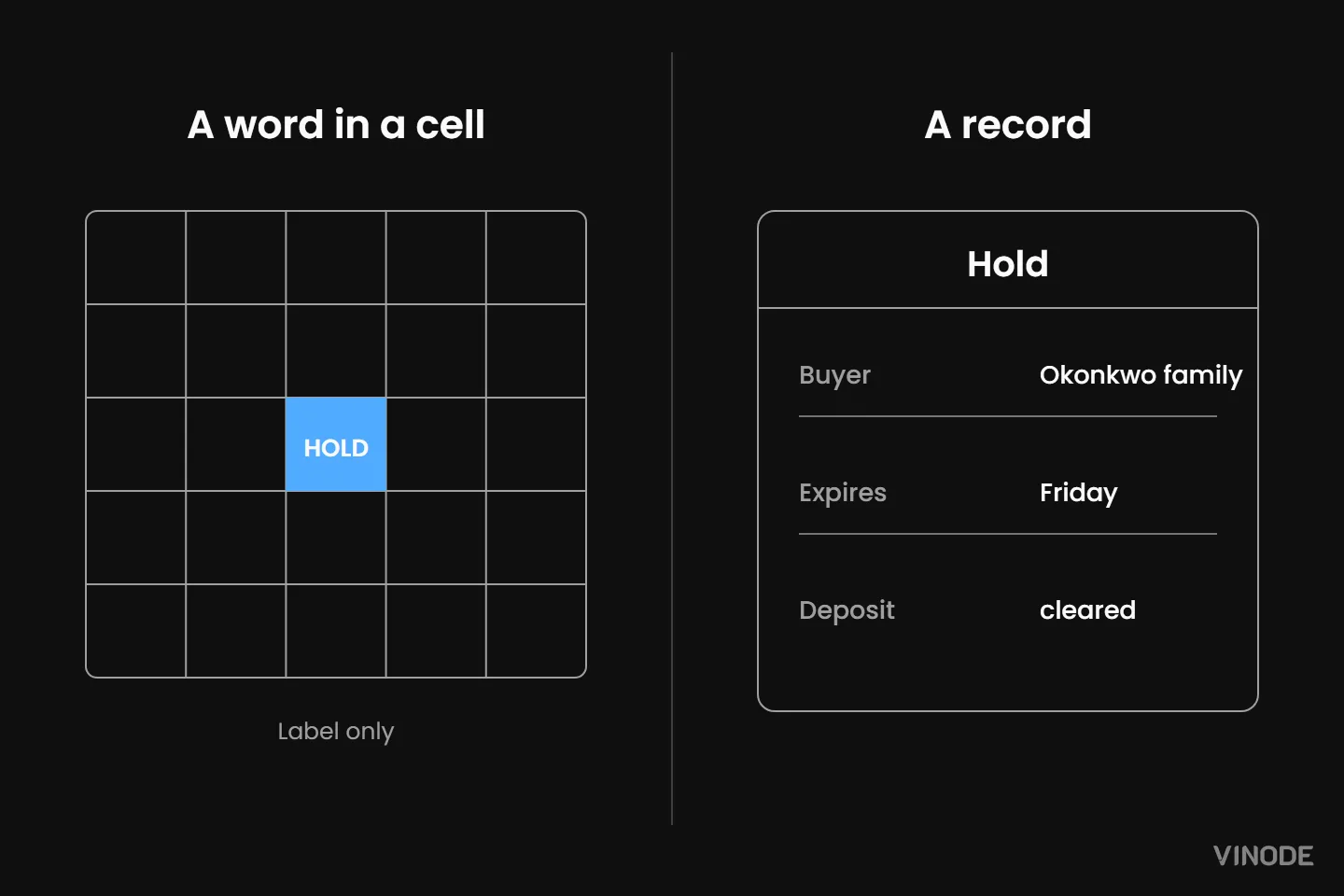
If a vendor agrees to a reduced deposit, the presale contract may not be counted.
Strictly speaking, even signed is too clean a frame. A signature tells you paper exists. It does not tell you whether conditions remain, whether the buyer can rescind, where the deposit sits, whether the buyer is independent, or whether the facility excludes part of that buyer group. The useful record is a set of facts that lets counsel and the lender test eligibility, rather than a yes or no against the word signed.
That is why contract mechanics beat demand volume. Three hundred expressions of interest cannot be averaged into sixty qualifying contracts. They are different objects. One shows a pool that sales can work. The other creates an enforceable obligation that a credit team can inspect.
What each signal proves
Reservation or EOI
A buyer has shown intent toward a unit or project. The buyer may still leave before an enforceable contract exists.
Waitlist or page view
Marketing has reached an audience. No named buyer owes performance under a sale contract.
Qualifying contract
A specific buyer, unit, contract, and deposit meet the tests written into the facility. This is the evidence that enters the covenant count.
Settlement risk between exchange and completion
Exchange does not remove settlement risk. An off-plan buyer can sign long before completion, and their income, debts, mortgage terms and the completed valuation may all change before settlement. A deposit gives the buyer money to lose. An unconditional contract removes the easy exits. An arm's-length test stops connected parties from manufacturing apparent demand. Those filters reduce the risk and do not remove it, which is why a lender inspects the quality of each commitment instead of accepting a stage label from the sales pipeline.
Marketing evidence and the sell-down assumption
Marketing evidence has a real role in the lender's estimate of how long the remaining stock will take to sell. That estimate is the sell-down assumption. A lender can use sales history, comparable settlements, remaining stock, market conditions and a written sales plan when testing the period allowed to sell and settle units left after or during construction. Campaign reach, enquiry quality, viewing activity and prior conversion can support a credible pace for that remaining stock. They cannot turn a page view into a presale.
The two claims need different proof. The presale count asks which contracts qualify today. The sell-down case asks whether the remaining units can be sold within the lender's assumed period. Keep them apart in the reporting and both get stronger.
Keep two totals. Report qualifying contracts against the facility covenant. Report reservations and demand signals as the pipeline that may produce future contracts. Combining them makes both reports less useful.
The evidence pack, deal by deal
The practical fix starts in the CRM. A reservation hold and a won or contracted stage must be separate. Vinode's Back Panel keeps that distinction: a reservation can hold a unit and expire, while the won stage records the binding deal. It also tracks payment schedules per deal and can export pipeline data. Those features do not certify a contract for a lender. They preserve the facts the review needs.
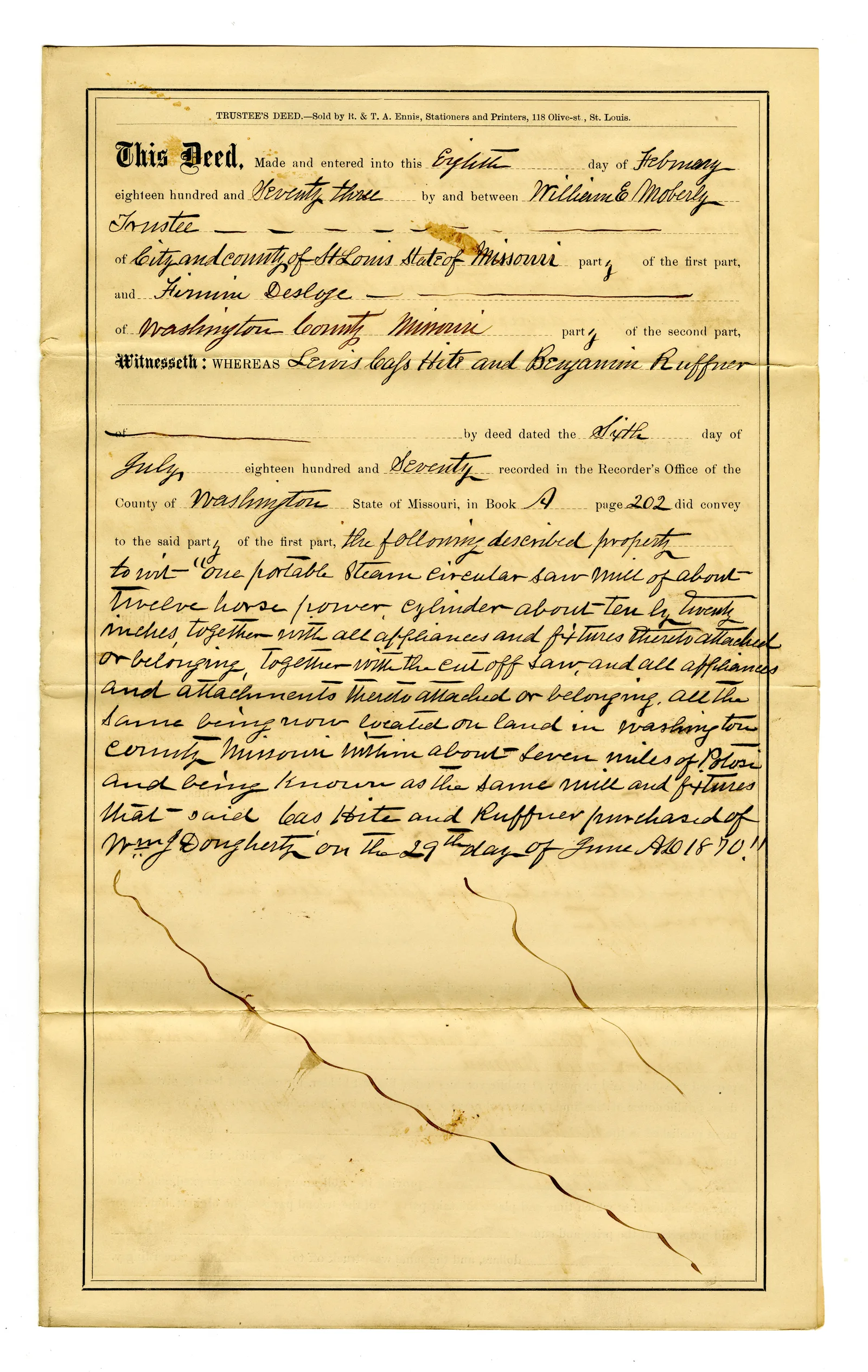
For each claimed presale, the evidence pack needs enough to identify the buyer and unit, the contract status, the deposit amount and payment status, and the expected settlement date, plus any facility-specific fields your lender or counsel requires. I would rather see a smaller total with those cells complete than a larger sold number built from stage names nobody has defined.
One row in the evidence pack
Identity and contract
Buyer reference, unit reference, exchange date, contract status, and any conditions or rescission rights.
Money and settlement
Deposit required, deposit received, trust evidence, expected settlement date, and the result of the facility test.

One language trap is worth a small digression, because it exposes the whole problem. Sales teams like the word booked. It feels firmer than reserved and less final than sold, and inside one team it works well enough. It has no stable credit meaning. Two firms can book the same buyer at different legal stages, and I have seen it mean everything from a verbal hold to an exchanged contract. Anyway, the practical point is to define every stage and attach the underlying documents to it.
Run the audit deal by deal. Separate holds from exchanged contracts. Check the deposit against the facility requirement. Flag conditional terms, rescission rights, connected buyers, foreign-buyer caps and missing trust evidence for review. Then reconcile the result with counsel before presenting it as a qualifying total. A 5% deposit that fails the test needs a decision from the lender and counsel, so do not assume the buyer can simply top up the difference or that the lender will waive it. The CRM supports this finance control. It should not be allowed to invent the result.
When a lender uses a different route
The answer changes with the lender, the jurisdiction and the facility. A private or non-bank lender may accept fewer presales and put more weight on sponsor equity, project margin, security and the exit plan. Monark Partners, for example, says it can fund selected projects with minimal or no presales when the sponsor and exit case are strong (Monark Partners). That is a different underwriting route. It does not make reservations qualify under a facility that requires enforceable contracts.
Two totals instead of one sold percentage
This audit is not for a project with no presale covenant, because there is no qualifying total to calculate. A project held back by weak demand needs more buyers before finer evidence classification can help it. The presale threshold guide owns the threshold question and the pipeline forecast owns the crossing date.
For a project approaching a finance deadline, stop reporting one sold percentage. Put the qualifying-contract total beside the reserved total and list every deal excluded from the first. The gap is the work left for sales, legal and finance, and it is a much better Monday meeting than the one where the bank's number arrives as a surprise. If nobody can explain why each excluded deal fails, the audit is not finished.
See the reservation and contract stages separately
Walk through how Vinode's Back Panel ties buyers, units, deal stages, and payment records together.

Three kinds of price list drift, and which one responds to speed
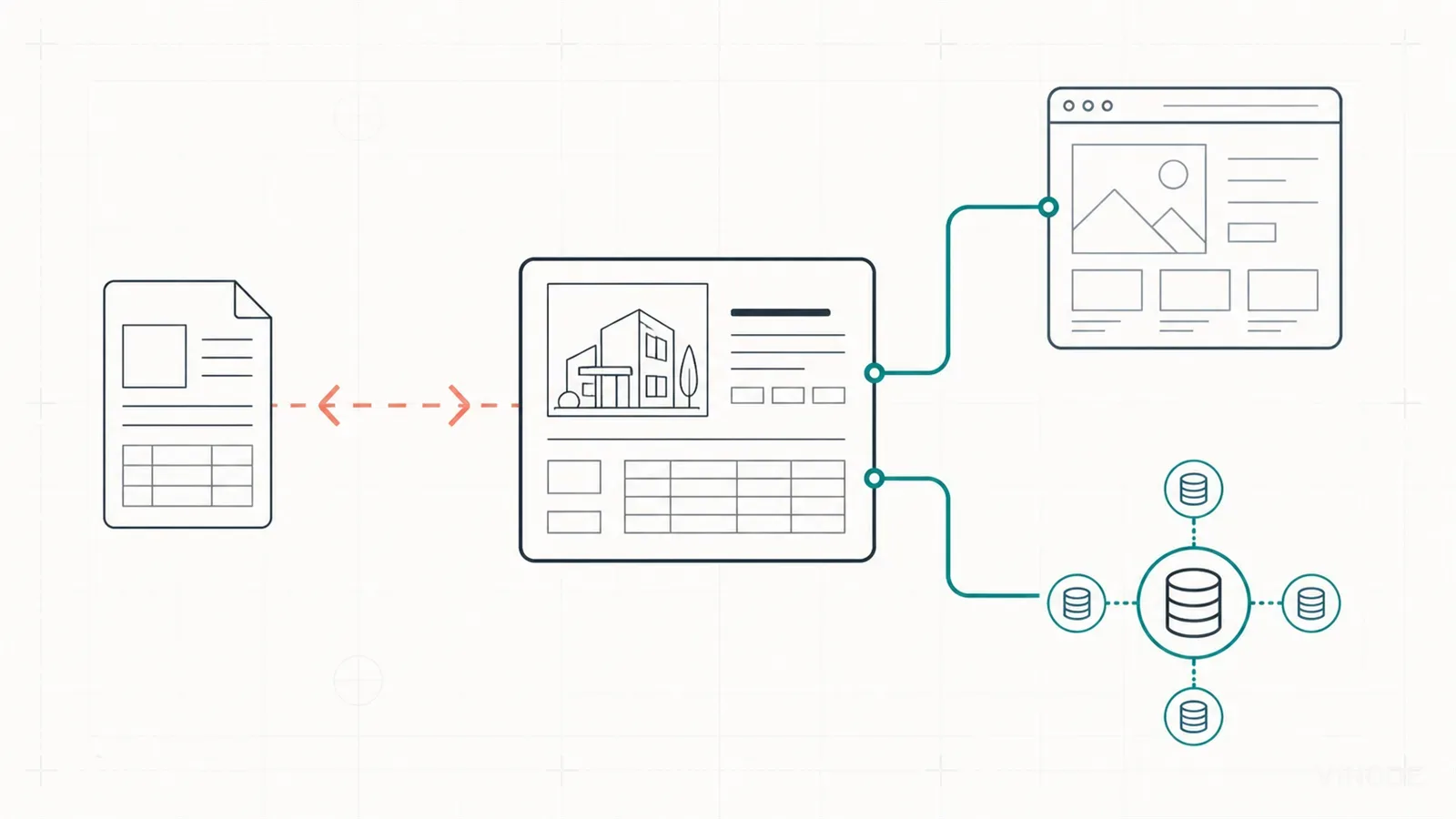
A stale PDF, a stale web page and a stale feed look like the same problem from the sales desk. Only the web page gets better when you update faster. The other two need a different fix, and the cleanest one is a single record every surface reads live.

One Development, Four Audiences: What Each One Needs
Three service charge figures for one two-bed in four days, from a team with a working owner-occupier site. Owner-occupiers, investors, brokers and committees can share one development platform. What changes is the fields, documents and access each one gets.

What a build-to-rent unit selector actually costs
The build is one invoice. Filters, sub-types, pre-leasing, channel sync and a status model with no way back from sold add costs that recur at every turnover for the life of the building. The largest is the void day, and it appears on no invoice.