

Grzegorz Bukowski
CEO & Technical Artist - Prographers - Warsaw, PolandCEO and technical artist at Prographers - he decides whether a render is photoreal enough (it usually isn't, yet).
Leads Prographers' real-time graphics work across web, mobile, and VR.
Samsung, Town&Country, eBilet, and Mercedes.
Web3D, VR/AR, metaverse, Unity, and Unreal Engine.
Areas of expertise
Real-time & pre-rendered 3D
CG photorealism
Unreal Engine
VR / AR
3D optimization
- Created immersive VR experiences for Samsung, showcasing their mobile devices.
- Produced photoreal 3D graphics and models for Town&Country's real estate marketing.
- Designed a VR ticket-purchasing UI for eBilet.
- Ran brand marketing campaigns for Mercedes.
- Named portfolio projects include Rudy Tank, a car configurator, and VRscopy.
- Writes about the craft on the Prographers blog - CG photorealism, Unreal Engine 5 shadow noise (Lumen & ray tracing), and in-camera VFX.
Grzegorz Bukowski is the CEO and technical artist at Prographers, a Warsaw studio working at the frontier of real-time graphics across web, mobile, and VR. He has led the company in his current role since March 2019, combining a hands-on 3D/VR artist's craft with company leadership. Ask him what he actually does, and the honest answer is closer to technical artist: the person who stares at a render until it stops looking like a render.
His work centers on real-time and pre-rendered 3D - building 3D graphics, models, and interiors for both real-time and static visualizations, designing UIs for virtual reality, and optimizing performance while pushing visual quality. His stated skill set spans Web3D, VR/AR, the metaverse, Unity, and Unreal Engine.
On Vinode this matters more than anywhere else. The whole promise is photoreal 3D that opens in two seconds on an ordinary phone, and that only works if someone is genuinely fanatical about the trade-off between fidelity and weight. He sets the visual bar for every project, then figures out how to hit it without melting your battery.
Experience
- CEO & Technical Artist, Prographers (since March 2019). Pushes the limits of real-time graphics on web, mobile, and VR, builds the 3D and VR pipelines, and runs the company.
- Creative Manager, Kamień Milowy (2015-2019). Built the brand and product marketing for a residential real estate developer.
- Co-owner, DB Skimboards (2012-2019). Product development, brand, and operations for a skimboarding brand.
Selected clients


Across those years the work has spanned immersive VR for Samsung, photoreal 3D for Town&Country's real estate marketing, a VR ticket-purchasing UI for eBilet, and brand marketing for Mercedes. His portfolio also features named projects including Rudy Tank, a car configurator, and VRscopy.
Education
- Electrical and Electronics Engineering, Warsaw University of Technology (2011-2015).
He regularly writes about the craft on the Prographers blog - achieving CG photorealism, fixing shadow noise in Unreal Engine 5 (Lumen and ray tracing), and in-camera VFX. Based in Warsaw. Works in Polish (native) and English (full professional).
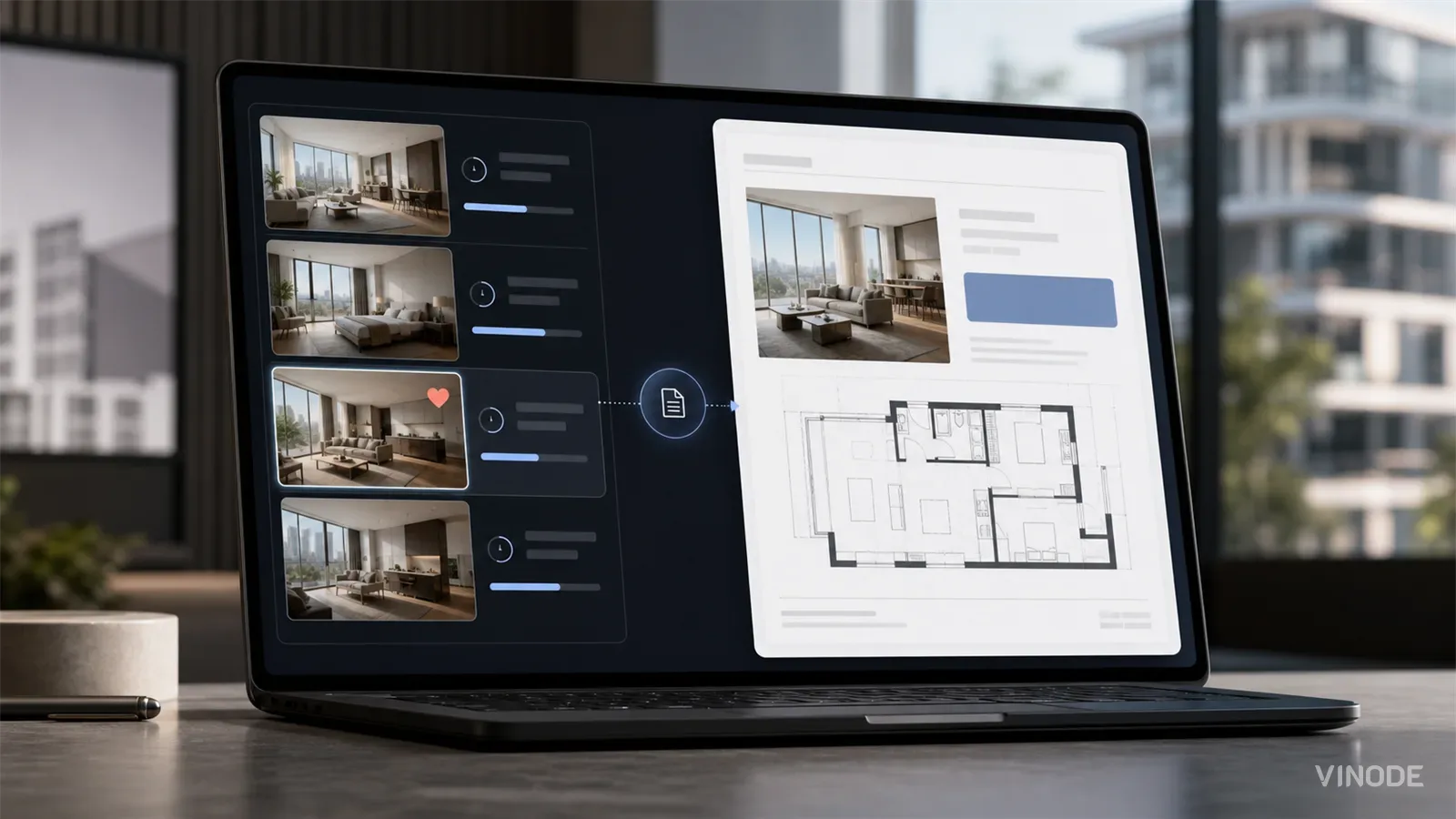
The Unit-Specific PDF a Buyer Actually Asked For
A buyer spends nineteen minutes on one two-bed, saves it, and gets the forty-one-page development brochure the next morning. Once a sales platform records the unit a buyer chose, the generic brochure becomes a decision to ignore that choice.

How to Move a Live Property Launch Off a Spreadsheet
Three weeks from launch, new enquiries were going into a spreadsheet tab called new leads 2. Move new leads and current unit data first, let old deals finish where they started, and leave the historical import until later.

AI Property Imagery in 2026: A Trust and Governance Playbook for Developers
A label tells buyers that AI touched an image. It cannot tell your team which design revision supports the image, who approved its claims, where it is live, or how to withdraw it.

AI Search Is Shrinking the Click: What Property Developers Should Measure Instead
AI answers can remove the visit before it happens. Keep tracking search traffic, but judge it by what follows: qualified arrivals, unit exploration, contextual enquiries and reservations.
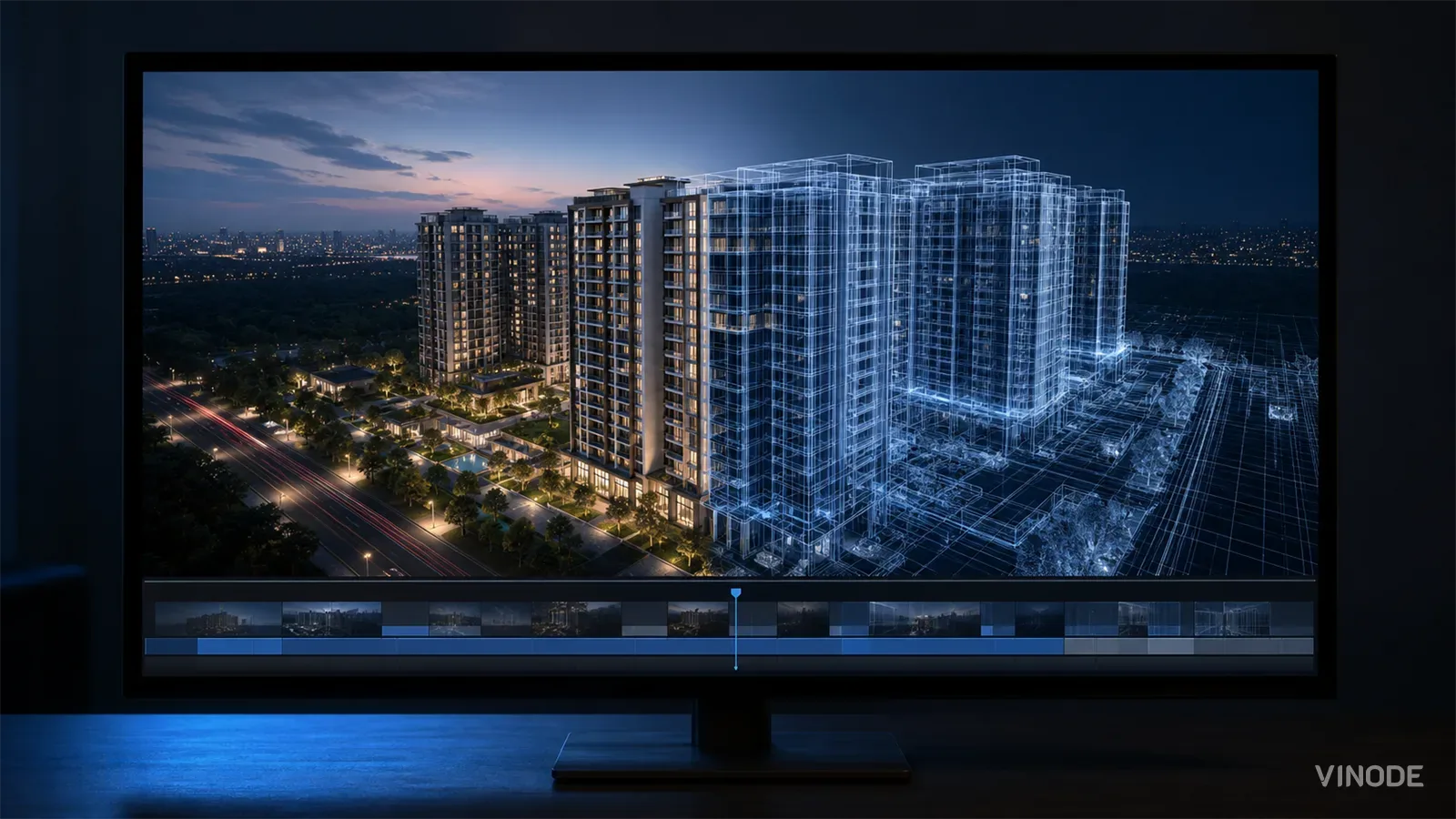
How to commission a development flythrough (and what to measure)
A sales director is asked by his board which reservations the launch film brought in, and cannot name one. What a flythrough can actually do, how to commission it so a later design change is one re-rendered shot, and what to measure instead of views.
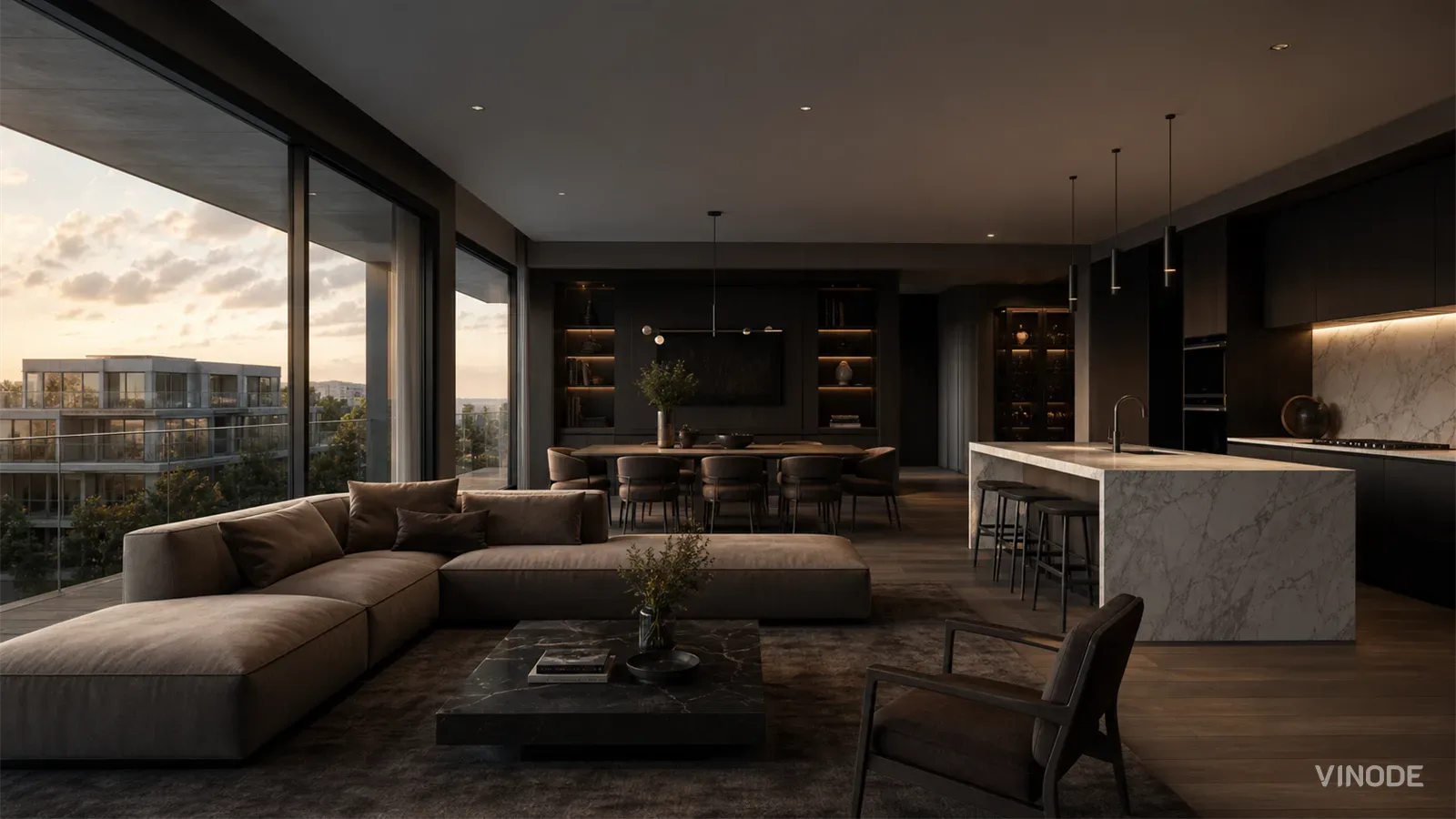
Digital vs physical show apartment: when to build the room
A furnished show apartment can only ever be one unit, one layout, one finish, built early. So the useful question is capital timing: whether phase 1 needs a built model unit at all, and if so, when.

What Off-Plan Buyers Do Before They Enquire: A Vinode Benchmark
The smallest useful buyer-behavior benchmark needs four facts: whether visitors return, how long they stay, which units they inspect, and whether that activity reaches an enquiry. Our data shows each signal, but it does not yet prove which action predicts a reservation.
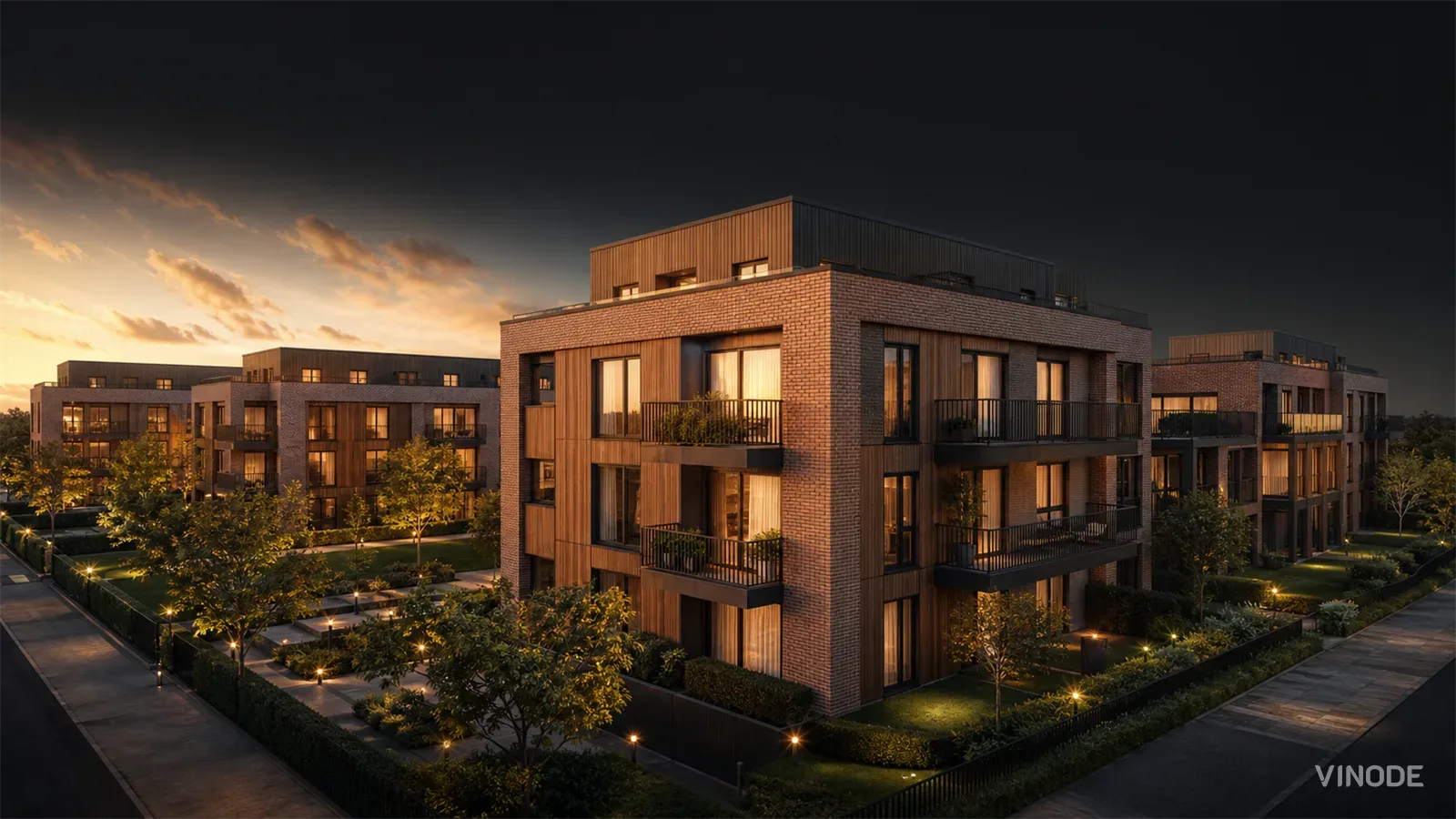
The plans changed in month four. Now what happens to the renders?
A floor plate gets value-engineered, or a finish lands nothing like the one your studio modeled, and suddenly the renders, the tour, the floor plans, and the unit data all show an apartment nobody will be handed. The instinct is to brace for another render invoice. Most of the time that's the wrong move: sort the change first, because the majority of mid-build changes were never a rendering problem at all.

Pre-construction visualization: price the weeks, not the images
If a development is below its presale threshold, visualization is a financing decision. Compare its quote with the carry cost of the launch time it can recover.
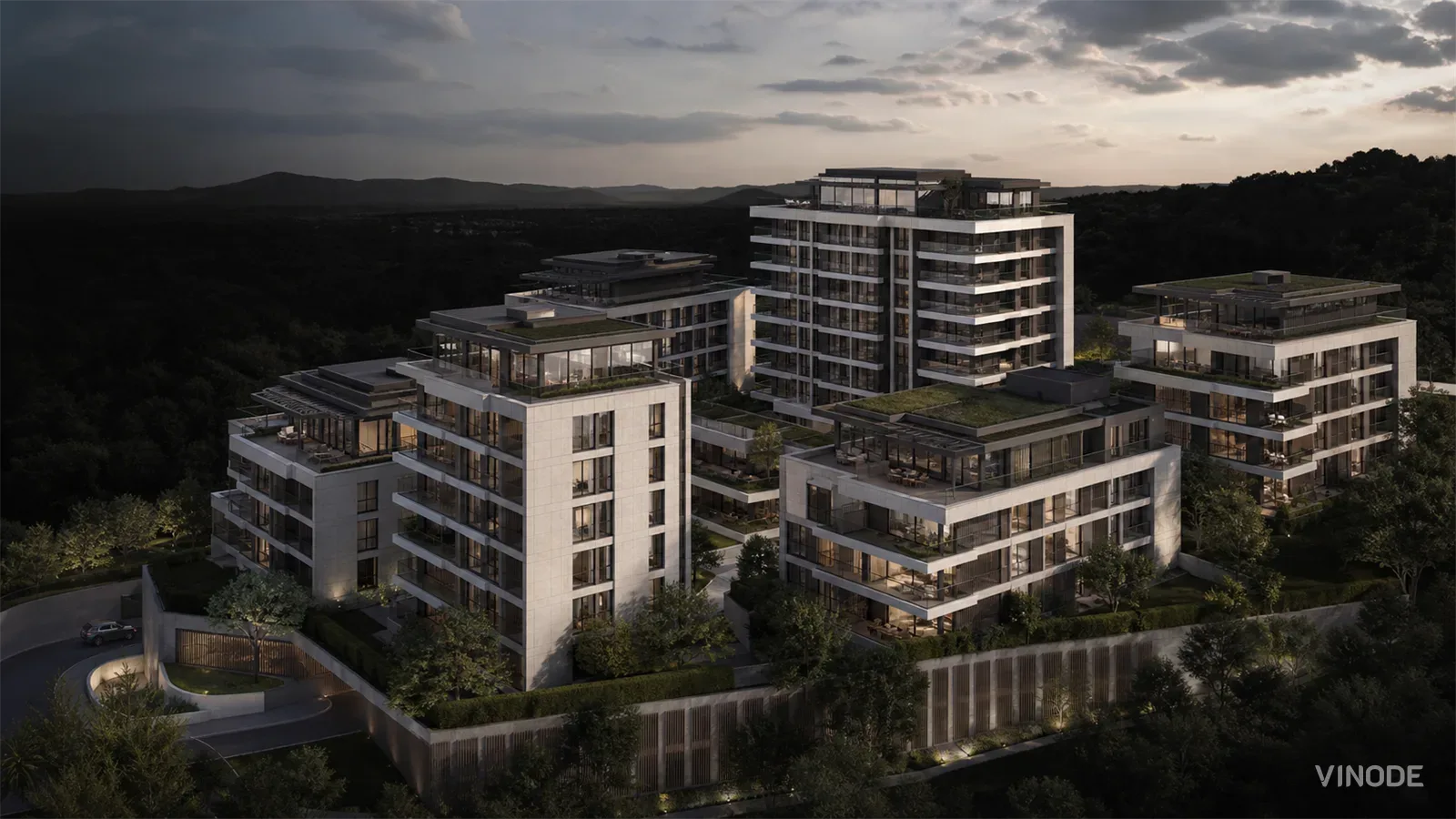
Virtual staging vs interactive 3D for a new development (and when flat renders are enough)
For an off-plan development, "virtual staging vs 3D" is the wrong question, because staging needs a finished room that doesn't exist yet. Rank your options by what each one physically requires, and the real fork becomes clear: flat renders or interactive 3D.

3D Visualization for Property Developers: What to Commission at Each Stage
3D visualization is not one purchase but roughly five, spread across a development's two-to-four-year timeline. The stage you are in decides what to commission, and buying the photoreal set too early is the costly default.

Indicative only: what a render disclaimer actually buys you
An indicative-only caption has a narrow, useful role in UK off-plan marketing. The larger control is keeping each unit's facts and visuals aligned with their authoritative sources.
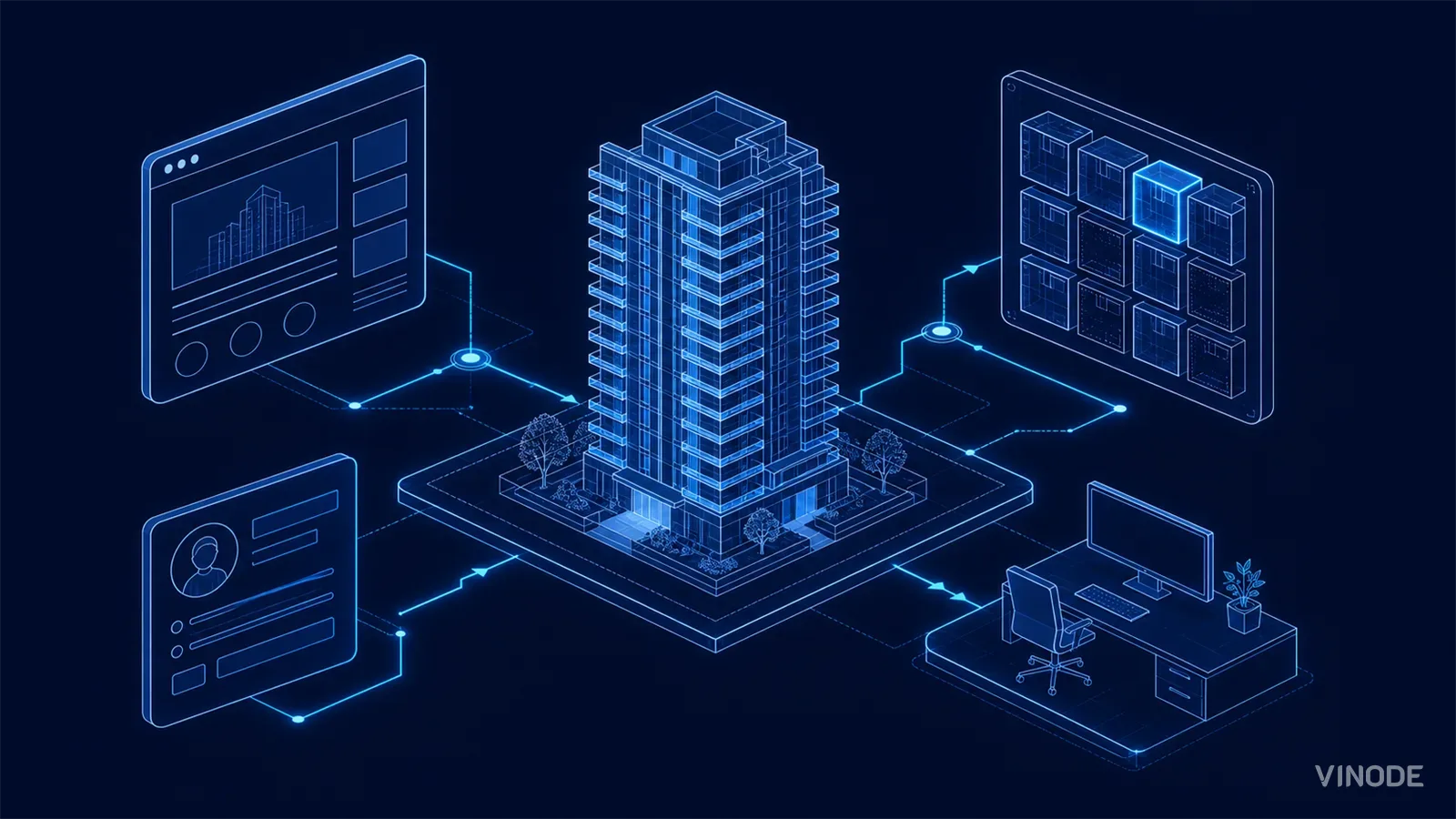
Off-Plan Real Estate Marketing: A Developer's Guide from Pre-Launch to Reservation
Off-plan marketing rarely fails at the top of the funnel. It fails between the website, the inventory and the sales team, when a generic contact form throws away everything a buyer just told you about the unit they want. Here is the connected system that holds that context together, from first click to reservation.
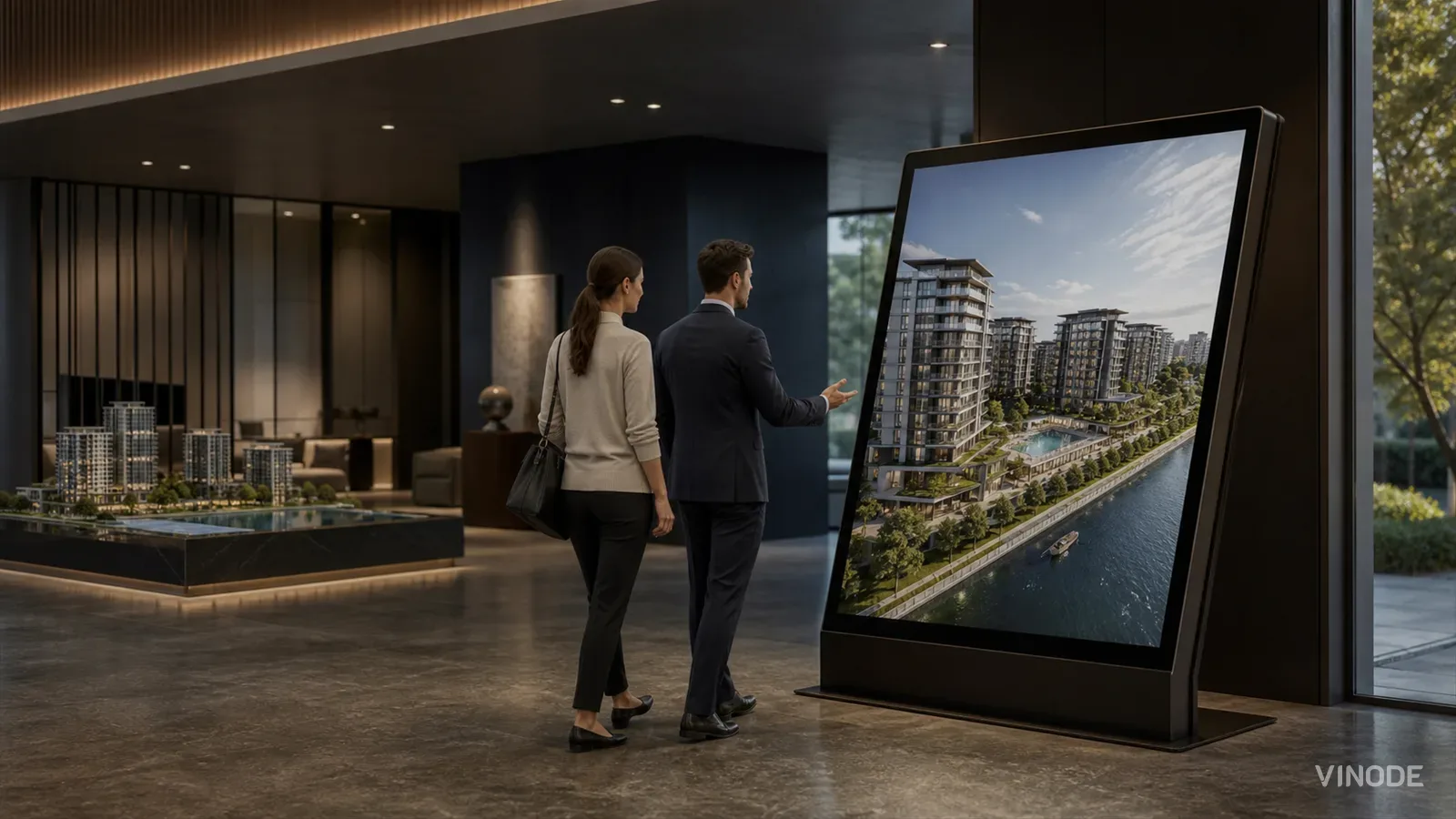
Offline isn't a feature: what actually keeps a sales-gallery kiosk alive when the wifi dies
Two kiosks can both claim "offline mode" and behave in opposite ways the moment the connection drops. Whether an interactive 3D sales gallery survives a dead line is settled during production, long before anyone ticks an offline box. Here is the one question to ask a vendor.

Why Procedural Granite Reads as Fake: Worley Noise Has the Wrong Statistics
Stacking more noise octaves will not fix procedural granite. Worley noise is a snapshot of crystals that all appeared at once, and it cannot carry the shape hierarchy real granite gets from crystallizing over time. The fix is ordering grains by growth stage, not adding detail.
Photorealism that sells real estate: judge the render before you pay
A high-resolution render can still read as a lie the moment a buyer stands in the finished room. What sells it is whether the light and materials hold together, and pixel count has little to do with it. Here's how to judge a vendor's sample without being a 3D artist, and why a too-perfect render carries legal exposure too.
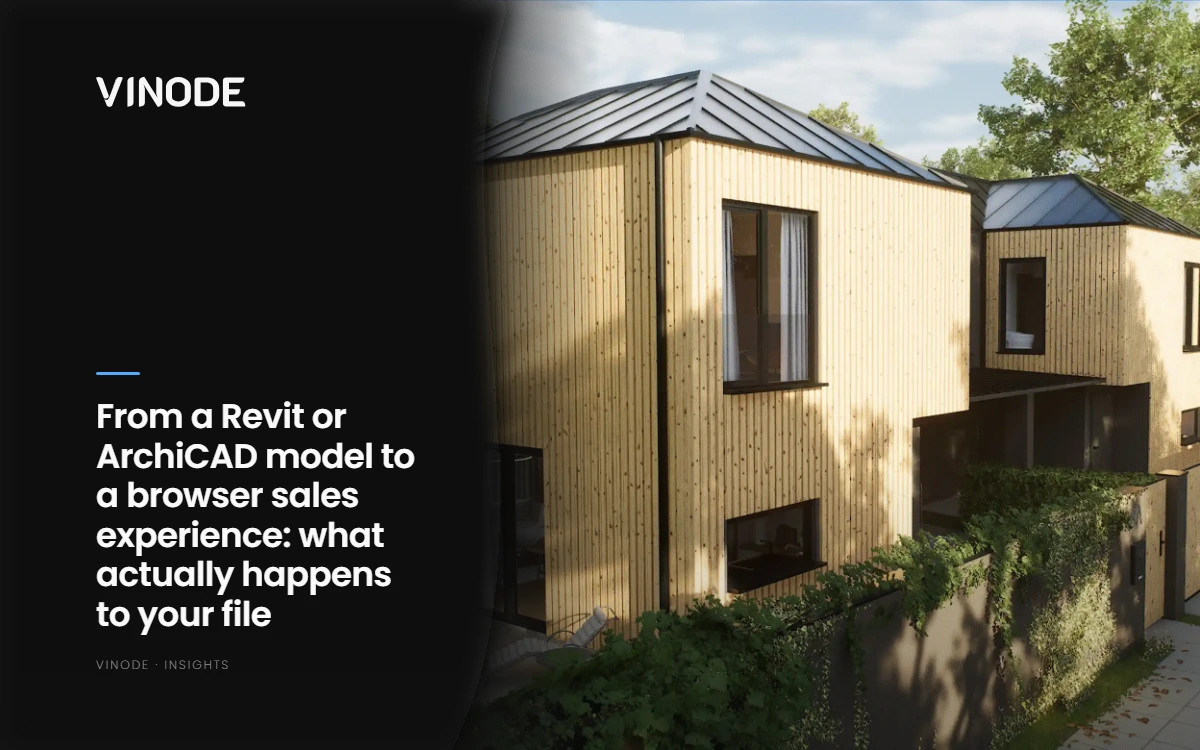
From a Revit or ArchiCAD model to a browser sales experience: what actually happens to your file
The first time your building shows up 'on the web' it arrives grey and flat, and the reflex is to hunt for a better export setting. That's the wrong instinct. Here's what really happens to a BIM model on the way to a browser-ready 3D sales experience, who does the work, and how long it honestly takes.
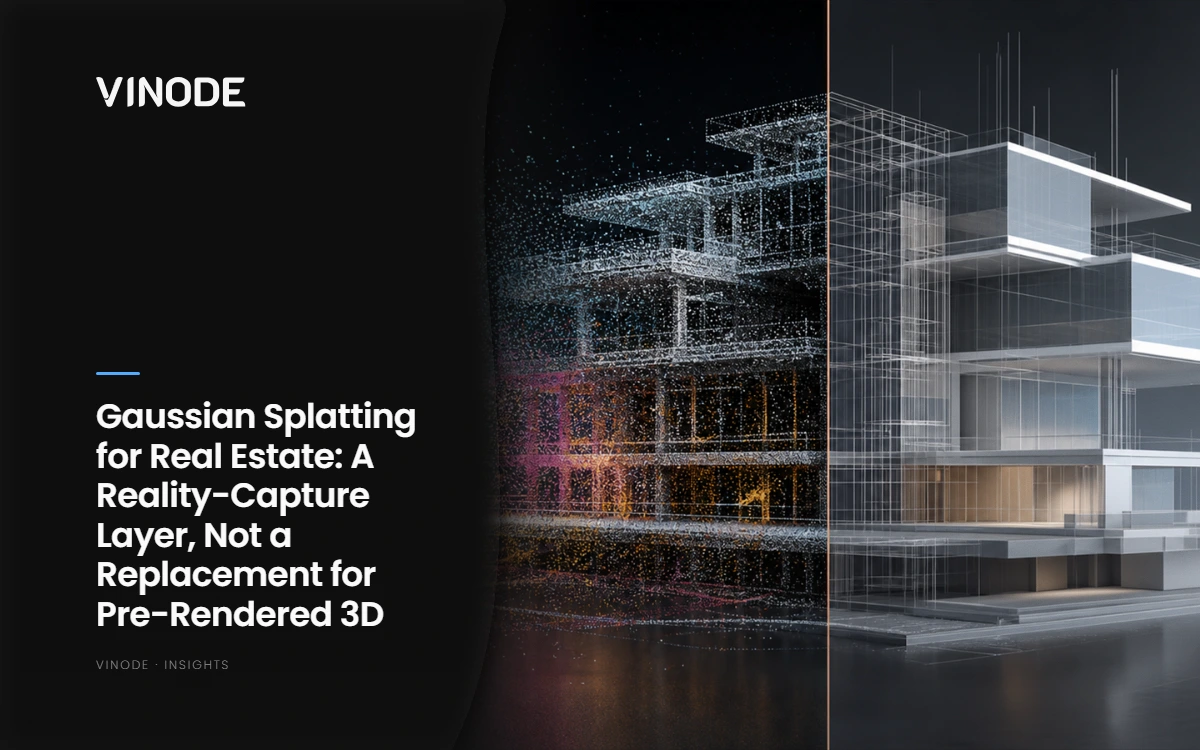
Gaussian Splatting for Real Estate: A Reality-Capture Layer, Not a Replacement for Pre-Rendered 3D
Capture-vendor pages frame Gaussian splatting as the technology set to retire architectural renders. It cannot, and the reason is not image quality. A splat only reconstructs something that already physically stands, which rules out every unbuilt building a developer sells off-plan.
The asset budget is what breaks 3D at 500 units, not your polygon count
Grinding on the model has a hard ceiling at masterplan scale. LOD tiers, a texture memory budget, draw-call limits, and streaming order decide whether a 528-unit scene loads on a buyer's phone. Here is what that budget looks like at 25 buildings, and why no amount of tuning upgrades the device in their hand.
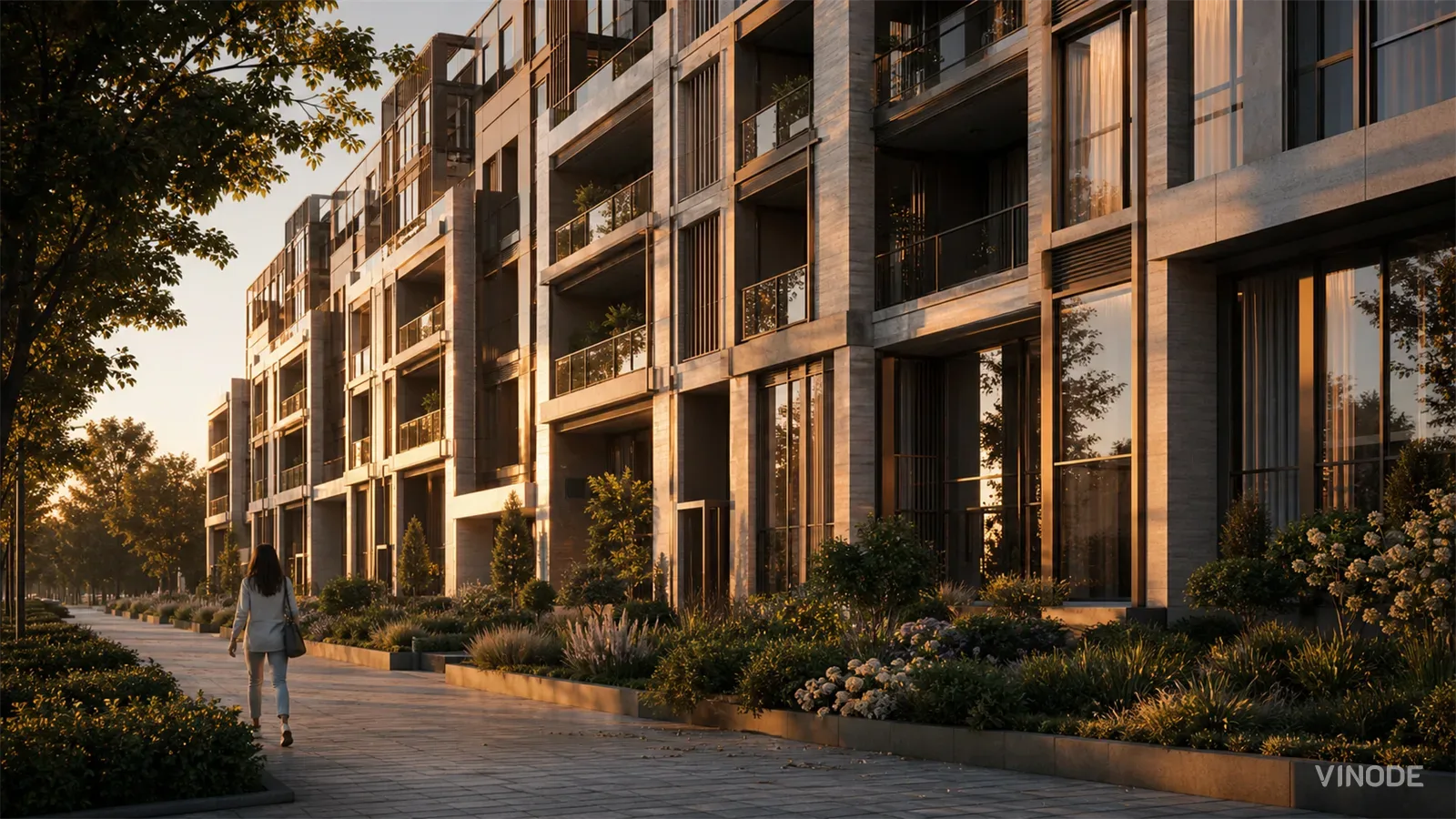
Why 3D looks 'game-like': photoreal is art direction, not resolution
A proof can be rendered in 4K and still look like a video game. The gamey tell is not resolution. It is lighting, lens, materials, and whether anyone lives in the frame. Here is how to diagnose it, and what to put in the brief so it never ships.
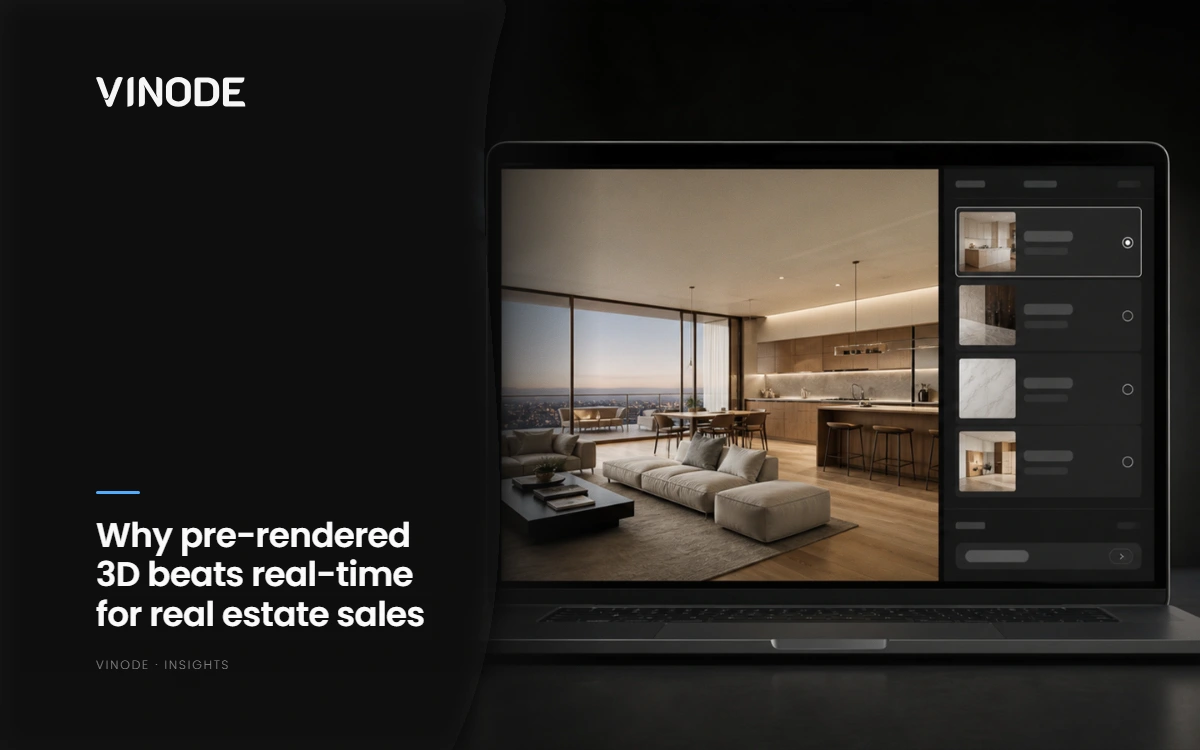
Why pre-rendered 3D beats real-time for real estate sales
Real-time engines look impressive in a demo, but they buckle on the devices your buyers actually use. Here's why Vinode streams pre-rendered 3D instead, and what it means for your conversion rate.
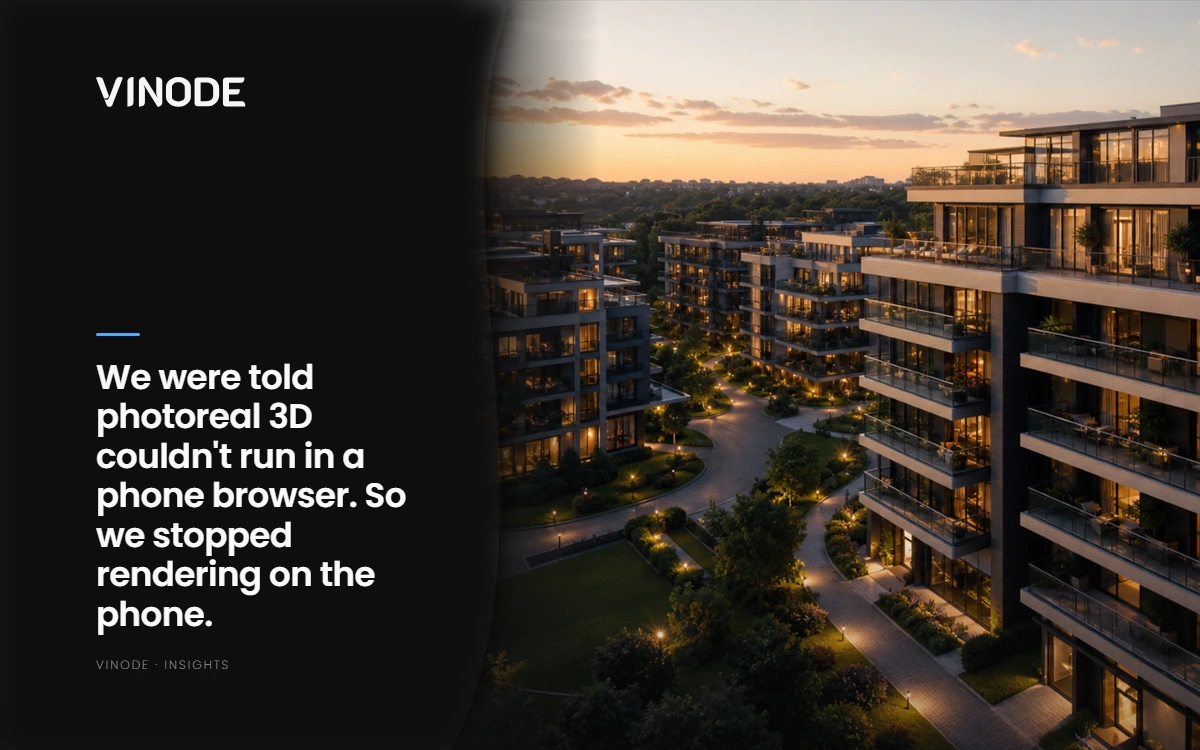
Serving a photoreal scene to a launch-day crowd: the 3-second threshold and CDN edge economics
A heavy 3D scene reaching thousands of phones at once is a delivery problem, not a rendering one. The bar is Google's 3-second abandonment threshold, and the mechanism is a CDN handing the same static bytes to a crowd, where the 1,001st viewer costs about what the first did.
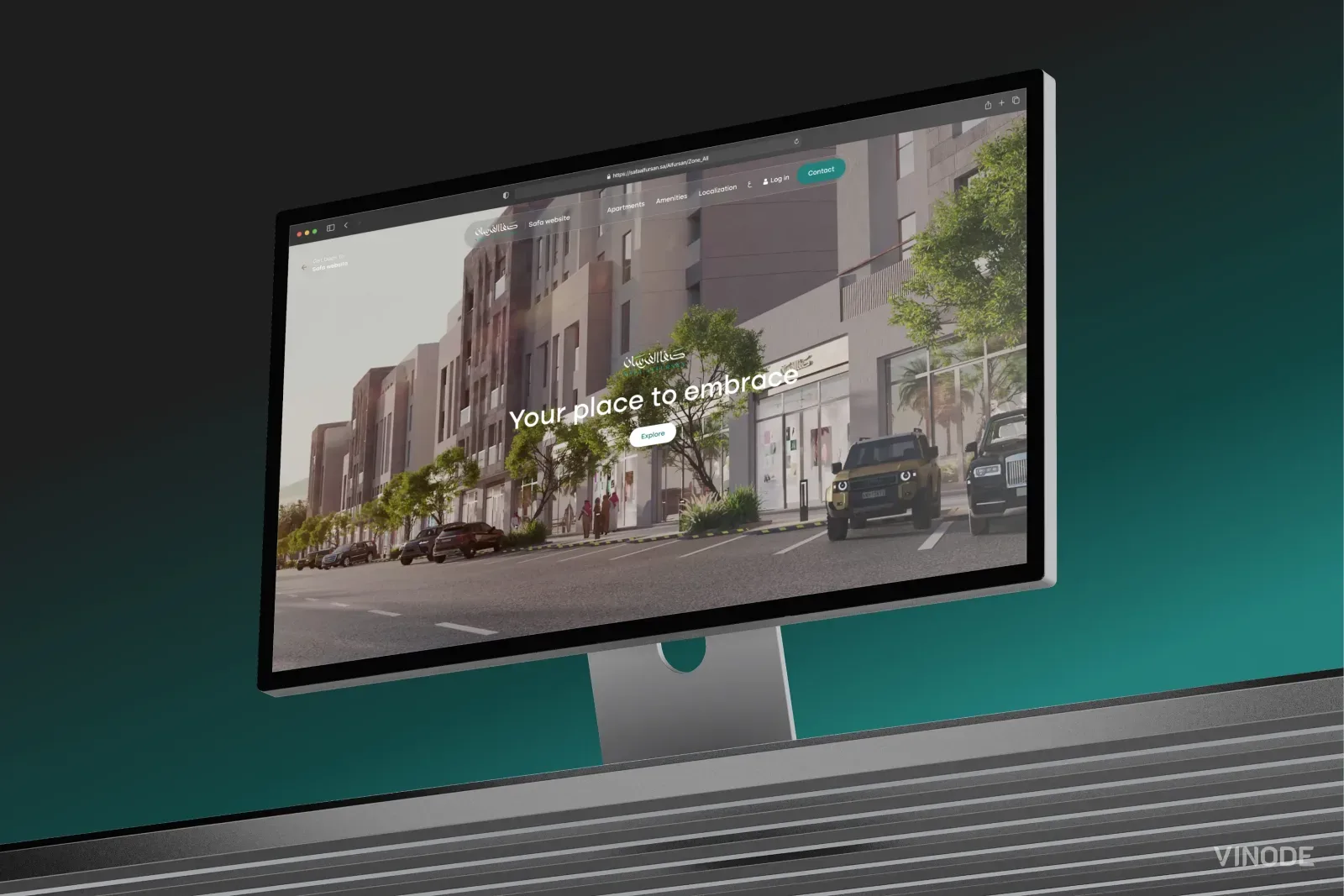
How I sold a 67,000 m² Riyadh masterplan to an investor 5,000 miles away
An investor 5,000 miles from Riyadh, a 67,000 m² masterplan that doesn't exist yet, and one continuous flight from the city skyline down into a single living room. The hard part wasn't the render. It was the seam between the vision and the unit.
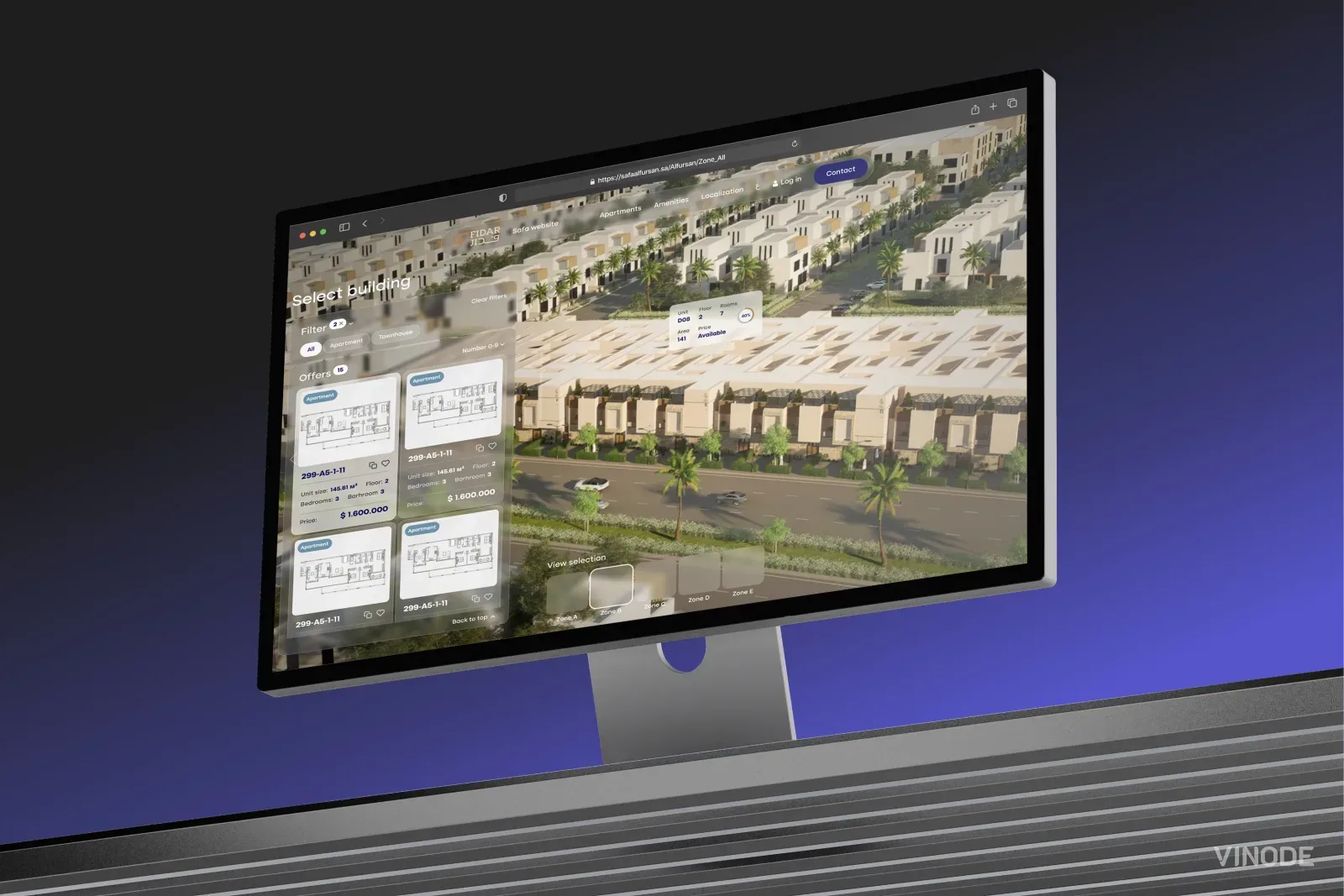
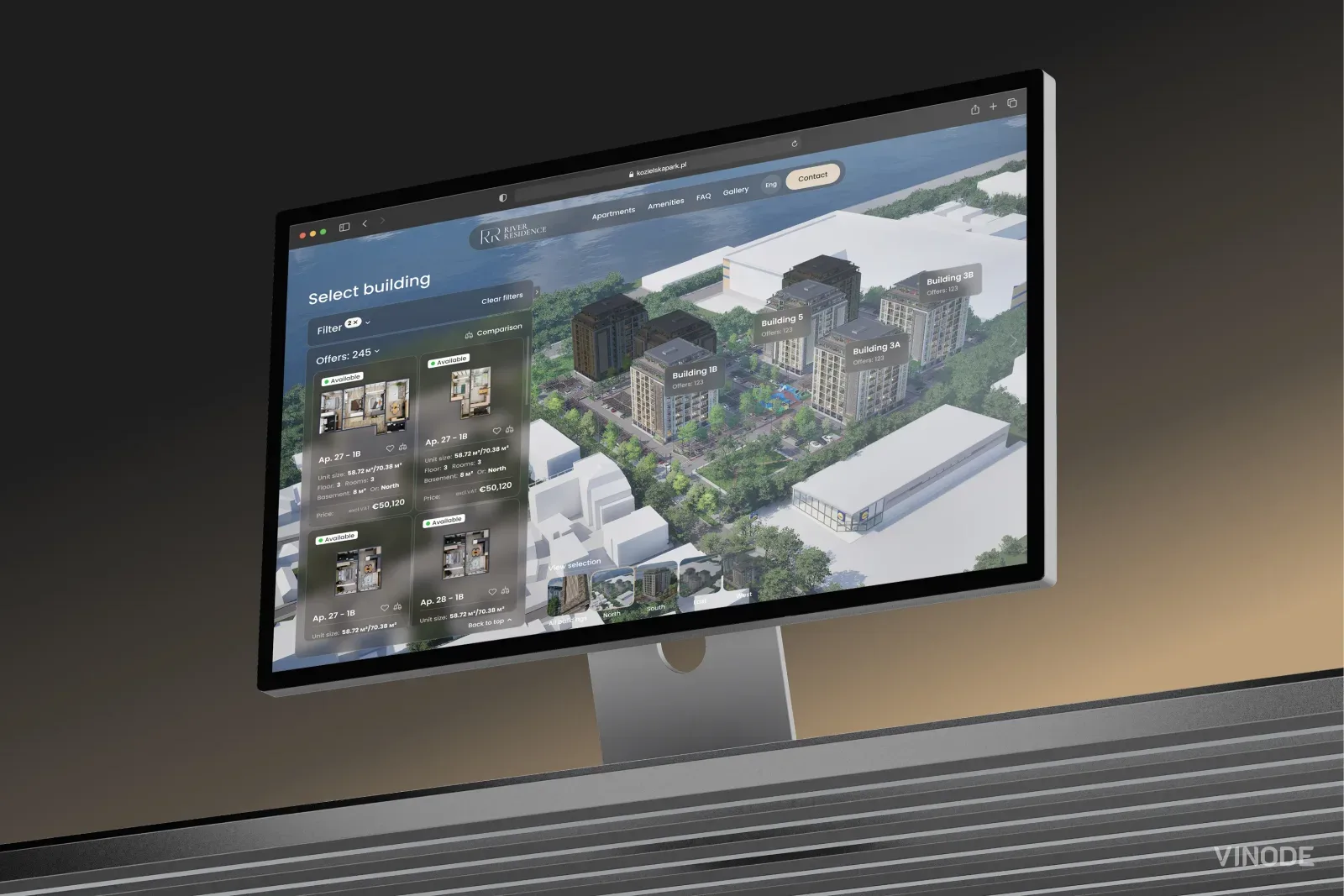
The static PDF floor plan is a dead end: how an interactive sales engine closes the luxury off-plan buyer
A black-and-white PDF floor plan doesn't lose the luxury sale by looking cheap. It loses by being a document when the buyer needs a decision surface. Here is what River Residence replaced it with, and the test I'd apply to your own sales stack.
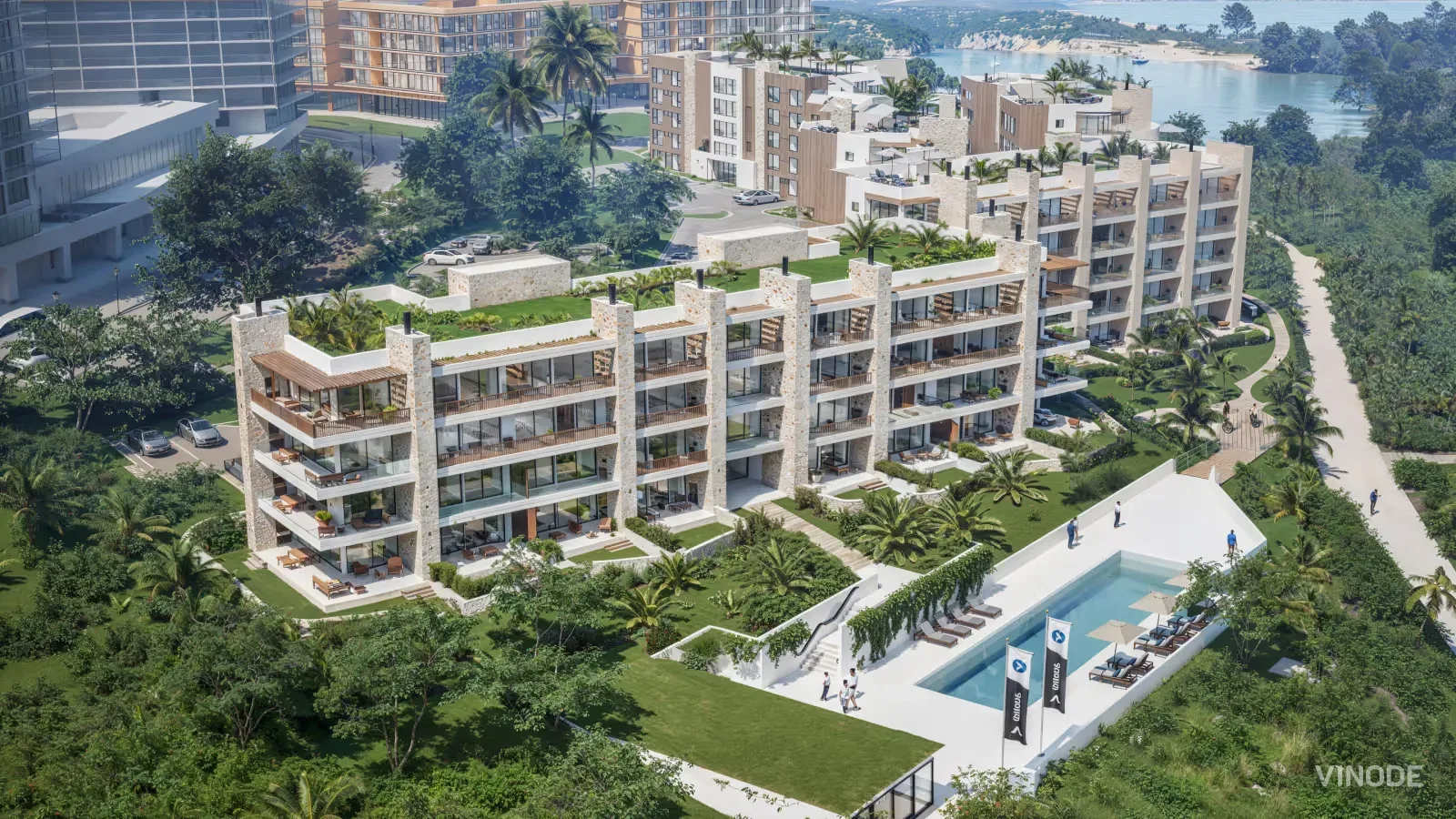
Selling the feeling: photorealism that simulates life
A flawless still can show a buyer the room and still leave them cold, because what sells an off-plan home is motion over time: wind, water, people, and cars, the ambient life a frozen frame cannot carry. This is why atmosphere, more than resolution, closes the gap between a floor plan and a feeling, and why you can only afford that motion when you render it once and stream it as video.
Why signed-off discounts still leak developer margin
Every discount on the unit was approved and the margin still came in under underwriting, because the concession left the price field entirely. Where margin actually leaks on a developer sales team, and how to govern who can give it away.
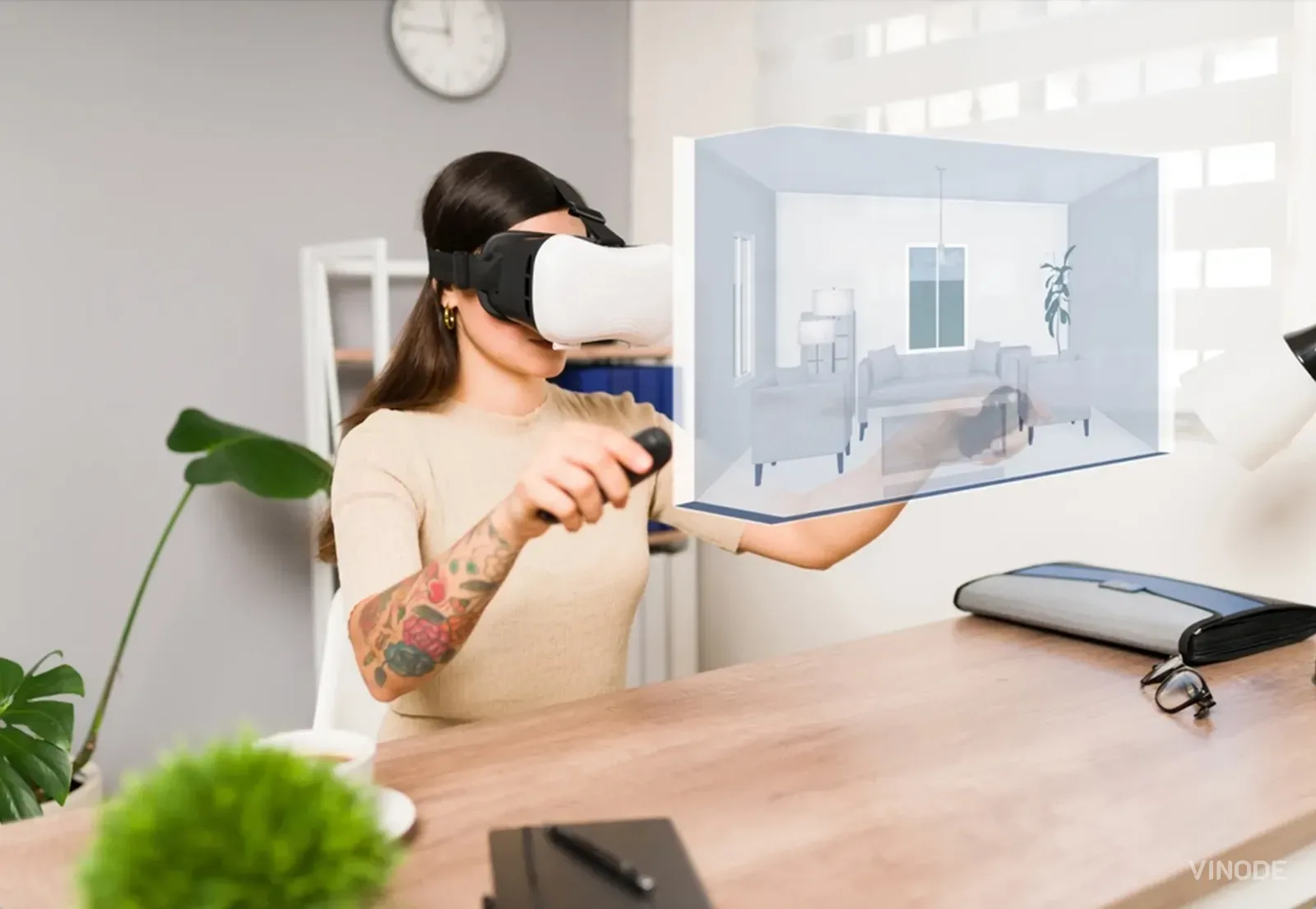
The Importance of Spatial Awareness in Real Estate-Using 3D Rendering to Showcase Not-Yet-Built Properties
3D visualization has transformed how properties are presented and perceived. Here is how immersive 3D house tours improve spatial understanding, emotional engagement and decision-making, and why that helps developers and agents sell.

How We Utilize Unreal Engine to Create Architectural Visualizations for Real Estate
Unreal Engine is no longer limited to game development. In this article, we explain how Unreal Engine 5 supports advanced architectural visualization and real estate marketing.
Technical Vinode Updates for Better Performance
This article outlines the latest technical updates introduced to Vinode, focused on improving performance, usability and cross-device compatibility. We summarize recent enhancements across the CRM, CMS, UI, 3D layers and browser support to show how continuous development translates into a smoother user experience and more effective real estate presentations.
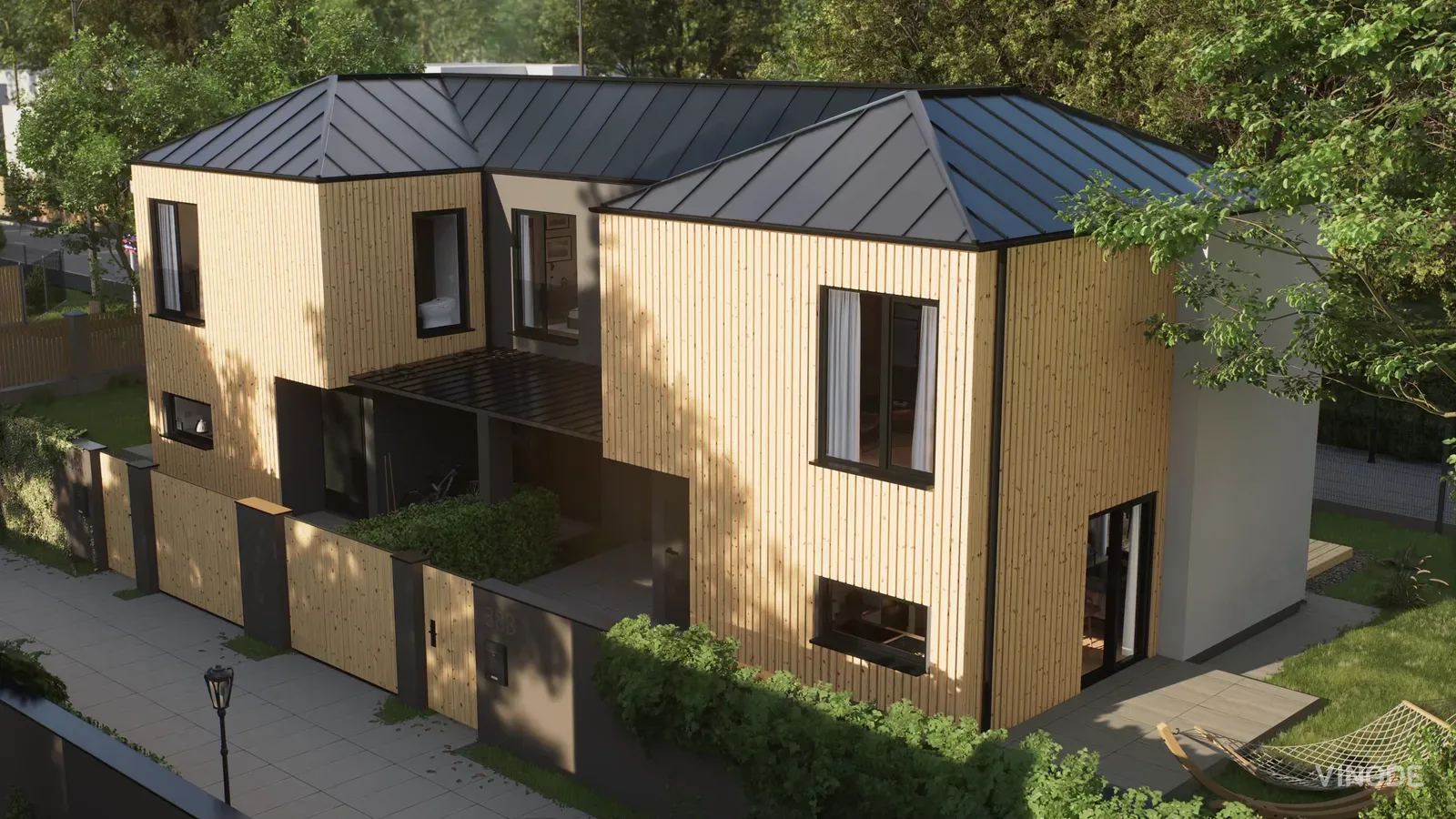
Archviz Web App-Realistic Rendering, Website Performance and Photorealism
3D web applications are becoming an increasingly important tool in real estate marketing. This article explains how performance, photorealistic rendering and optimized 3D delivery influence user experience, brand perception and sales effectiveness.

Visual Marketing-Next Generation Sales Experience
Visual content plays a key role in how users understand and evaluate real estate offers. In this article, we explain why 3D content outperforms traditional visuals, how spatial awareness influences decision-making, and why interactive 3D solutions have become an effective marketing tool in the real estate industry.