
The static PDF floor plan is a dead end: how an interactive sales engine closes the luxury off-plan buyer
Key Takeaways
- A static floor plan fails the remote luxury sale because it presents but cannot respond, turning every buyer question into a slow human handoff.
- Judge any sales tool against three jobs a document cannot do: live availability, buyer-driven pricing of their own unit, and attribution of who wants what.
- River Residence handed buyers a 3D configurator for their package, plus a personal brochure they generate themselves with current numbers.
- Below six units, a custom configurator is more tool than the sale requires.
A buyer in another country opens the brochure your sales team just emailed. It is a tidy PDF: a black-and-white floor plan, a hero render, a price list from three weeks ago. Within a minute she has three questions the file can't answer. Is this exact unit still available. What would her version cost, with the corner parking space and the premium kitchen. Can she picture the apartment in her own taste rather than the one the render happened to pick. So she replies to the email and waits. Someone checks an availability spreadsheet, prices the add-ons by hand, and sends a follow-up the next morning. By then the moment has cooled, and a second development is already in her inbox.
That is the real failure of the static floor plan, and it has nothing to do with how it looks. The problem is categorical. A PDF is built to present. This sale needs something the buyer can act inside, and a document can't be that no matter how well it is designed.
Why a nicer PDF doesn't fix it
Start with what you'd actually be optimising. Redesign the file all you like and it stays a document: it can present, but it can't respond. Every question it raises and leaves open becomes a handoff to a human, and every handoff is a place a time-poor, remote, high-net-worth buyer drops out.
Walk the three questions from the top. Is this still available becomes a salesperson checking a spreadsheet. What would mine cost becomes a manual quote assembled from an add-ons sheet. Can I picture it in my taste becomes an apology that the render is the render. Three questions, three round-trips, three chances to lose the deal. Removing those round-trips is the real win, and it is also what "give the sales team their time back" means in practice: fewer manual replies to write, real hours returned to the day.
And this isn't fringe demand for detail. In the National Association of Realtors' 2024 buyer survey, floor plans ranked as the third most-wanted piece of online listing content, behind photos and detailed property information (NAR, 2024 Profile of Home Buyers and Sellers). That is the broad US market, not the luxury off-plan niche, where the appetite for detail runs higher still. Buyers are asking for the floor plan online, and serving it as a dead file wastes the highest-intent moment you get.
The three-jobs test
Here is the test I now apply to any sales tool, before I care what engine renders it. Set it against the jobs in the box below: availability, configuration, attribution. A static document fails all three by its nature. A snapshot goes stale the day a unit sells, a document can't do arithmetic on the buyer's choices, and a download tells you nothing about who took it.
Apply it to your own stack rather than to a feature list. Wherever your current tool fails one of the three, that gap is where deals leak.
The three-jobs test
- Availability: it shows what's still for sale, live, with sold units dropping out on their own.
- Configuration: the buyer builds and prices their own version (parking, finishes) on screen.
- Attribution: you know who wants which unit, instead of the download vanishing into a black hole.
What River Residence actually replaced
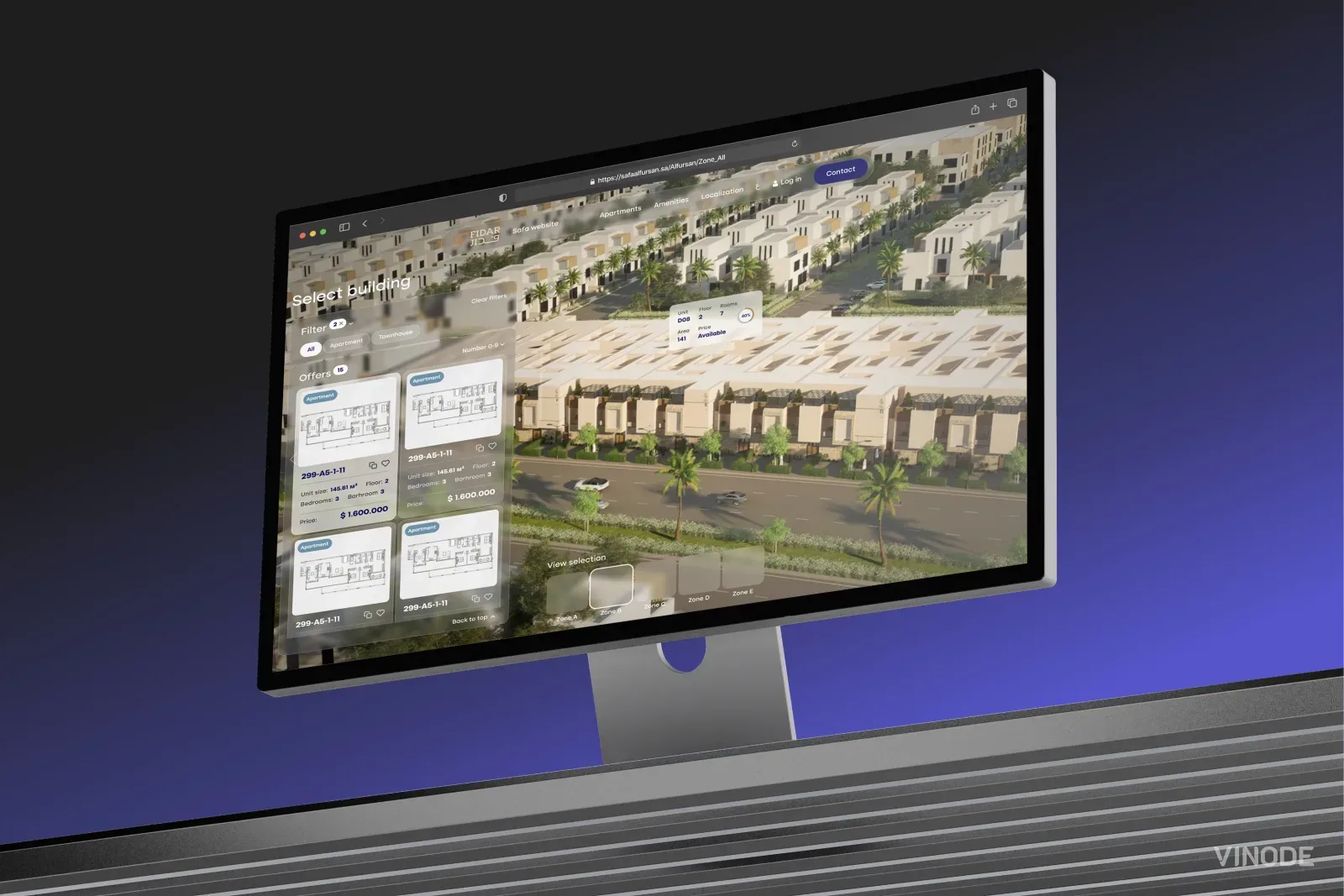
This isn't hypothetical. On River Residence, a luxury development we built for the client Rubik, we replaced disconnected spreadsheets and PDF forms with a single integrated configuration tool. While a buyer explores their unit in 3D, they customise the package in real time: add parking spots, select premium kitchen furnishings, and review financing options, with full clarity and control inside the app. That took the Excel-and-email workflow out of the buyer's path, and with it the wait that used to sit between every question and its answer.
One unified flow for the unit, the add-ons and the financing - and three curated interior styles switched with a single click.
The configuration part is where the luxury case sharpens. A single render shows one taste. River's buyers change the entire atmosphere of the apartment with one click, across three curated styles: Modern minimalist, Classic elegance, Industrial chic. That matters because a high-net-worth international buyer is deciding on something unbuilt, from another country, often on a phone between meetings. So the whole flow works with one-thumb navigation on mobile, then expands on a laptop for high-resolution detail.
I'll be disciplined about outcomes. What the project showed us was qualitative and real: it shortened the sales cycle by removing friction from the decision, kept buyers exploring the experience far longer than a conventional property site, and lifted how the brand was perceived. No percentage uplift here, because I don't have one worth quoting, and a made-up figure would be worth less than the honesty.
Thanks to the team at River Residence, Borislav Dakov and Viktor Zhekov, for believing in Vinode and bringing this project to new heights.
River's configurator was a custom build we produced for the client. The self-service Visual Unit Configurator, the no-code editor that will let a developer's own team stand this up unaided, is still rolling out, with a broader release planned for Q3 2026. Until it lands, we build and deliver this for you. Pricing stays quote-only, sized to the project.
Don't kill the PDF - make it live
Here's the part that surprises people who assume the argument is anti-PDF. It isn't. The problem was never the file format. It's that the file is frozen the moment it's exported, and a luxury off-plan sale keeps moving after that. Buyers still want something to save, forward to a partner, and open on the flight home.
So the right output is a one-click, per-unit brochure the buyer generates for themselves while they explore: their selected unit, the current price, the floor plan, and the preferences they just configured. It is still a PDF. What changed is the engine behind it, so the document comes out correct, personal, and current every time it's generated. You keep the artifact buyers actually want to save and forward, and the fixed handout stops having to stand in for a live decision.
The cost nobody puts on the invoice: attribution
If I had to name the static PDF's worst cost, it's the missing data. A downloaded brochure is a black hole. You don't know who has it, which unit they lingered on, or whether they're still warm. A connected sales engine captures the lead from the form, links it to the contact, records the units they viewed and the time they spent, and attributes a submission through to the deal and the unit it concerns. That is intelligence a downloaded file can never hand back.
I'll say the unfashionable part plainly: the 3D sells the meeting, but attribution is the half that pays the tool back. A beautiful configurator that still drops its leads into an untracked download has kept the exact failure the PDF had. Build the data plumbing before you polish the pixels.
The live-inventory half of this is a topic on its own. I've argued the single-source-of-truth case for availability separately, and if attribution is your weak point, lead forms that actually convert is the companion read.
When a full sales engine is overkill
One honest boundary. For a genuinely boutique project, say six units or fewer, a bespoke configurator can be more machinery than the sale needs. The buyer set is small, a broker sometimes already has them by name, and smart filters plus a dynamic brochure will beat a static handout without the cost of a custom build. The failure mode I'm describing is narrow: making a static document the decision surface for a high-value, remote buyer who needs to check availability, price their version, and imagine it in their taste before they'll act. The cards below sort which tool that leaves for which moment.
Which tool fits the moment
A static PDF still earns its place
A cold-audience teaser, a print leaflet for a physical sales office, or the saved artifact a buyer keeps after configuring. Low intent, offline, or a keepsake: here the document is doing document work.
You need the engine when
The buyer is remote, high-value, and committing to a home that doesn't exist yet. They need live availability, a way to configure and price their unit, and a brochure they can generate themselves without waiting on a reply. Nothing static covers that.
Count your handoffs
Don't take my word for the diagnosis. Map your own off-plan buyer journey and count the handoffs: every "let me check availability," every "I'll price that up for you," every "I'll email the brochure." Each one is a place the buyer waits, and waiting is where remote luxury buyers cool off. Then mark the ones the buyer could do alone if the tool let them, because that count is your leak.
The goal was always the same: hand the buyer the decisions, and hand your sales team back the hours they spend answering questions a live experience answers on its own. River Residence is what that looks like when the document becomes an environment. If you're selling off-plan to buyers you'll rarely meet in person, the remote-buyer playbook and the configurator UX write-up are where I'd go next.
See what replaced the spreadsheet
Walk the River Residence experience, or tell us about your development and we'll scope a custom quote.

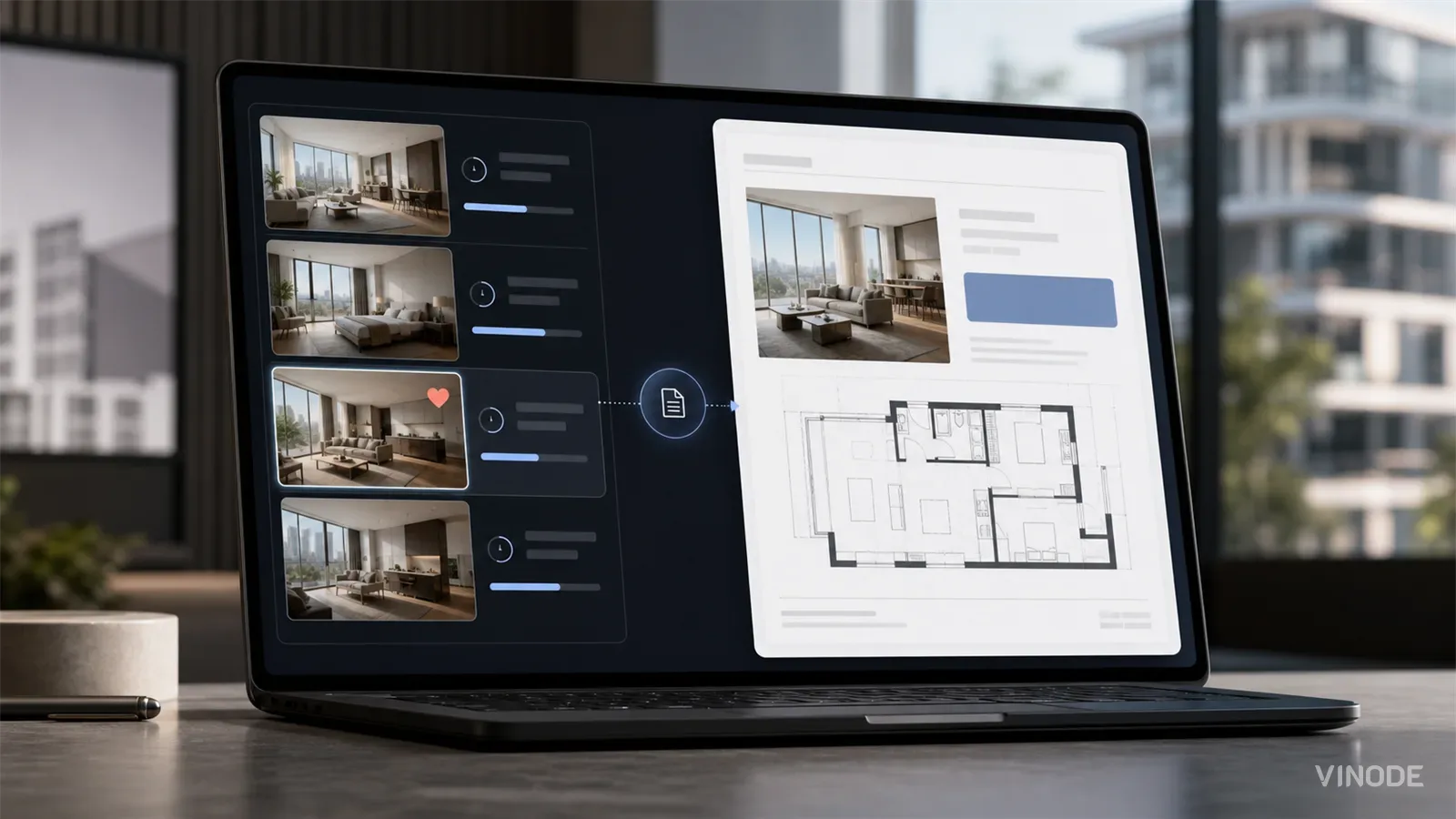
The Unit-Specific PDF a Buyer Actually Asked For
A buyer spends nineteen minutes on one two-bed, saves it, and gets the forty-one-page development brochure the next morning. Once a sales platform records the unit a buyer chose, the generic brochure becomes a decision to ignore that choice.

Expression of interest before release day: capture unit demand
640 names and no idea which side of the building they want. An expression of interest campaign pays off when the form is joined to the units each buyer explored, and each of these checks has a pass, a fail and a cost.

We measured when a pipeline crosses the presale line, not just whether it will
When GTHA opening-quarter absorption averaged 66%, the sold percentage was enough to forecast a presale crossing date. Then absorption fell to 17%. Three pipeline inputs produce the crossing date your lender asks for: stage-conversion rates, a cancellation haircut, and remaining inventory.