
Selling the feeling: photorealism that simulates life
Key Takeaways
- Past a point, more resolution adds nothing a buyer can feel; a flawless still can still read as dead.
- Wind, water, moving people, and cars are the four things that turn a modelled building into a place someone lives.
- Rendering once in Unreal and streaming the result as video lets a cheap phone simply play the motion, so a full project loads fast and works offline.
- Motion makes a good location felt earlier, but it does nothing for a weak site and can make buyers trust the render less.
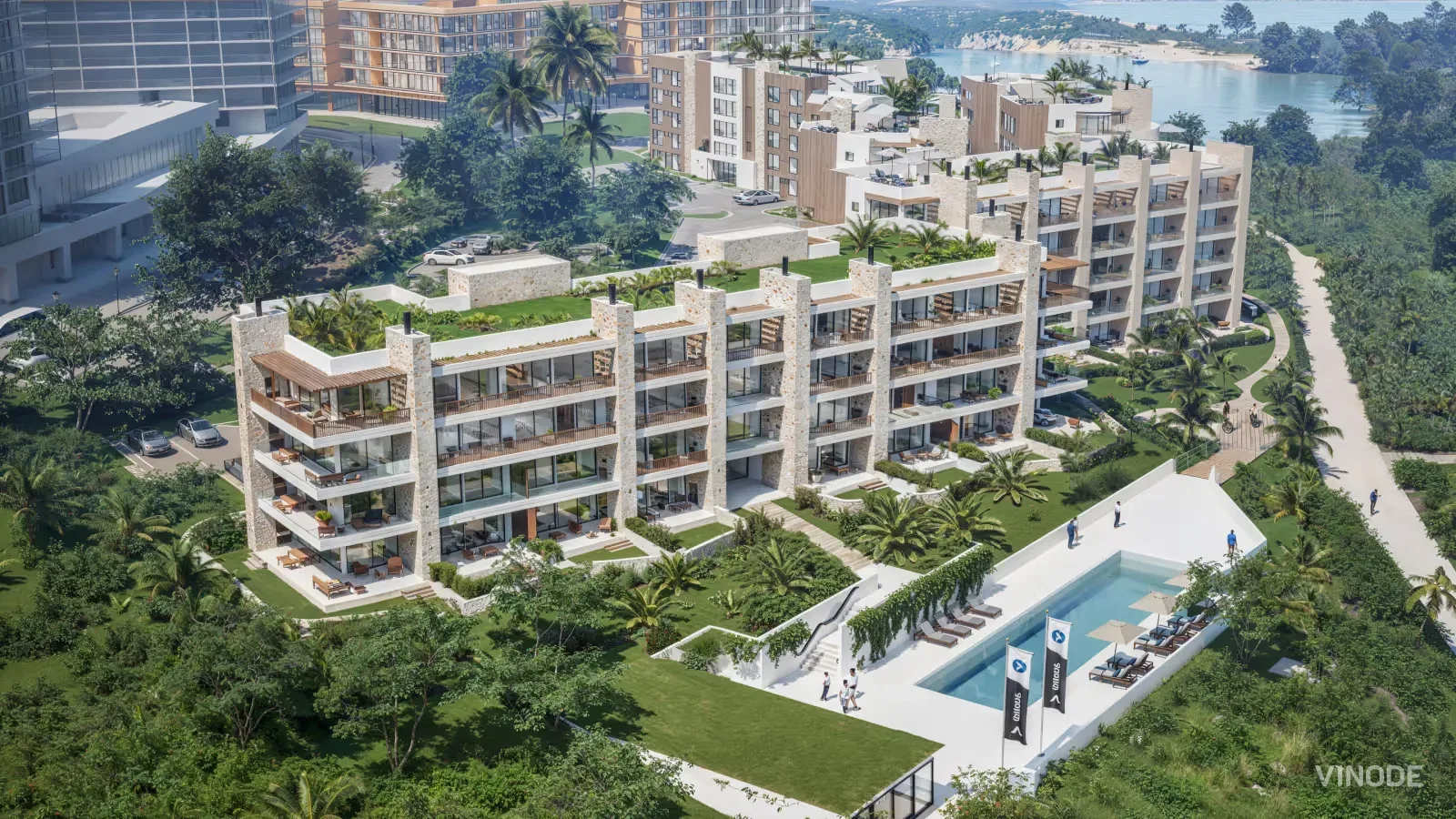
A buyer opens your off-plan listing on their phone at the kitchen table. The hero render is gorgeous: sharp glass, warm evening light on the facade, a kitchen island you could photograph for a magazine. They look at it for four seconds and set the phone down. Nothing was wrong with the image. Nothing was alive in it either. The trees stood dead still, the water sat like poured resin, and the streets were empty of anyone who might actually live there. They were shown a building. What they came looking for was a sense of the life inside it, and a single still image cannot hand that over.
We don't buy concrete and glass. We buy the feeling of living somewhere. When the thing you're selling won't physically exist for two years, that feeling is the entire sale, and bridging a technical floor plan to an emotional connection is the hardest job in off-plan real estate.
A perfect still freezes the one thing that sells
Here is the reframe that changes how you brief a render. Photorealism is not a quality dial you turn up until the sale happens. A still can be flawless and still feel dead, because the felt quality of a place is not held in any single instant. It lives in time passing: light shifting across water over a minute, a branch moving in wind that was moving before you arrived, the sense that the neighbourhood was living its own life whether or not you were watching.
My trade has a word for the deliberate population of a scene with that kind of life: entourage. People, vehicles, vegetation, the small ambient signals that tell your eye a place is inhabited rather than staged. A good still can imply all of it. Only motion proves it, and no amount of resolution changes that. If you want the case for what a great still genuinely can do, we made it in photorealism that sells real estate. This piece is about the part a still leaves on the table.
The four things we make move
When we build a project on Vinode, my first question to the team is never how photoreal the geometry is. I'm asking what is alive in the scene. On our work that comes down to four things we deliberately animate, and I would defend each one as doing real sales work.
Wind moves through the trees, so the greenery reads as a living setting instead of a landscape architect's diagram. Water ripples and throws shifting reflections onto a ceiling, the kind of detail that tells a buyer this is a room light actually behaves in. People walk and talk through the common areas, which gives the space human scale and the quiet suggestion that others have already chosen to live here. Cars move along the approach roads, so the street feels like a place with its own comings and goings.
Each of those is a signal your eye reads before your conscious mind writes a sentence about it. Stack them together and a scene shifts from 'a building was modelled here' to 'a life is happening here.' In off-plan that shift is the sale, so ambient life is a line item, and it should be priced into the brief from the start.
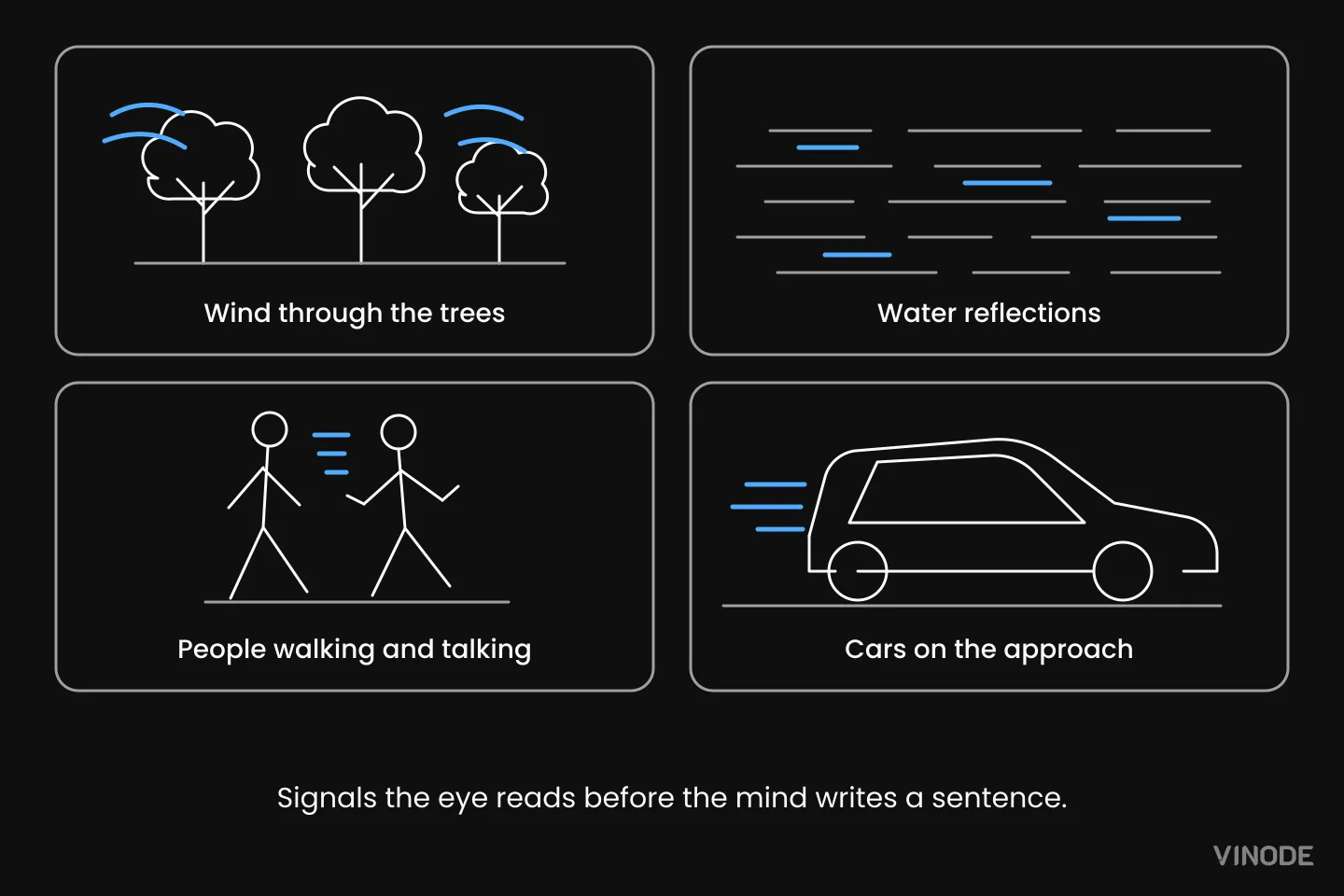
Brief a render on what moves and why. The pixels stopped being the differentiator years ago.
The tradeoff you think you're stuck with
Most teams believe they have to choose between two poor options. Either a still image that loads instantly and never moves, or a moving experience that loads slowly, drains the battery, and looks different on every phone it opens on. That choice is real if you only know those two. There is a third, and it is the reason the previous section is even possible.
Here is the honest contrast, by approach rather than by brand.
Three ways to deliver 3D, and what each costs you
Static renders and virtual staging
Sharp, light, and completely frozen. You can decorate a still with AI-inserted furniture, but you can't make wind blow, water ripple, or a car actually cross the frame. A decorated photo is still a photo.
Real-time in the browser
Moves and reacts, but computes every frame on the buyer's device. Vinode's own comparison puts in-browser WebGL near 6 seconds to load and in-browser Unity near 12 seconds, with battery and quality costs on phones and results that vary by handset.
Pixel streaming
Full real-time fidelity, streamed from a cloud GPU. The catch is that it rents a live graphics GPU for every concurrent viewer, with startup latency and quality that drops under load.
That last cost is easy to underrate until you price the hardware. Google Cloud lists one NVIDIA T4 GPU at $0.35 per GPU-hour on-demand in us-central1 (Iowa), as of 3 July 2026 (Google Cloud GPU pricing), and pixel streaming needs one of those running for every person watching at once, so a launch-day traffic spike arrives as a bill. We work through the delivery mechanics in pre-rendered 3D beats real-time and pixel streaming vs pre-rendered 3D.
If your whole audience will experience the project on one machine you control, a gaming laptop in a sales suite, real-time is perfectly good and sometimes better. The trouble only appears the moment the experience has to survive the cheapest phone a real buyer owns. Match the delivery to where the buyer actually opens it, not to the demo you give on your own hardware.
Why we can afford to simulate life
Motion is affordable on Vinode because of when we compute it. Atmosphere is expensive to render, so we render it ahead of time. A project is pre-rendered once, primarily in Unreal Engine, at whatever cinematic quality the scene deserves, and then streamed to the buyer as video. The wind, the water, the people, and the cars are all finished before anyone opens the link. The phone in the buyer's hand never simulates any of it; it plays a video, which even a low-powered handset does easily.
That is what lets the same experience load in about two seconds, run on a cheap phone, and keep working offline as a kiosk on a showroom floor with no internet at all. It holds at scale too, from a handful of units up to estates of 500 and more.
On an ordinary phone, because the atmosphere was rendered once, ahead of time.
We've carried this across very different kinds of place. Kozielska Park, an urban development in Katowice, where street life and greenery are the atmosphere. Tropical Mirage Bayahibe on the Dominican coast, the kind of waterfront where a moving water reflection earns its place rather than showing off. +Colonia, a 515-hectare smart-city masterplan near Colonia del Sacramento in Uruguay, large enough that ambient life is what keeps the scale from reading like an empty model. Safa Al Fursan, luxury residential in northeast Riyadh, sold largely to buyers who will never stand on the plot before they commit. Four very different projects, one capability underneath: the life is rendered once and travels everywhere the buyer opens the link.
The commitment happens before the show-home
Here is why I treat atmosphere as a purchase driver in its own right. In off-plan, the emotional decision does not wait for the show-home. It happens the first time a buyer can genuinely picture their evenings in a place, and if you can deliver that feeling on the phone in their pocket, you have moved the decision earlier in the funnel, before a single viewing is booked. That changes how the sale runs. Momentum starts building while the competing listing is still a static gallery the buyer scrolled past in four seconds. For an overseas buyer who cannot fly in to walk the neighbourhood, that phone screen may be the only chance the atmosphere ever gets to land, which is why we wrote about that audience specifically in selling off-plan to remote overseas buyers.
There is an honest limit worth stating plainly. Simulated life amplifies a place worth feeling, and it cannot invent one. Where the location is the weak part of the pitch, animating the trees will not rescue it, and a buyer who senses the atmosphere is carrying the whole pitch ends up trusting the render less. Ambient life lets a good place be felt early. For a place with little worth feeling, it does nothing, so the honesty of the render matters as much as its beauty.
Brief the life, then choose a delivery that carries it
The next time you commission a sales experience, change two habits. Ask your visualization partner what moves in the scene and why, then write simulated life into the brief as a named deliverable beside the geometry. And pick a delivery method that can actually carry that motion to the cheapest phone your buyer might use, offline if the sales suite needs it, without renting a GPU per viewer to do it.
Treat those as one decision. You can only sell the feeling if the feeling reaches the buyer intact, and you can only afford to simulate life when a phone is not being asked to render it live. We aren't visualizing a building. We're letting a buyer feel the atmosphere of a home that does not exist yet, on the device already in their hand, the ambient life a frozen frame could never carry.
Feel it on your own phone
Open a live Vinode project on the worst phone you own and watch what moves.

The Unit-Specific PDF a Buyer Actually Asked For
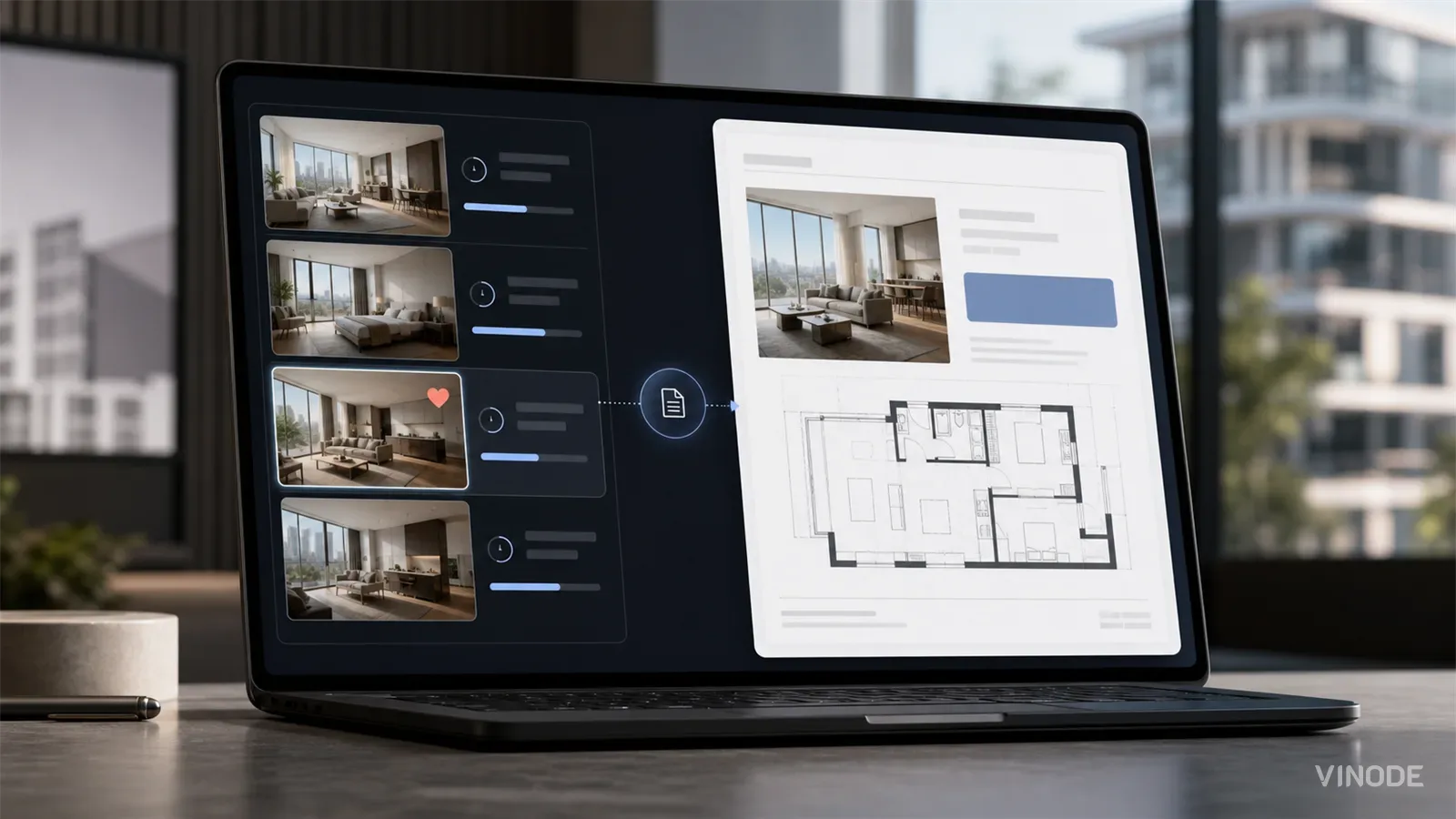
A buyer spends nineteen minutes on one two-bed, saves it, and gets the forty-one-page development brochure the next morning. Once a sales platform records the unit a buyer chose, the generic brochure becomes a decision to ignore that choice.

Expression of interest before release day: capture unit demand
640 names and no idea which side of the building they want. An expression of interest campaign pays off when the form is joined to the units each buyer explored, and each of these checks has a pass, a fail and a cost.

We measured when a pipeline crosses the presale line, not just whether it will
When GTHA opening-quarter absorption averaged 66%, the sold percentage was enough to forecast a presale crossing date. Then absorption fell to 17%. Three pipeline inputs produce the crossing date your lender asks for: stage-conversion rates, a cancellation haircut, and remaining inventory.