
3D Visualization for Property Developers: What to Commission at Each Stage

Key Takeaways
- 3D visualization is really five separate purchases spread across a development's two-to-four-year timeline, each commissioned at a different moment.
- Land acquisition and planning need accurate massing and context; photorealism there is polish spent early and wasted.
- Most developers commission the photoreal set too soon, so it ages before the units reach the market and has to be reshot when the spec changes.
- Before launch you buy assets that age; at launch you need a system that stays current, which is why a per-render quote and a per-unit quote measure different things.
A development director sends one line to three studios: we need 3D visualization for the new scheme, please quote. Back come three numbers, priced per image, and the cheapest one wins. Six weeks later there is a set of glossy exterior stills. Eighteen months after that, when the units finally go on sale, the balcony detail in those stills is wrong, the kitchen finish was value-engineered out at technical design, and half the renders are quietly retired before a single buyer opens the page.
The mistake was treating "3D visualization" as one purchase to make once, shortly before selling. A development does not buy visual work once. It buys it perhaps five times, at five different moments across an arc that commonly runs two to four years and stretches further for large or phased estates (Lev, GowerCrowd). Each of those moments answers a different question, is signed off by a different person inside the developer's own organisation, and fails in its own way. The useful decision has little to do with which vendor is cheapest. It turns on which stage you are actually in, which tells you what to buy right now and what to hold off buying.
The single most expensive error in this category is worth naming at the top, because everything below unpacks it: the assets with the shortest shelf life, the photoreal stills tied to specific finishes, are the ones developers buy first and buy most of. So they age before the units are on the market.
A commonly cited baseline of 24-36 months, longer for large or phased estates.
Source: Lev - as of
The axis that matters is project stage
Almost every guide on this keyword sorts the decision by format (exterior, interior, floor plan, animation) or by price. That tells you what a render looks like and what one costs. It leaves out the thing a developer actually needs to know, which is what to buy at this point in the project. We have written the format breakdown elsewhere, in interactive 3D vs virtual tour vs video, so this post takes a different route: the development's own timeline. A scheme proceeds through stages (land acquisition, planning, pre-launch, launch, and what happens after handover), and the visual work each stage needs is a different job, with a different buyer inside the developer's organisation and a different way of failing.
That is the part budgets tend to miss. Visual work gets booked as a single line item near the launch, as if it happened once. In practice it recurs, because a development recurs: a phased scheme loops back on itself and repeats. The neat five-box version is already a little too clean. Real developments blur planning into pre-launch and start marketing before construction ends, so the five behave less like sealed compartments and more like moments that bleed into each other. The point is only that the question changes as you move through them, and so does the right answer.
Five moments, five buyers
Land acquisition
Massing, true height, site context, scheme options. Typically signed off by the development director and investors. Fails by being overproduced.
Planning and consultation
Accurate, verified context that survives scrutiny. Typically the planning consultant and the authority. Fails when a render reads as misleading.
Pre-launch
The first photoreal stills that set the brand. Typically marketing and creative. Fails when it is shot before the finishes are fixed.
Launch
Buyer-facing, unit-level, always current. Marketing and sales jointly. Fails when the website, price list and sales floor disagree.
Post-handover
What is worth keeping current versus retiring. Typically finance. Fails by paying to host a sold-out phase.
This staging logic assumes a multi-unit development moving through planning to a launch over a couple of years. A single completed building being marketed for resale, or a one-off villa, collapses most of these stages into one. If there is no off-plan gap between commissioning and selling, buy the photoreal set and skip the rest of this article.
Stage one: land acquisition and the investor deck
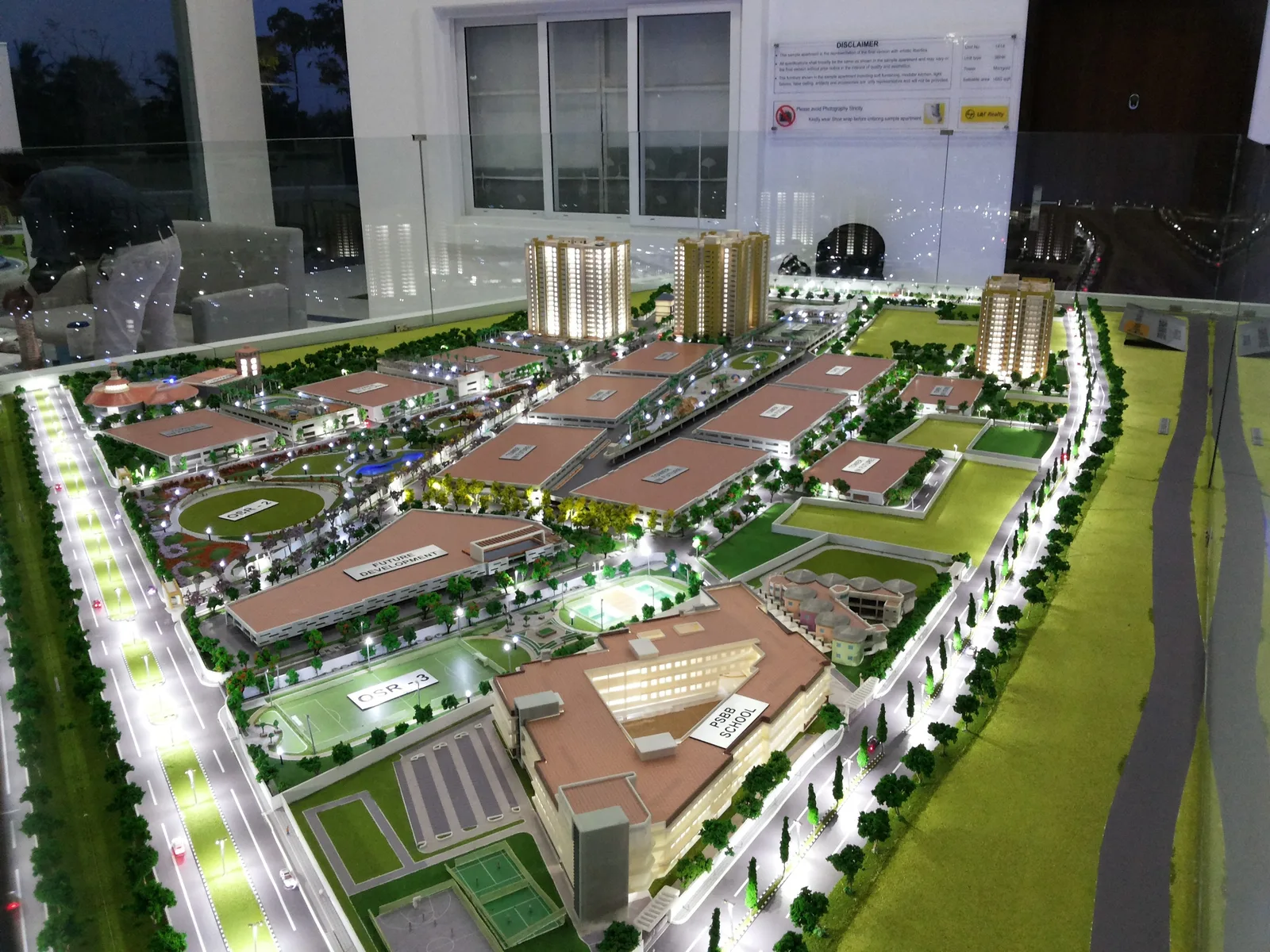
At acquisition the visual work exists to answer money questions: whether the site can carry the massing the scheme assumes, how that massing sits against its neighbours and the skyline, and which two or three options are worth putting in front of the people writing the cheques. Massing, here, is just the building's bulk and shape (its volume and how it meets the ground) before any window, material or finish is decided. As an aside, it is the same word painters and sculptors use: you block in the big masses of light and shadow first and leave the detail for last, and a development deck wants exactly that order, the overall form settled before anyone argues about door handles. Anyway, back to the deck. What convinces an investor at this stage is accuracy about that bulk, the true height and the site context, plus a clear read on the options. A photoreal shot of a lobby that may never get built does nothing to help price a site.
Worse, it sends the wrong signal to a room deciding whether to fund the fundamentals: money is going on polish before the fundamentals are fixed. Overproduction is the failure mode of this stage - a beautiful deck for a scheme that has not earned beauty yet. Buy massing and context; refuse the photoreal. The work that earns its place here is the model that shows the whole site: its phasing, its options, and how it sits in what surrounds it. On Safa Al Fursan in Riyadh we rendered the neighbouring government masterplan into the far view of the scene, so investors could see exactly where the project would sit inside the city's future infrastructure. That is an acquisition-stage argument, the investment context that moves a decision, and accurate massing and surroundings carry it without a photoreal interior anywhere in the frame.
There is a second reason not to overspend here, and it is the one that makes the whole sequence affordable. The 3D model itself is the durable investment; the outputs drawn from it are what change stage to stage. The massing view for the deck, the accurate view for planning, the photoreal stills for pre-launch and the interactive launch experience can all come from the same underlying 3D project rather than from four separate builds. So the accuracy you pay for at acquisition is not thrown away when the scheme moves on. The model is worth paying for early. What to defer while the scheme is still provisional is the expensive finishing pass laid on top of it.
Stage two: planning and public consultation
At planning the visual work changes job entirely. Now it has to survive scrutiny from people who would often rather the scheme were smaller, or gone. This is where the industry distinction between a verified view and a marketing render earns its keep. A verified view (the professional term is an accurate visual representation) is built from surveyed camera positions to a documented method, so that what it shows can be checked against what a person would really see from that spot. In the UK the Landscape Institute's guidance on the visual representation of development proposals sets out how that is meant to be done, and its governing principle is blunt: the image must fairly represent what people would perceive in the field. A verified view shows the building in full context - the neighbours, the streetscape, the trees, the way the new massing changes a sightline. A marketing render is calibrated for aspiration instead: a flattering angle, idealised light, the building floated against a clean sky.
The same studio can produce both, but they have to be briefed as two different things, and the failure mode here is specific and expensive. Bring a flattering render to a consultation and you have handed objectors a gift, because "misleading visualisation" is an argument a committee will hear. A view built to a defensible, documented method gives them far less to hold: they can argue about the choice of viewpoint, but not about whether the picture is honest. So if the internal debate is whether you need photorealistic renders for a planning application, the answer is usually no. Accurate ones are what the application actually wants, and buying the glossy set here is polish spent exactly where it can hurt you.
Stage three: pre-launch and the first photoreal stills
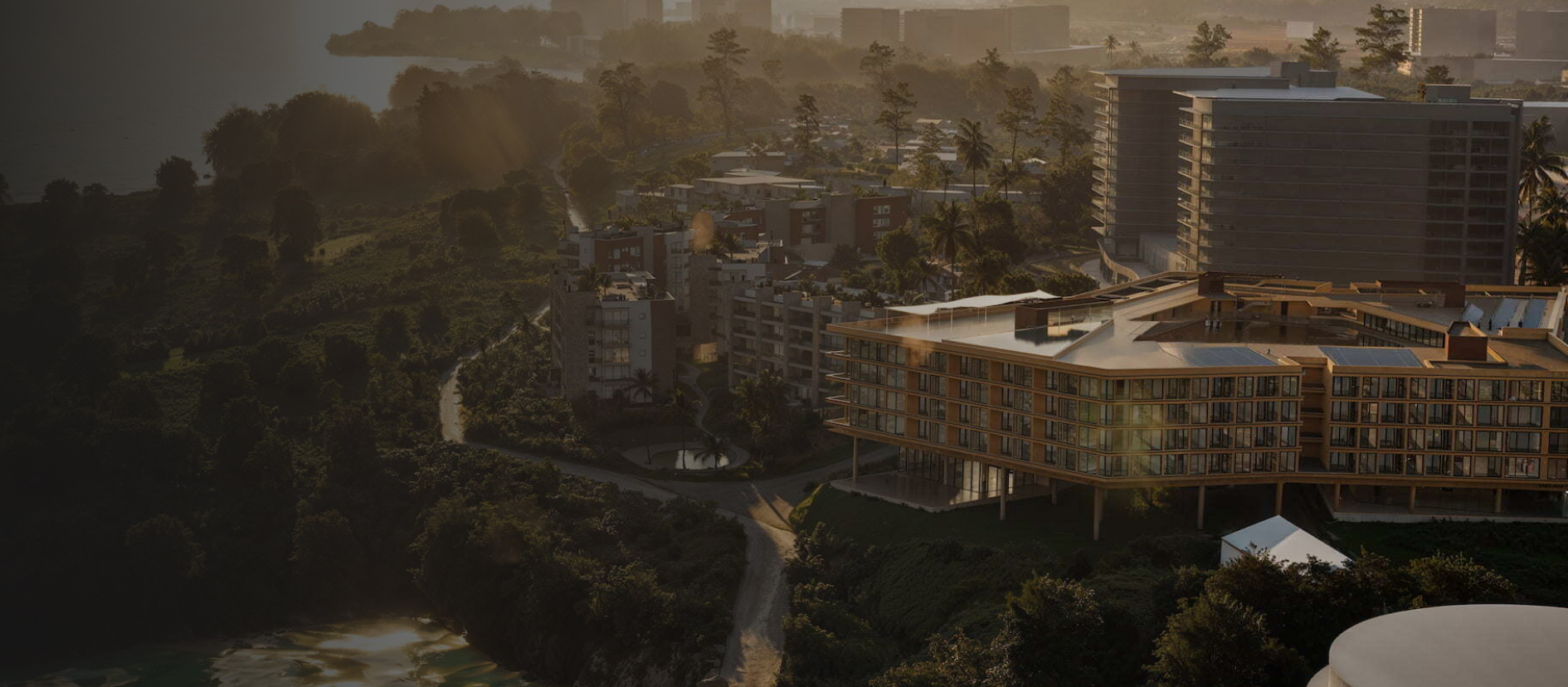
Pre-launch is where photoreal work finally belongs, and where most of the money goes wrong. These are the stills that set the brand and the tone: the hero exterior, the show-apartment interiors, the lifestyle frames. Typically marketing and the creative lead own this stage. The thing to internalise is that a photoreal still is an asset. You buy it once, it is correct on the day it is delivered, and it is stale the moment the plans, finishes or prices move. In an off-plan development, those things move. The kitchen spec gets value-engineered. A balcony detail changes at technical design. A unit type is split in two. Every one of those changes orphans a render that was commissioned to depict the old version.
The cheapest visual programme, then, is the boring one: lock the brief before anyone opens a 3D tool. Fix the finishes, the plans and the price positioning first; commission the stills second. That is not always possible, and I will come back to the case where it is not. But treating early commissioning as the default, rather than as an exception you accept with open eyes, is the single habit that wastes the most money in this category. Before you brief the set, run it past a sign-off process that actually catches the not-yet-locked; the render review and sign-off checklist is the version we use. And if the reason you are commissioning early is that you need something live fast, a two-week launch microsite is often a better answer than a full photoreal set you have already agreed to throw away.
The most expensive render is the one you commissioned before the kitchen spec was frozen.
Stage four: launch, where you stop buying pictures
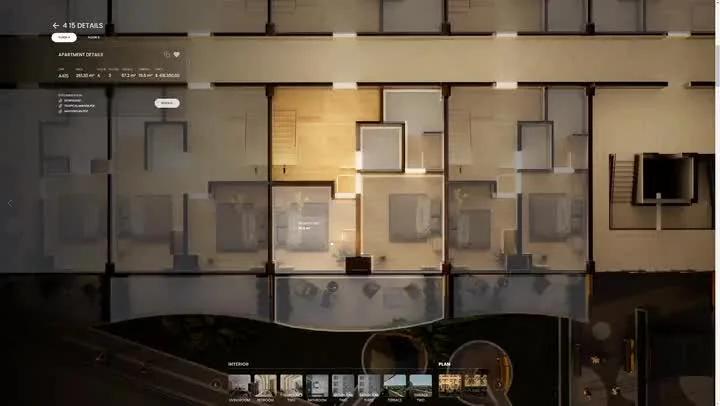
At launch the question stops being what the visuals look like and becomes whether they are true. Picture a modest scheme, forty units rather than five hundred. On Friday afternoon an agent reserves unit 12 on the sales floor. On Saturday the website still lists it as available, because nobody re-exported the page, and a second buyer browsing from overseas puts a holding deposit on the unit that is already gone. Now you are refunding a deposit and apologising in the first week of a launch, and the cause was not a bad render. Every render was perfect. The cause was three surfaces telling three stories: the website, the price list and the sales floor, each updated by a different person on a different clock. More renders do not fix that; the three surfaces have to read from one live source of truth.
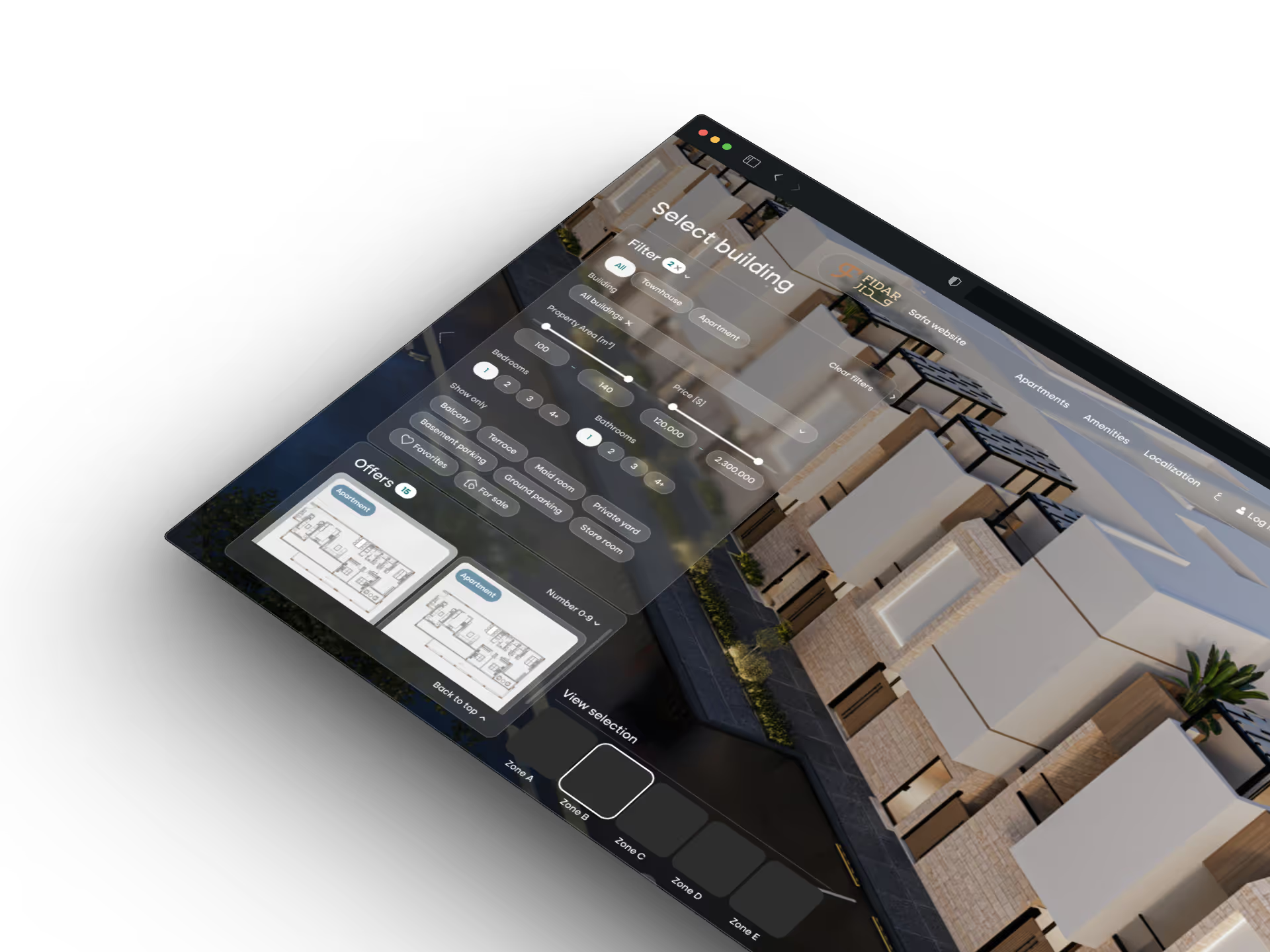
This is the hinge of the whole post. Before launch you are buying assets; at launch you need a system, and a system stays current because it is edited in one place and read everywhere. In Vinode's Back Panel a single status change, a unit moving from free to reserved, propagates at once to the public listing, to the price on the auto-generated per-unit brochure, and to the kiosk on the sales floor, because all three read the same project data. Nobody re-exports anything; nobody has to remember to update the PDF. The three surfaces cannot disagree, because there is only one surface underneath them. And the switch from a stack of stills to that live system is not a re-platforming saga: a productized Vinode build runs roughly two to four weeks and a bespoke one roughly two to three months, because the launch experience is generated from the same 3D project the earlier stages already paid for. If you want the back-office version of this argument in full, we wrote it up as one back office for property developers. The rest of the launch (the channels, the funnel, the lead handling) is its own discipline this post keeps deliberately out of frame; it lives in off-plan real estate marketing. Here the only question is what visual work to buy, and at launch the answer is that system.
Stage five: after handover, what to keep alive
Most guides on this topic stop at launch, as though the development ends when the last render ships. It does not. A phase sells out, and now there is a bill nobody scoped: hosting and maintaining the experience (the renders, the microsite) for units that no longer exist to sell. This is where finance typically becomes the approver, and where the asset-versus-system distinction pays off a second time. The photoreal stills for a sold-out phase are assets you can retire: they cost nothing to stop hosting and they are not selling anything. The system is the part worth keeping current, but only if there is a next phase reading from it.
This is the loop from earlier made concrete. A phased development does not really end; the phase that has sold becomes the starting point for the next release, and the system you built for the first launch is the head start for the second. If your development is a single phase, wind the experience down deliberately once it has sold rather than paying a standing charge out of inertia. If it is phased, keep the system and let it carry forward, and retire the stills whose depicted units are gone. The decision is a finance question wearing a 3D costume: what is still earning, and what is only accruing. A hosting line for a sold-out phase is easy to defer and quietly expensive, the sort of charge nobody notices the way they noticed the render invoice. So decide the wind-down when you plan the launch, and put the end of each asset's working life on the calendar. Left off it, that charge is something you discover in an audit.
Why a per-render quote and a per-unit quote are not the same number
The obvious question here, how much 3D visualization costs, cannot be answered as asked, because it bundles two things that are not priced in the same units. A studio quoting the photoreal set prices an asset by the image: so many exteriors, so many interiors, so many seconds of animation. A platform quoting the launch experience prices a system, by the unit or by the project: the thing that keeps a hundred listings, a hundred prices and a hundred availability states true at once. Put the two quotes side by side and the per-image number usually looks smaller, which is how developers talk themselves into comparing them. Some of that confusion is smuggled in by the word render itself. It is a noun for a single image, and it quietly frames the whole purchase as a countable, priceable stack of pictures - twenty renders, forty renders, pick a number. A launch platform is not a bigger stack of renders; it is a different kind of object that happens to contain some. Keep the word and you keep importing the stack-of-pictures model into a decision where it does not belong, and you end up comparing the price of a photograph with the price of the photograph never being wrong. They are not rival quotes for one purchase.
The cost arithmetic itself belongs elsewhere on purpose. The lifetime-cost argument has its own post, the true cost of ownership, as do the make-or-buy call, build versus buy, and how to judge a vendor once you know what you are buying, the vendor evaluation checklist. The point that belongs here is narrower: when a per-render quote and a per-unit quote land in the same inbox, do not read them as two prices for one thing.
The decision: ask which stage you are in
The next time a scheme needs "3D visualization," resist the reflex to send one brief to three studios and take the cheapest number. Ask a smaller question first: which stage is this development actually in? Acquisition and planning want accuracy and context with the photoreal budget held back; pre-launch wants the stills, once the finishes and prices they depict are locked; launch wants the system. Get the stage right and you have answered most of the question before a single render is briefed.
The complication I promised to come back to is that these stages do not wait for each other. The market window opens when it opens, and sometimes that is before the finishes are frozen, so you shoot early knowing you will re-shoot. Stage-matching is a discipline you keep, and the developers who do it best are the ones who decided in advance which re-shoots they were willing to pay for.
One honest limit, at the point where the system earns its keep. A Vinode launch experience is pre-rendered: the heavy 3D is computed ahead of time and streamed, which is what lets a buyer open it in about two seconds on an ordinary phone and keep using it as an offline kiosk on the sales floor when the venue wifi drops. That reach costs you something real. Pre-rendering fixes what a buyer can do inside the scene at build time, so you give up the free-roam, change-anything-at-runtime interactivity a live game engine offers. For a sales tool I think that is usually the right call, because reach and reliability shift more units than unconstrained camera freedom ever has. It is a genuine trade, and I would rather name it than let the capability read like a brochure. So here is the thing to do tomorrow: before you sign any visual brief, write down which of the five stages the scheme is in this quarter, and have the person who will approve the work put their name on the same line. Almost every wasted render in this category traces back to a brief that nobody stage-checked.
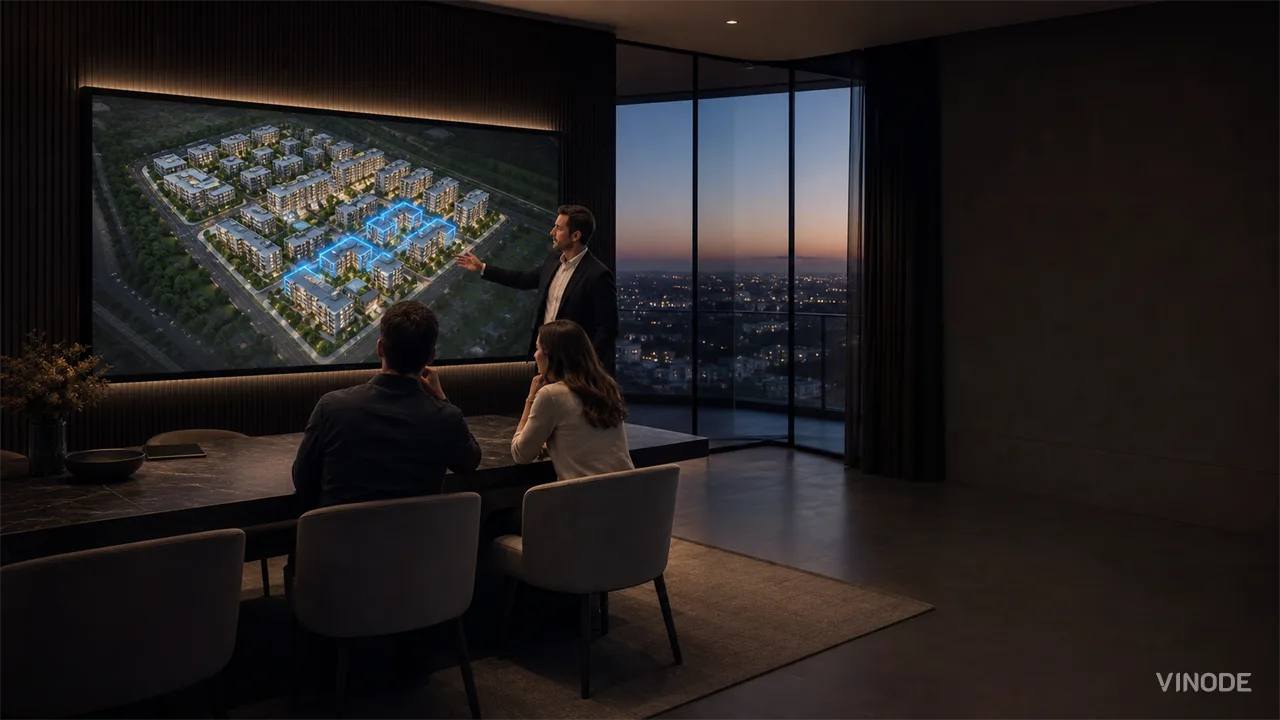
See what the launch system actually looks like
Open a live Vinode project on the worst phone you own, then imagine the price list changing behind it.

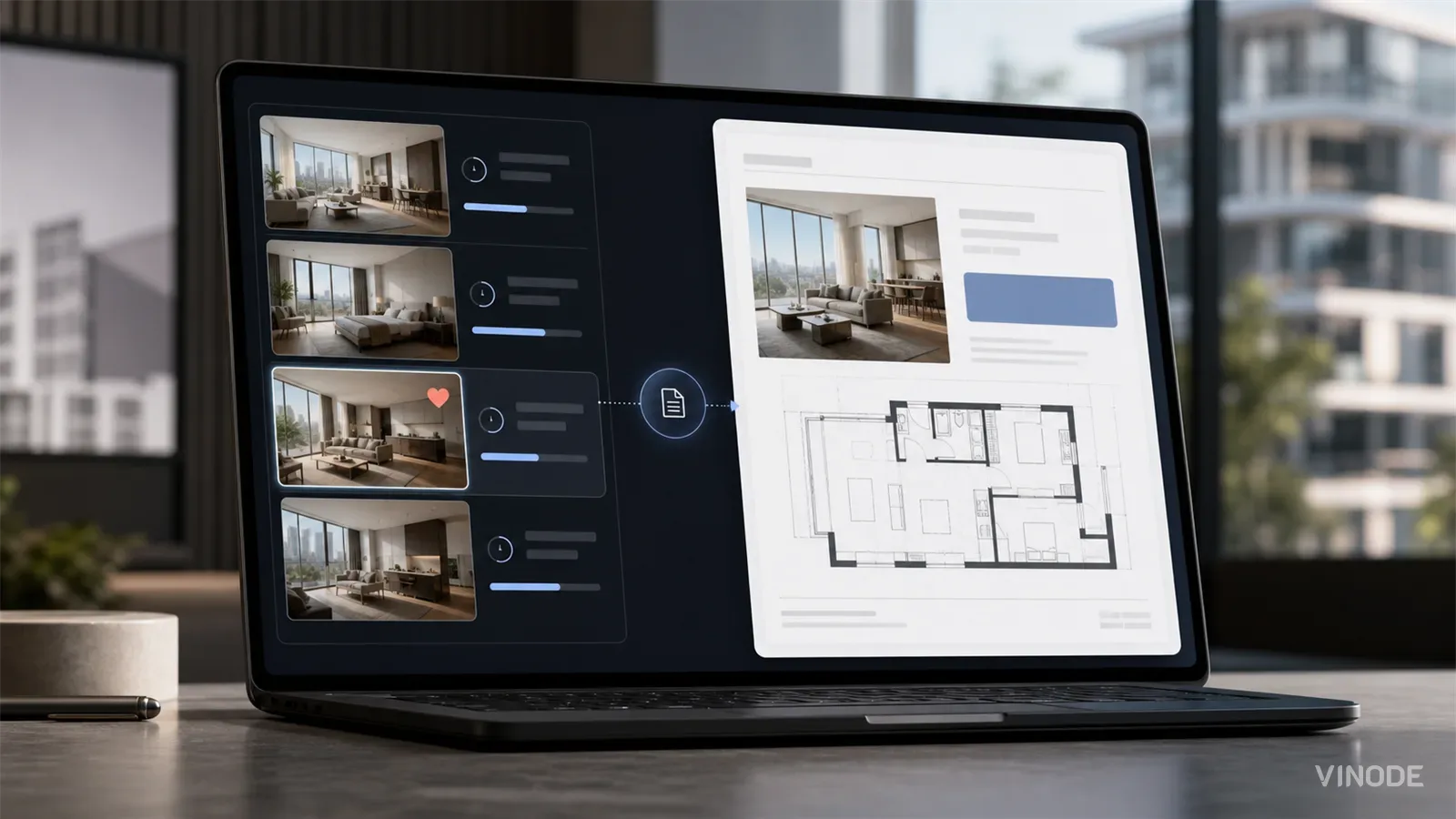
The Unit-Specific PDF a Buyer Actually Asked For
A buyer spends nineteen minutes on one two-bed, saves it, and gets the forty-one-page development brochure the next morning. Once a sales platform records the unit a buyer chose, the generic brochure becomes a decision to ignore that choice.

Expression of interest before release day: capture unit demand
640 names and no idea which side of the building they want. An expression of interest campaign pays off when the form is joined to the units each buyer explored, and each of these checks has a pass, a fail and a cost.

We measured when a pipeline crosses the presale line, not just whether it will
When GTHA opening-quarter absorption averaged 66%, the sold percentage was enough to forecast a presale crossing date. Then absorption fell to 17%. Three pipeline inputs produce the crossing date your lender asks for: stage-conversion rates, a cancellation haircut, and remaining inventory.