
The Unit-Specific PDF a Buyer Actually Asked For
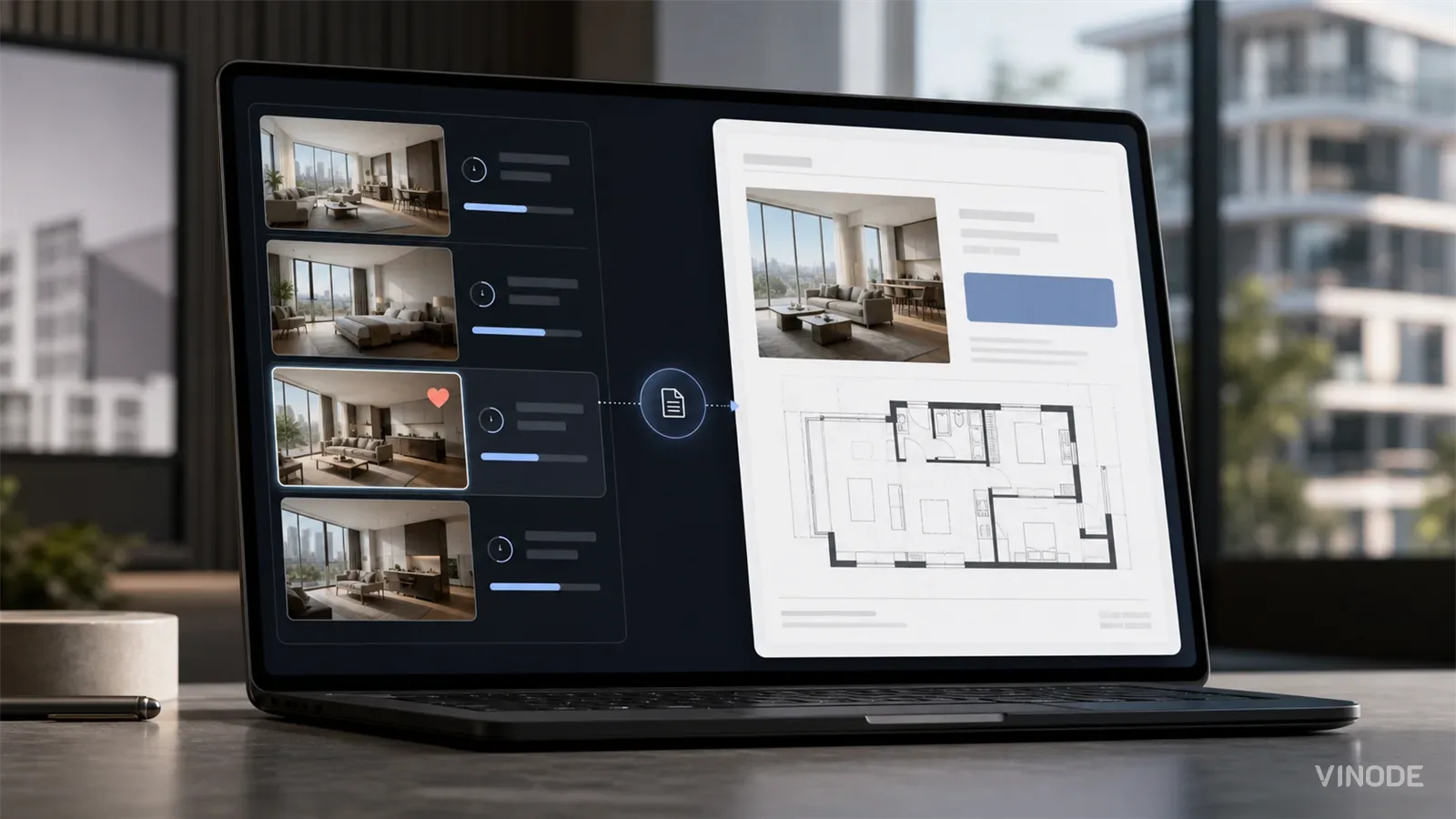
Image co-authored with help of AI for illustrative purposes
Key Takeaways
- When the platform records which units a buyer viewed and for how long, a follow-up that ignores that record tells the buyer the sales team did not look.
- A document generated from the CMS reads the current price at generation, and the exported PDF can go stale after later changes.
- Per-unit PDF generation scales without a designer because it resolves a template against the same live data the website already displays.
A sales advisor at one of our clients copied me in, by mistake I think, on the follow-up she sent a buyer the morning after his visit. The email had the whole-development brochure attached, forty-one pages, every unit type, the lifestyle spreads, the location map. The CRM record I had open for a different reason showed that the same buyer had spent nineteen minutes of a twenty-four-minute session on one apartment, a two-bed on the fourth floor, and had saved it as a favourite before he left. She knew that. It was on her screen. The brochure went out anyway, because sending the brochure is what the follow-up had always been.
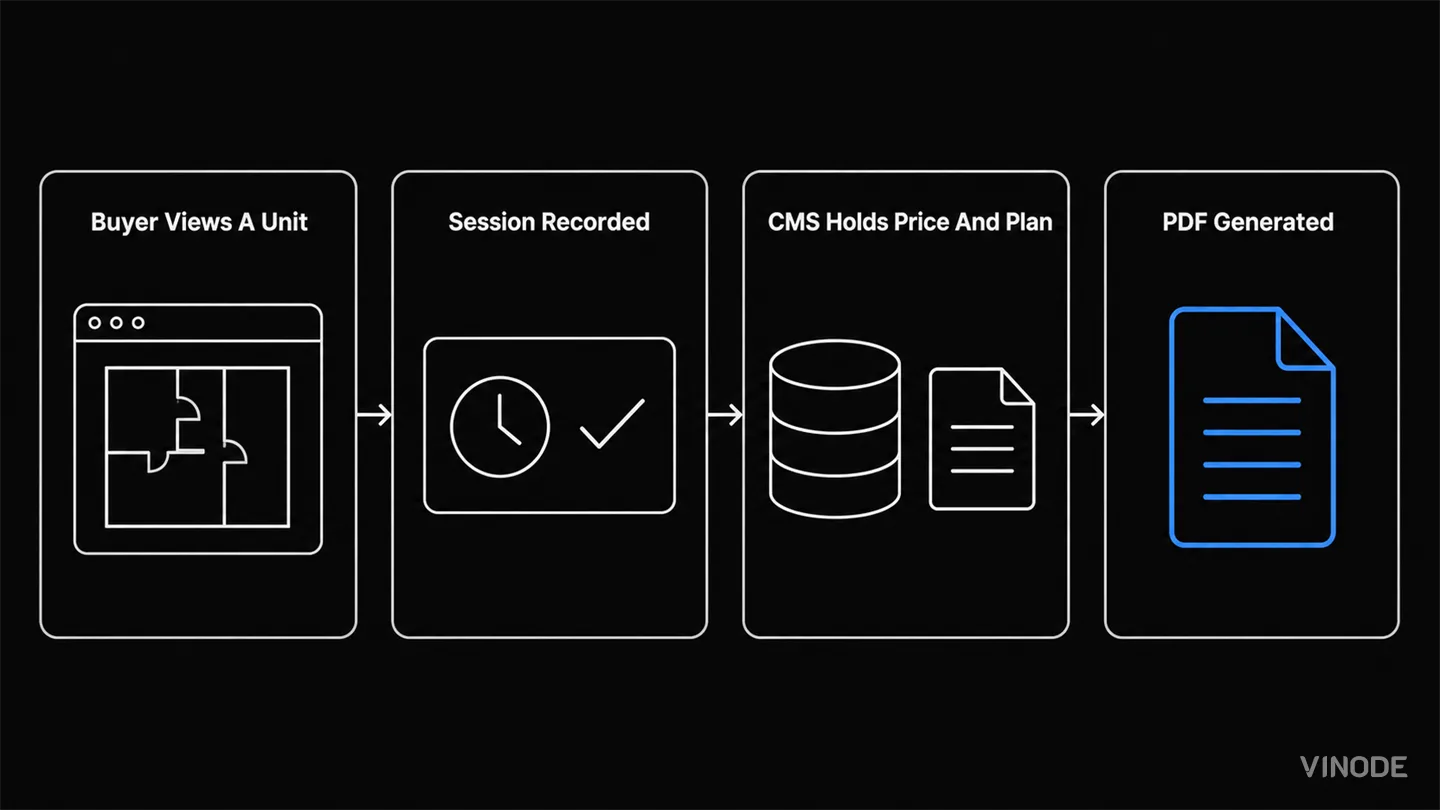
In January 2025, Safa Al Fursan in Riyadh went live with the capability that turns that email from a habit into a choice. The platform records which units each buyer explored, how long they spent on each and which they favourited, and it generates a follow-up document for the exact duplex a buyer selected, populated from live CMS data. Once a sales platform holds that record, sending the whole-development brochure after a recorded session stops being the safe option. It becomes a visible decision to ignore what the platform already knows.
Before session tracking, one PDF for the whole development
Through 2024 and earlier, one brochure per development was the practical default, and it was a reasonable one. A buyer visited the sales office, walked past the models and the plans, spoke with an advisor, and left with a folder covering every unit in the project. The brochure had to be broad because the document system had no reliable signal about which unit had held the buyer's attention. When a price changed, someone re-exported the whole PDF. More often nobody did, and the old file stayed in inboxes carrying numbers that no longer applied. That workflow matched the information available at the time, and I would not call it foolish.
Development websites became unit-level sales surfaces
The old workflow started to fail when buyers began exploring individual units online before they ever contacted sales. Vinode lets a buyer filter by price, floor, size and features, open a specific apartment and save it as a favourite. The CRM records the resulting session: view count per unit, time spent in seconds, favourites, device type, referrer. By March 2026 at Kozielska Park in Katowice, automated PDF generation from CMS data had removed the re-export cycle entirely, with plot data, layout, price, 360 interiors, floor plans and a downloadable house card all sitting in one sales experience.
That is the mismatch that makes the old brochure an active problem rather than a harmless habit. If the CRM logged that a buyer spent nineteen minutes on one apartment and skimmed everything else, a forty-page brochure is a strange reply. It tells the buyer the sales team either did not look at the record or looked and chose not to act, and from the buyer's side those two read the same.
Two pages about the chosen unit
A unit-specific PDF carries the floor plan, the current price, the saved preferences and the apartment details for the unit the buyer chose. Orientation, area, parking, availability and the agent's contact come from the same project data when those fields exist in the CMS. The document does not retell the whole development story. Its job is narrower: preserve the option under discussion so the next reader can understand it without replaying the search.
The template is what makes this scale. Adding a unit to the CMS makes it available to the document system automatically, so no designer cuts a custom layout per unit, and the marginal cost of the 200th unit-specific PDF is the same as the first.
What the old options cost
Send the full brochure
Fast for the agent, but the buyer must find the relevant unit and check whether its details still apply.
Ask a designer
The result can be specific, but each request adds production work and another file to maintain.
Type the details
An email is quick, but it can omit the floor plan, lose the brand, or repeat an old price.
The price is current at generation, and then it stops
The deeper gain of single-source generation is that there is no second copy of the facts. The CMS holds unit data, pricing, availability, galleries and attributes, and the document reads from that same record. A price change reaches the next generated document automatically, because there is no brochure copy for someone to forget.
Actually, dynamic deserves a stricter sentence than that, because the loose version is how vendors overclaim. A generated PDF reads the current CMS price at the moment of creation. Once issued, the document freezes. It will not rewrite itself after a later price or availability change. The source is live, and the exported file is a snapshot of it. So generate a fresh PDF when the source changes, and especially before a buyer relies on the old one. Pretending every issued file stays current is exactly the kind of claim that loses a technical evaluator in one sentence.

Two projects and no conversion study
Kozielska Park showed the commercial handoff: buyers arrived at viewings informed, and advisors spent less time on admin and more on closing. At Safa Al Fursan, the lead is captured and auto-linked to the exact unit the buyer lingered on, with time per unit recorded and a personalised brochure generated for the selected duplex. Those are two delivered projects in two geographies, both client-reported. We do not have an aggregate conversion figure for unit-specific documents, and I am not going to decorate the argument with one.
The document another decision-maker receives
Off-plan purchases are multi-person decisions. A buyer who liked a unit forwards the document to a partner, a parent, a mortgage advisor, and none of those people were in the sales office. A forty-page development brochure asks the second reader to reconstruct the buyer's path through the whole project. A two-page document about the chosen unit, with its plan and the price captured at generation, is what actually gets read at the kitchen table.
The industry calls this personalisation, and I am not sure that is the right word, which is a small digression but a useful one. Personalisation in property marketing usually means the buyer's name in the email subject line, and that is decoration. Matching the document to the unit the buyer explored is continuity between the session, the sales record and the conversation that happens next. Anyway, the label matters less than the test: can the second reader understand the buyer's choice without being walked through the whole development?
A unit-specific PDF is not for a buyer who has shown no interest in a specific home. It also inherits incomplete or wrong CMS data. A generic project brochure still belongs at first contact. It becomes the wrong document after the buyer makes the conversation specific.
Does the follow-up match the unit the buyer explored
Every sales team on a platform with session tracking can run one audit. After a visit or an online session, compare the document the buyer received with the unit the CRM recorded. If the brochure covers the whole development when the session was about one apartment, check three things: whether the sales record captured a unit choice, whether the CMS holds the fields a PDF needs, and whether generation is switched on for the project.
There is no regulatory deadline forcing this change. The deadline is the next follow-up. The advisor who copied me in was not careless; she had a record in front of her and a habit older than the record. Every generic brochure sent after a unit-specific session is a follow-up that told the buyer less than the platform already knew about them, and that is the one habit worth breaking before the next launch.
Build the follow-up around the chosen unit
Show us your current brochure workflow. We will map what can come from live project and session data.


Expression of interest before release day: capture unit demand
640 names and no idea which side of the building they want. An expression of interest campaign pays off when the form is joined to the units each buyer explored, and each of these checks has a pass, a fail and a cost.

We measured when a pipeline crosses the presale line, not just whether it will
When GTHA opening-quarter absorption averaged 66%, the sold percentage was enough to forecast a presale crossing date. Then absorption fell to 17%. Three pipeline inputs produce the crossing date your lender asks for: stage-conversion rates, a cancellation haircut, and remaining inventory.

Digital Sales Gallery: What to Test Before the Display Suite Opens
The afternoon before opening, the sales lead sends herself a test enquiry and the sales desk cannot find it. Four things go wrong most often in a digital sales gallery, and each has a test you can run on the real devices and a fallback if it fails.