
Letting the whole team edit the property page, without losing control
Key Takeaways
- Self-service means rebuilding the three jobs the developer queue did silently: controlling who can change anything, keeping two edits from colliding, and forcing a review before publish.
- Real-time editing stays safe through presence, edit-locking, versioned snapshots, and a draft-to-published gate rather than one person approving each change.
- Two editors on one page rarely collide, because data-binding means they touch different records and edit-locking settles the genuine overlap.
- Turn self-service on only once one named owner is accountable for each page; until then, sort the roles first.
A buyer reserves the penthouse on Saturday afternoon. The sales lead knows within minutes. The website does not. On the email-a-developer model, that change is now a ticket in a queue, and the queue does not move until Monday, so for the rest of the weekend the public page keeps advertising a unit that is already gone. Every buyer who clicks it is looking at a promise you cannot keep.
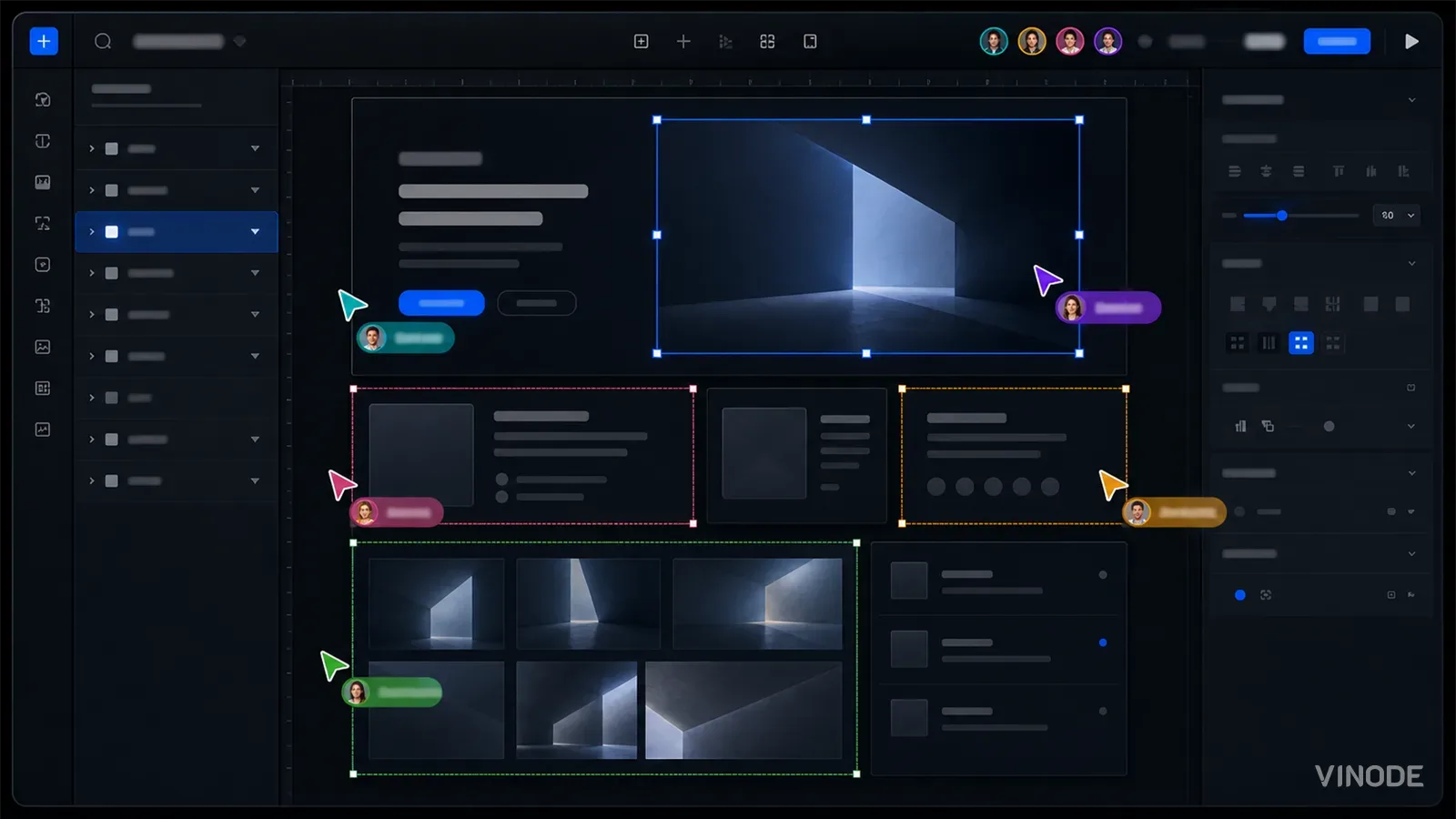
Now run the same Saturday on a live, data-bound page. The sales lead flips the unit's status to reserved, and every surface that shows that unit updates in step. Two desks over, a marketer reworks the launch banner on the same page, and neither steps on the other. That gap is the whole subject here: what actually changes when a marketing team edits its own property pages at the same time, instead of filing changes one at a time through someone else.
The developer queue was access control in disguise
It is tempting to read that queue as pure friction, a slow lane to delete. It was slow. It was also quietly doing three jobs nobody wrote down. Because the only way to change the page was to get a developer to do it, the queue decided who could change anything at all. Because one developer worked one ticket at a time, it guaranteed exactly one person touched the page at once. And because nothing went public until they pushed it, every change passed a second pair of eyes first. Those are three separate jobs: controlling access, serialising edits, and forcing review. Delete the queue and you delete all three, whether or not you meant to.
So when a team moves to self-service and drops five editors into a page that used to admit one, the instinct that we are losing control is half right. You are losing the mechanism, not the need for it. Remove the gatekeeper and those three jobs do not disappear; someone still has to do them. Real-time collaboration is only an upgrade if it ships that gatekeeping alongside the speed. Without it, faster editing just means a wrong price reaches a buyer sooner.
What actually happens when two people edit at once
The fear behind self-service is a specific image: two people typing into the same box, one saving over the other, work lost. On a structured property page that image is mostly wrong, for two reasons.
The first is data-binding. When an editor changes the price, they are editing one record in the project's data. The listing, the unit card, and the filter all read that record, so a single edit moves every surface together. That single-record model has its own consequences, and the sibling post on a single source of truth for unit availability makes the full case. For concurrency, the point is simpler: two people on the same page are usually not touching the same thing at all. One is on the price record, another on the banner component, a third on the gallery. Different objects, no collision.
The second is edit-locking. When two editors genuinely do reach for the same component, Vinode locks it. The person who got there first holds it, and the second sees that it is taken. This is pessimistic locking. Collaborative text editors such as Google Docs work the other way, letting two people type into one paragraph by merging keystrokes character by character, using algorithms from the operational-transformation and CRDT families (Sun et al., Proceedings of the ACM on Human-Computer Interaction, 2020). That merge suits free-flowing text. A component on a structured page is a different object: a priced unit card, a booking form. Merge two people's edits into one priced card and the two numbers average into a price nobody chose. So Vinode locks the component while someone is editing it. A colleague waits a moment for the lock, and nothing gets silently blended underneath them. Presence makes the lock legible, so you can see who else is in the page before you reach for something.
Vinode publishes no fixed number for maximum simultaneous editors, lock timeout, or sync latency, so this post names none. If a vendor quotes you a hard up to N editors figure, ask what happens at N plus one, and how a lock is released when someone closes their laptop in the middle of an edit.
The permission surface you now have to draw
Serialisation is the easy job to rebuild, since locking and presence handle it. Access and review are the harder two. They become explicit rules you have to write down, because the old answer, whoever holds the ticket decides, is exactly what self-service takes away.
Take the price, the sharpest case. A free-text price field that any of five editors can overwrite is a double-sold unit waiting to happen. The fix is a rule that holds no matter who has the page open, so authority over the number stops depending on who is logged in. Every other editable surface needs the same treatment. The grid below works through them, old model against new.
From one gatekeeper to explicit rules
Who may change a price
The old model: only the developer, once they reached your ticket. Now: a discount workflow with an approval ceiling, so proposals under the limit clear and anything above needs a sign-off.
Who touches which fields
The old model: only the developer, on everything. Now: roles that let a regional team edit copy and availability while the page structure stays out of reach.
How the brand stays consistent
The old model: one person's judgment. Now: a brand kit set once and cascaded, plus shared components an editor fills but cannot redraw.
How a change gets reviewed
The old model: the developer was the review step. Now: a draft that many people edit, promoted to the live URL only when someone signs it off.
Editing live and publishing reviewed are different axes
A false choice sits underneath most of this. Either the team edits freely, the worry goes, or every change is reviewed before it reaches the public. Both can hold at once. Live collaboration and the publish gate are separate controls, and you turn each to its own setting without touching the other.
Live collaboration governs who can be in the draft together. The publish gate governs when that draft becomes the public page. Vinode's visual page builder moves a page from draft to preview to published, so any number of people can be working the draft while the live URL stays exactly where it was until someone promotes the new version. Versioned snapshots sit underneath. A bad simultaneous edit rolls back to a saved state from before it. That is the arrangement the reader assumed was off the table: a crowd editing together, and one reviewed publish at the end of it.
A six-unit project has one person keeping the page current. A 500-unit estate has a whole sales floor doing it through a launch weekend, which is where two people reaching for the same page stops being hypothetical.
When self-service is the wrong move
Be fair to the old model first. Serialising every change through one person was slow, but it bought a real review step and clear accountability: one place a change could come from, one person to ask when something went wrong. Rip that out without rebuilding it as workflow and a five-editor free-for-all can drift faster than any queue ever did. The publish gate and the approval limits are that rebuild, and they only earn their keep if a team actually adopts them.
So the deciding factor is organizational, and it reduces to one test. If you cannot name the single person accountable for what the page says, do not turn self-service on yet. Fix the roles first, on paper. Written down, they turn into checklist items you can actually assign. Decide who signs off a discount above the approval ceiling. Decide which roles may touch availability and copy, and which may not touch structure. Name the one person who promotes a draft to the live URL. If those answers come back blank, start there. The editing tool can wait; the accountable owner cannot.
One honest note on timing. The Back Panel editing that flips a unit from available to reserved is live and in daily use now. The live multi-user composer and the visual page builder, the pieces that put several people into one draft together, are rolling out, with the broader self-service release arriving in Q3 2026. As of mid-2026 this is a direction you can start planning for and adopt in stages, well before every client has lived inside it for years.
See the editing surface on a live project
Walk through the Back Panel, the discount workflow, and the draft-to-published gate on a real development.


We measured when a pipeline crosses the presale line, not just whether it will
When GTHA opening-quarter absorption averaged 66%, the sold percentage was enough to forecast a presale crossing date. Then absorption fell to 17%. Three pipeline inputs produce the crossing date your lender asks for: stage-conversion rates, a cancellation haircut, and remaining inventory.

Digital Sales Gallery: What to Test Before the Display Suite Opens
The afternoon before opening, the sales lead sends herself a test enquiry and the sales desk cannot find it. Four things go wrong most often in a digital sales gallery, and each has a test you can run on the real devices and a fallback if it fails.

How to Move a Live Property Launch Off a Spreadsheet
Three weeks from launch, new enquiries were going into a spreadsheet tab called new leads 2. Move new leads and current unit data first, let old deals finish where they started, and leave the historical import until later.