

Tomasz Juszczak
CTO & Board Member - Prographers - Warsaw, PolandCTO of Prographers, the studio behind Vinode - he sets the technical direction and still writes the code.
Leads all technical projects at Prographers.
Written and won to build an automated game-testing system.
A real-time car configurator featured in Unreal's monthly showreel.
Areas of expertise
System architecture
Pre-rendered 3D pipeline
Unreal & Unity
Team & technical leadership
Code quality
- Wrote and won a 3M PLN NCBiR grant (GAMEINN programme) to build an automated game-testing system, then architected the project and led the team that delivered it.
- A real-time car configurator he worked on was featured in Unreal Engine's 2019 showreel.
- Presented Prographers' work at Infoshare 2018 and T-Mobile 5G Berlin 2018.
- Has shipped work with Samsung, Google, and Unit9.
Tomasz Juszczak is the Chief Technology Officer and a board member at Prographers, the Warsaw studio behind Vinode. He has held the role since January 2016, and owns the technical side of everything the studio ships: setting technical direction, running technology research, and owning application architecture - while still writing code alongside the team.
His career spans a decade of interactive and 3D software before real estate. Prographers grew out of building interactive VR experiences and configurators - primarily car and house configurators on Unity and Unreal Engine - and one of his real-time car configurators was featured in Unreal Engine's 2019 showreel. His broader portfolio crosses disciplines: VR and AR experiences, healthcare simulations, high-scale e-commerce, fintech applications (as technical lead on financial software for the Brazilian market), and 2D/3D games for mobile, console, and PC. Along the way he has worked with Samsung, Google, and Unit9.
At Vinode that same instinct shows up as one stubborn question: what if the gorgeous 3D thing also loaded in two seconds on a five-year-old phone? Pre-rendering, streaming, and a lot of quiet optimization are the answer. He designs the architecture, still writes code, and reviews yours.
Experience
- CTO & Board Member, Prographers (since January 2016). Sets technical direction, owns application architecture, and runs code-quality practices across every project.
- VP of Technology, Fuero Games (October 2016-February 2019). Led up to 13 engineers directly (and up to 25 indirectly), owned technical debt, and ran recruitment and quality practices. Wrote and won the 3M PLN NCBiR grant and built the team behind an automated game-testing platform.
- Technical Project Manager, YND (August-November 2019). Ran two concurrent fintech and e-commerce projects for web and mobile (React, Ruby) using Scrum.
- Tool Design Engineer, Flax Engine (December 2016-February 2018). Introduced the Mono layer to the C++ engine and helped design its UI architecture and prefab system.
- Mobile Unity 3D Developer, 7LEVELS (March 2015-May 2016). Shipped cross-platform mobile games.
Selected clients


Education
- Computer Software Engineering, Jagiellonian University (2011-2015).
A vocal clean-code advocate, Tomasz anchors his teams on code quality and maintainability, with CI/CD, documentation, and automated tests as standard. Based in Warsaw. Works in Polish (native) and English (full professional).

Masterplan 3D for Phased Estates: How to Show Phase One Without Overselling Later Phases
A phased estate contains several levels of certainty at once. The masterplan should make that difference visible, then absorb a later-zone redesign without discrediting the phase-one material buyers already saw.

Who signs off on a 3D sales platform, and what each approver asks
A marketing director walks the whole development on her phone and is sold by the end of the demo. Six weeks later the deal has not moved, because four other seats never got their answer. Know the five questions before the demo.

AI Was Supposed to Make Property Marketing Cheaper. So Why Is the Hardware Getting So Expensive?
AI can create images faster. At the same time, the AI boom is competing for the GPUs, memory and cloud infrastructure used to create high-end property marketing. For developers, that creates a strange new reality: some creative work is becoming cheaper while the machines behind it become more expensive.
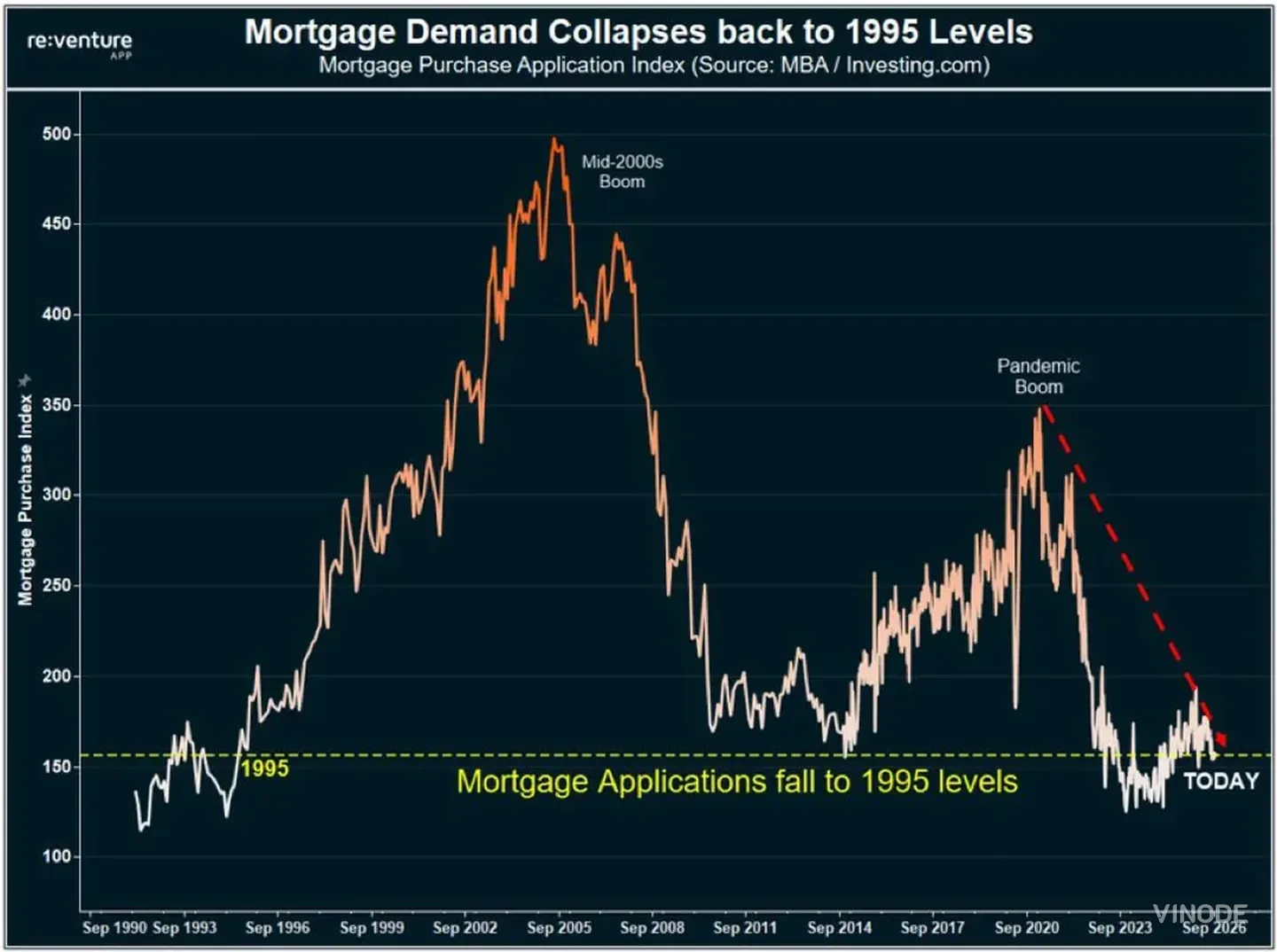
Mortgage Demand Is Back Near 1990s Territory. The Next Housing Battle Is Conversion
Mortgage-ready demand is weak while builders spend more margin on incentives. Marketing cannot fix affordability. It can stop wasting the qualified buyers who still arrive.

Why rendered glass façades read as fake: the optics of IGU deflection
Archviz glass reads as fake for a reason no roughness slider reaches. Real curtain-wall panes are slightly bowed, each one differently, so adjacent panes reflect the sky at slightly different angles. A render's panes stay flat because the CAD geometry is flat, and that flatness is what the eye catches.

Real Estate 3D Model Ownership: Five Files, Five Different Answers
A real estate 3D model is a chain of assets, not one portable file. Name the working files, rights and dependencies before production starts.
How to embed a 3D unit selector into the CMS you already run
Keep your existing site and add the 3D as an embed. Which platforms host a code block and which gate it, the lazy-load and facade hygiene that keeps it fast, the three objects you can embed separately, and who maintains it after launch.

The launch-day traffic spike: why you're bracing the wrong asset
Before an off-plan drop, everyone stares at the interactive 3D tour and braces for it to crash. It's the wrong worry. On a page built the right way, the biggest visible asset barely feels the crowd, and the fragile part is the small transactional path behind the form. Here is how to split a launch page into its two load profiles and spend your prep where it counts.

One record for unit availability, not four copies in sync
Your website, your sales team, and the buyer's brochure keep quoting different prices for the same unit, and a faster sync won't fix it. The fix is one record every surface reads from, instead of four editable copies kept in step. How to tell data-bound listings from synced ones, when batch is good enough, and who gets to change the number during a launch.

What banks require pre-sold before they fund construction
In Canada banks want around 70% of units pre-sold before they fund construction; in the US a new-build condo needs 50% sold just for its buyers to get conforming mortgages. Those targets sit on a different clock than any benchmark you measure yourself against, and the clock your loan actually runs on is the one no published benchmark measures.
Do 3D property tours hurt Core Web Vitals? Diagnose it yourself before you ship
A mobile PageSpeed score has you worried a 3D tour will tank the page, but "3D is heavy" is not a diagnosis. Each failure mode hits one specific metric: payload pushes out LCP, a long task on the main thread costs INP, an unreserved container triggers CLS. Here is how to attribute the damage with a DevTools trace and the network panel on your own page before it ships.

EU AI Act Article 50: do property renders need an AI label?
Article 50 applies from 2 August 2026, but it does not turn every photorealistic property visual into a deep fake. The useful test has two gates: how the image was made, and whether it depicts something existing as authentic.

How we built the Vinode SaaS: four years and three rewrites
Four years of Vinode engineering produced the CRM, CMS, sales tools and no-code self-service platform clients use to run interactive property projects. The core specification was largely settled in year one; three rewrites removed the tooling friction that delayed it.
Pixel streaming vs pre-rendered 3D: the cost decision, not the quality one
Both can look photorealistic, so stop comparing them on image quality. The real choice is where your money sits: a recurring cloud-GPU bill for every concurrent viewer, or a one-time production cost that serves launch-day crowds for almost nothing.
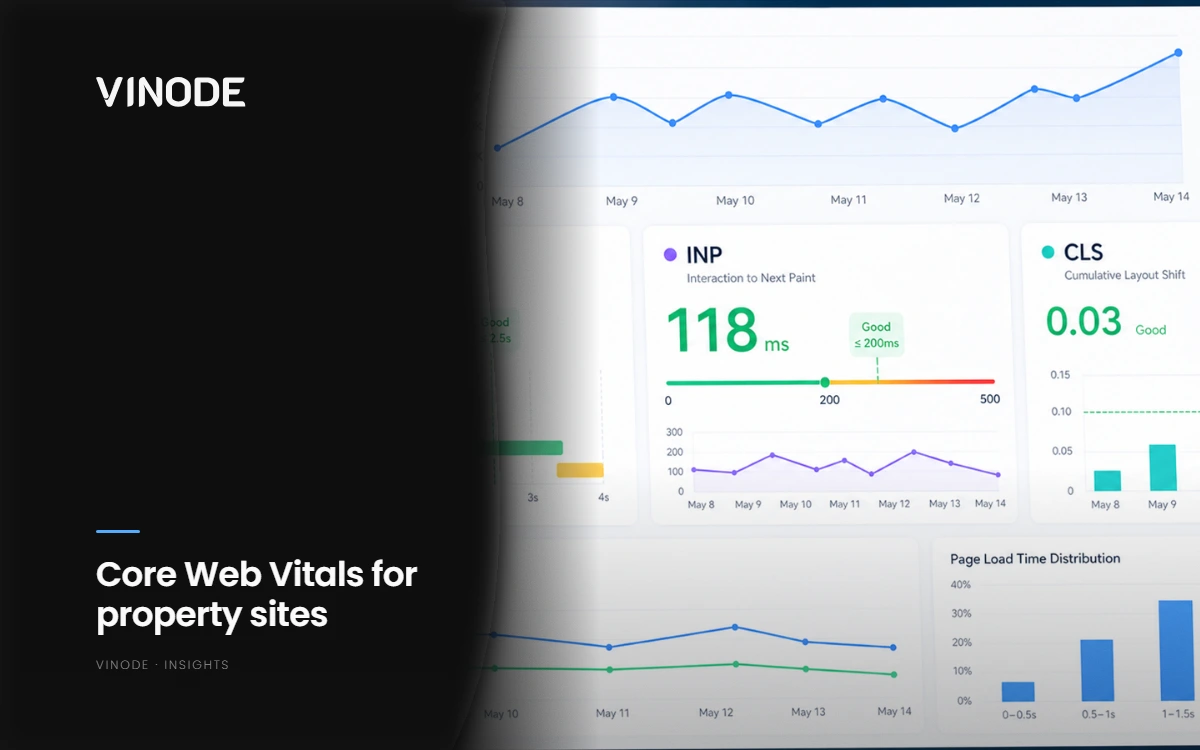
Core Web Vitals for property sites: how to actually measure a 3D tour's impact
One green desktop Lighthouse run on the tour page is not proof the tour is fine. Lab tools and field data answer different questions, and the metric a 3D tour is most likely to fail - INP - is one Lighthouse cannot score at all. Here is how to read the field data at the 75th percentile, and why a freshly launched development page shows "No Field Data" for weeks.

Photogrammetry for real estate development: what it is, how accurate it is, and where it fits
A drone survey that ends up filed on a shared drive is a wasted asset. Here is where photogrammetry actually fits in a pre-construction sales stack, how far to trust its accuracy, and why the recurring capture matters more than the one-off measurement.
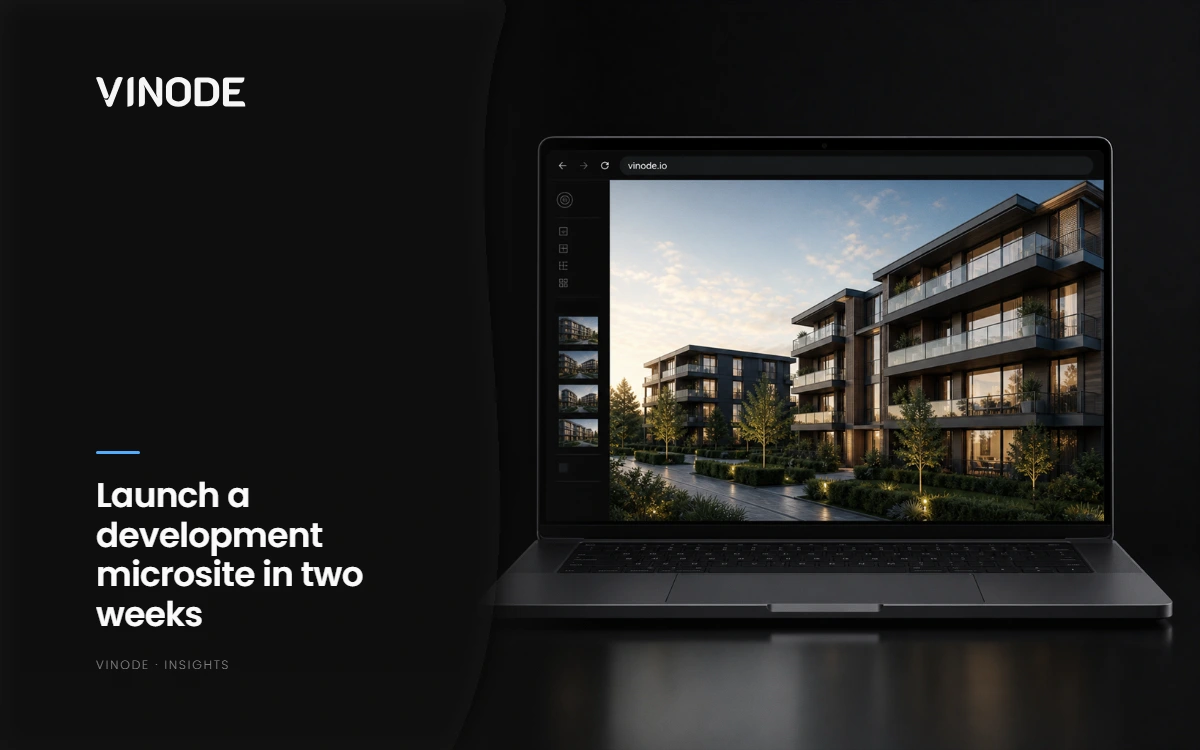
Launch a development microsite in two weeks
A productized Vinode package goes from kickoff to a live, interactive sales page in about two weeks. Here's what actually happens in those two weeks, and what your team owns afterwards.
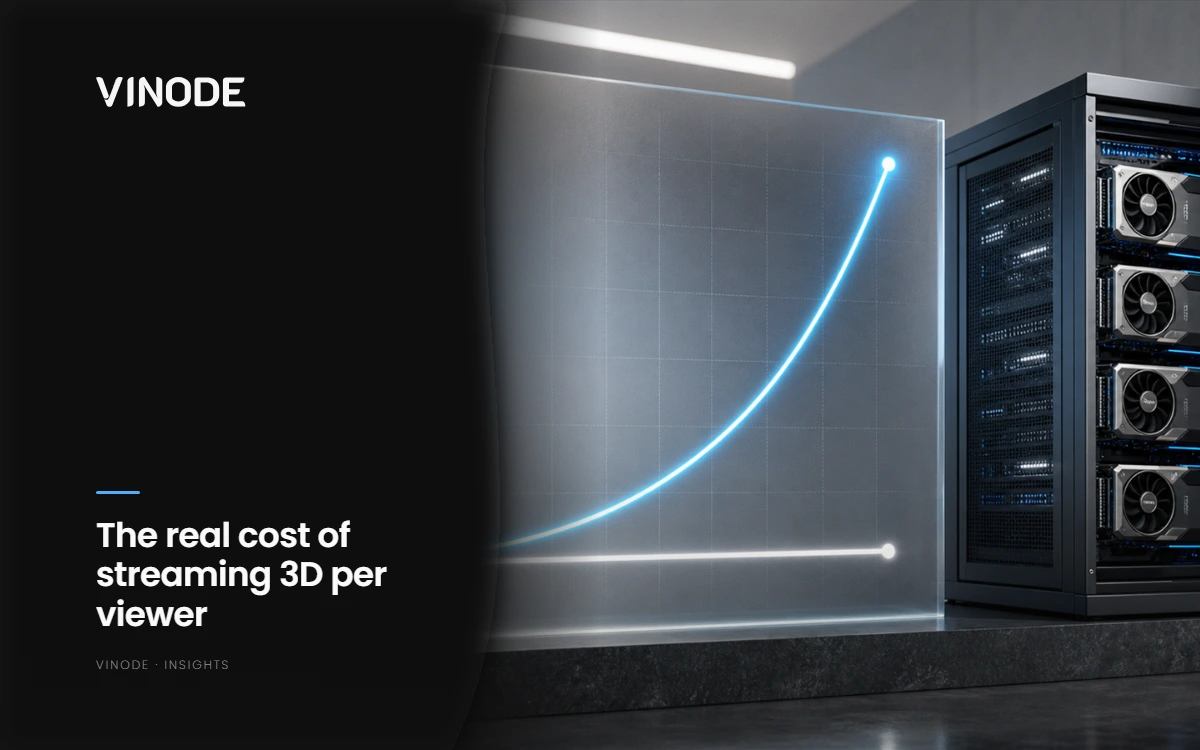
The real cost of streaming 3D per viewer: a worked GPU-and-CDN cost study
Two ways to serve an interactive 3D tour, two cost curves that point in opposite directions. This is the arithmetic worked out at dated public rates: what 100, 1,000 and 10,000 concurrent viewers actually cost on a GPU fleet versus a CDN, and the two numbers that decide where the lines cross.
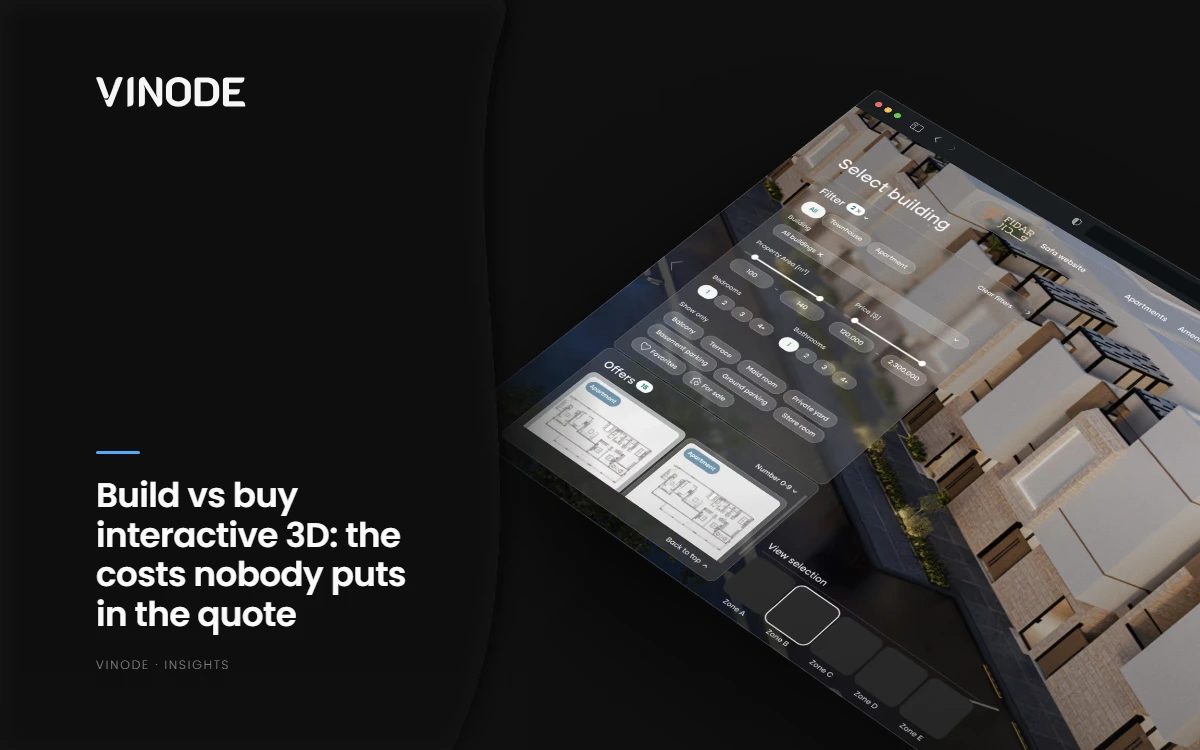
Build vs buy interactive 3D: the costs nobody puts in the quote
The build-versus-buy call for interactive 3D hangs on one variable the quote hides: the per-concurrent-viewer GPU bill of real-time rendering, which scales with launch-day traffic. Only a serial developer with a standing 3D and web team can amortize a build against it.

Who really owns your leads: the two columns the contract forgets
The contract says you own your leads, and that line is nearly useless on its own. Real ownership is decided in two places the marketing page never mentions: the controller line in the contract, and whether consent status and attribution history survive the export. A buyer's guide to checking both before you sign.
How to evaluate an interactive-3D vendor: the questions that aren't about the 3D
The demo runs beautifully on the vendor's laptop and tells you nothing about your buyers' phones. A technical buyer's checklist for choosing an interactive-3D vendor, ordered by what you'll regret skipping.

Reject cookies, keep the lead source: the seam that makes first-touch legal
Most teams treat the cookie banner as one switch over all tracking, so a rejected banner reads as a lost lead source. It isn't. Consent law gates the visitor's device, not the enquiry they choose to send. Design attribution in three storage tiers and the converting lead keeps its first-touch even when the banner is refused.
No-code vs bespoke: sort every asset by how often it changes
Template versus custom is the wrong axis for a property marketing page. Sort each asset by edit frequency instead: set-once work goes bespoke, weekly-changing work goes into a no-code layer bound to live unit data.
The true cost of ownership of an interactive property experience
Two vendor quotes, same number. The one that costs you more over a three-year sell-down is decided by a line no quote shows: whether a price change is self-serve or a billable request. A procurement-minded look at where the money actually goes after launch.

Why sales teams abandon fancy 3D tools, and how to ship one they actually use
Fancy 3D sales tools get abandoned over the conditions they demand to run, not the quality of their graphics. Before commissioning one, ask whether it survives gallery wifi, a mid-range phone, a ninety-second window with a walk-in buyer, and a follow-up link that has to stay current.
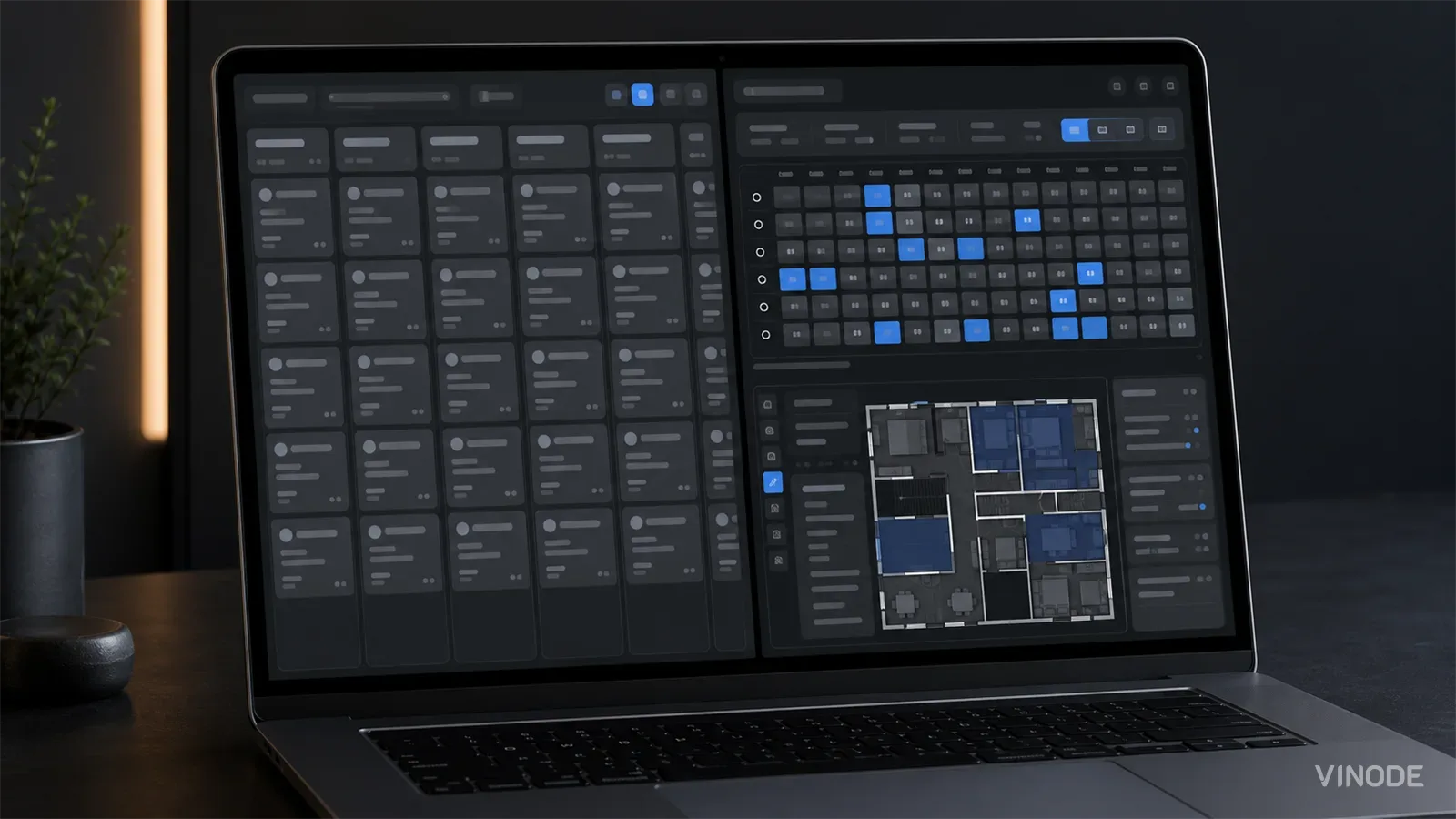
Generic CRM vs a Purpose-Built New-Build Sales CRM
Both HubSpot and Salesforce can model an apartment, but only as a custom object you build at their top tier, and even then the availability sync, discount approval, and per-unit brochure a new-build team runs daily stay unbuilt. Here is what that means for the build-versus-buy call.
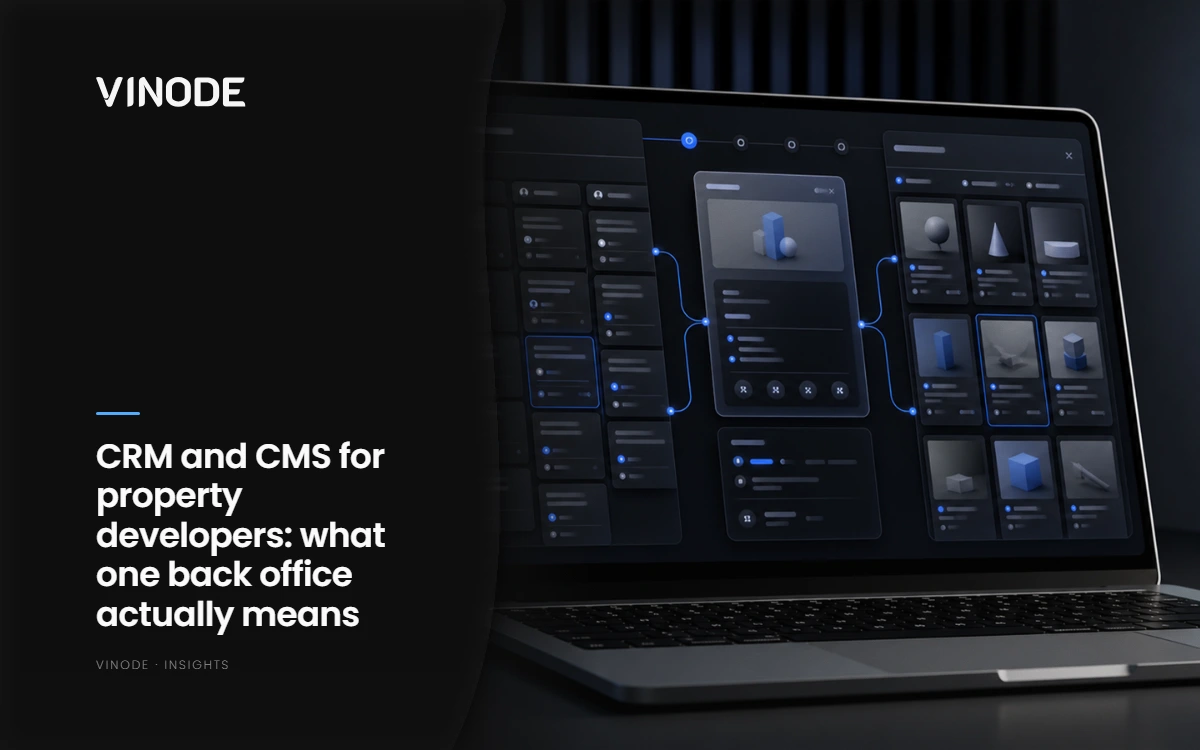
CRM and CMS for property developers: what one back office actually means
A buyer sees a unit as available while your sales team reserved it two days ago. That gap is not a shopping problem you fix by picking a CRM, a CMS, and a connector between them. For a developer both systems revolve around the same object, the unit, and one back office stores that unit once instead of keeping two copies an integration has to chase.

What a slow property page really costs you in lost enquiries
The "53% of visitors leave after three seconds" line is a real Google number, but it is 2016 cross-industry data, not a measure of lost property enquiries. Here is the figure to reason from instead, why bounce rises steadily with load time instead of snapping at a three-second mark, and the one case where no amount of image compression saves the page.

Will a browser 3D property tour work on every phone? The device ceiling nobody demos
A WebGL tour that glides on the salesperson's iPhone can go black on a buyer's 4 GB Android ninety seconds in, and the team never reproduces it. The ceiling is set by the weakest phone that opens the tour, and it is invisible from the machine it was built on. Here is how to judge one before you buy, and why the fix is architectural.

How a property tour reaches the browser: static, edge-cached 3D and what a CDN does
A tour that opens instantly in your office can crawl for a buyer overseas. Here is how a pre-rendered 3D tour is delivered as static, edge-cached files, and what a CDN actually does for load time.
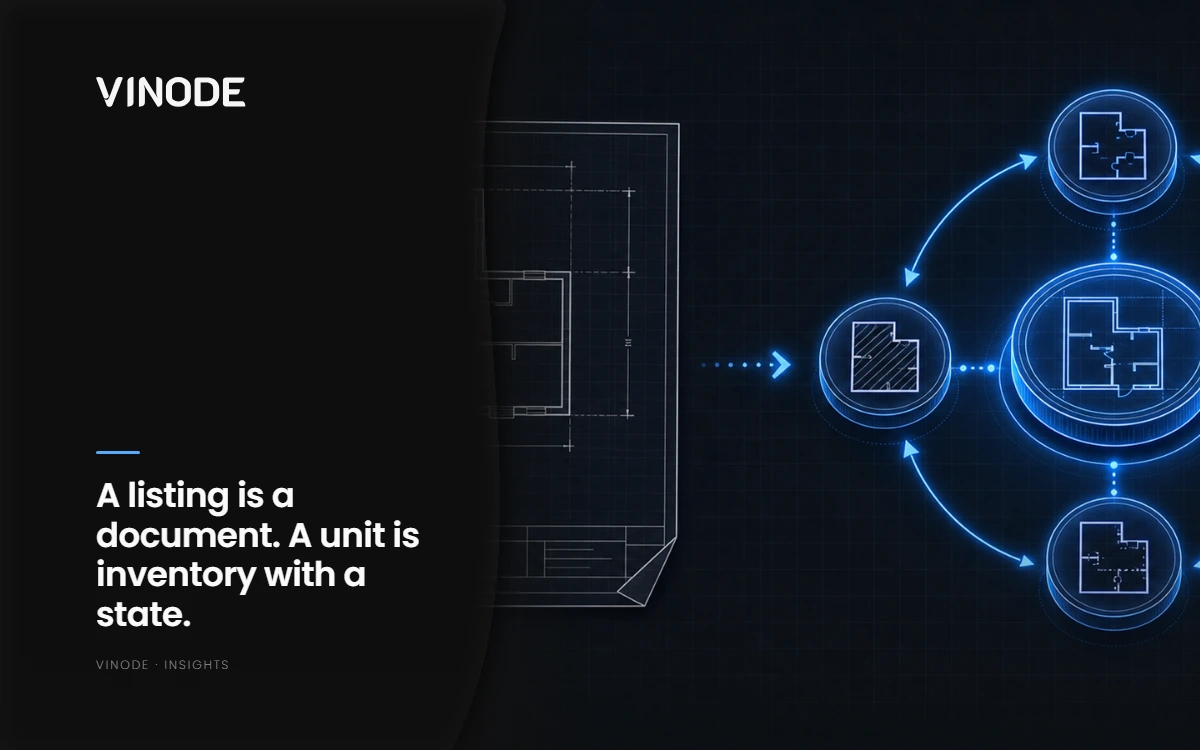
A listing is a document. A unit is inventory with a state.
A sold apartment still showing as available is not a sync bug you fix with more discipline. It is the sign that a marketing listing was handed a job that belongs to a unit-inventory record, and on a development launch that is a data-model decision you make before you build.
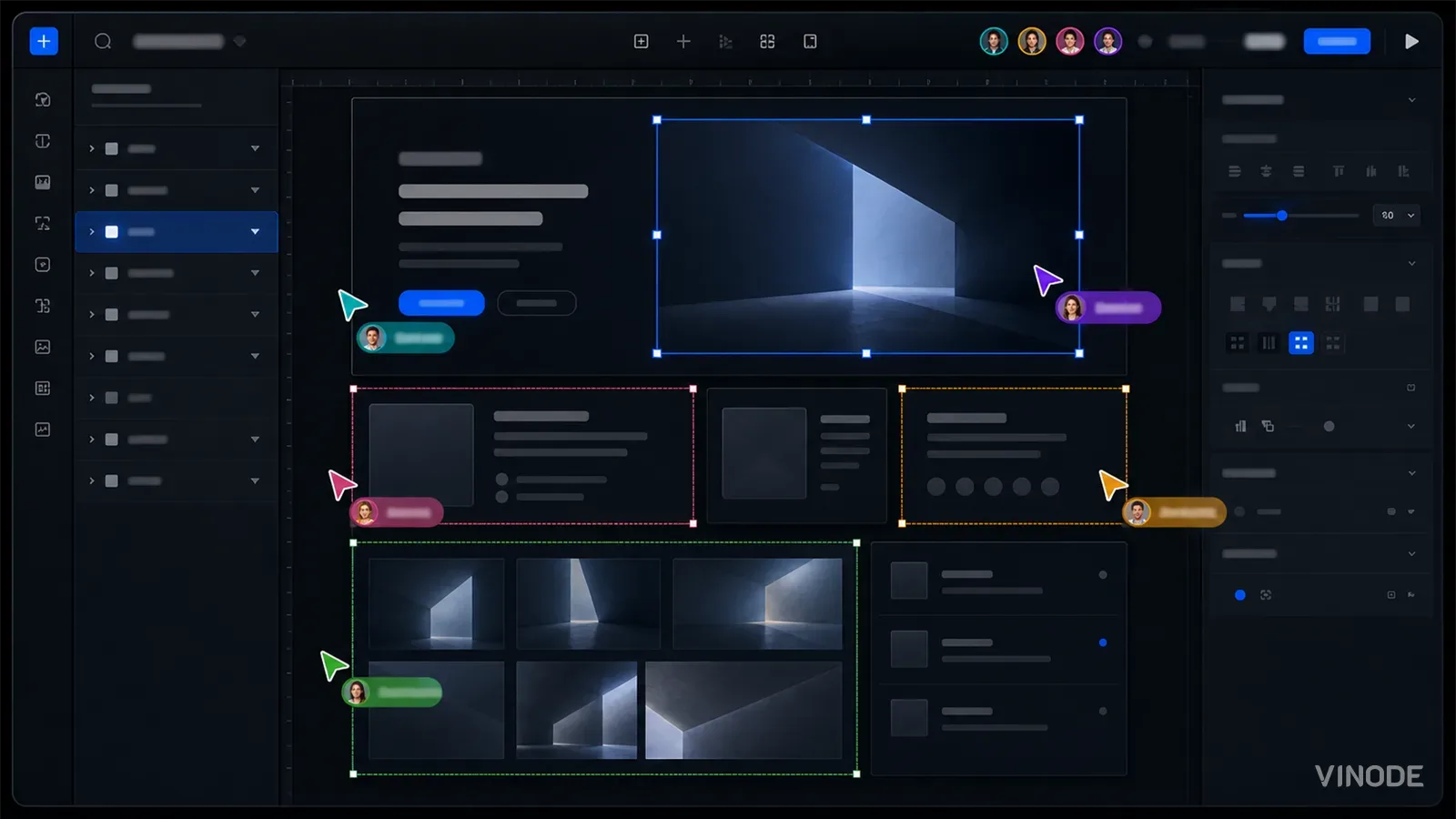
Letting the whole team edit the property page, without losing control
When a marketing team edits its own property pages at the same time instead of filing changes through a developer, the developer queue turns out to have been access control in disguise. Here is what real-time editing actually changes, and the permission model you have to build to replace it.
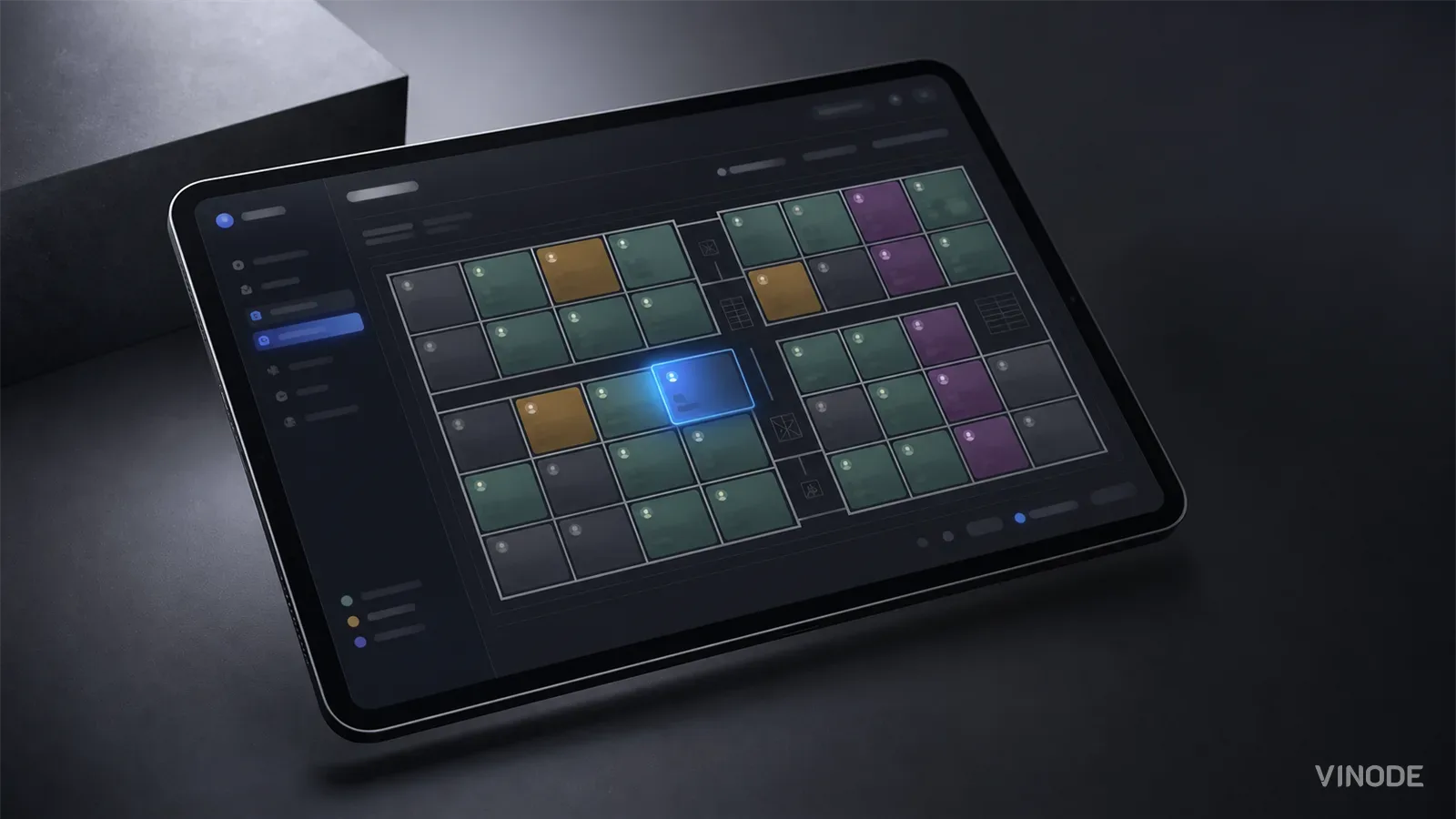
Unit inventory for developers: what a hold really is, and why the sheet fails
Two agents sold the same off-plan unit because the shared sheet said 'available' to both. The fix is not more discipline. Unit inventory is a sell-once problem whose hard part is holds, and a hold is a small record (a buyer, a deadline, a deposit) that a spreadsheet cell cannot carry. Why the sheet degrades on editors times velocity rather than unit count, and when it is still the right tool.

Best Rendering Engine for Architects and ArchViz Artists
Choosing the right rendering engine is a key decision in architectural visualization and ArchViz projects. In this article, we compare the most popular rendering tools used by architects and visualization specialists, outlining their core features, strengths and limitations.
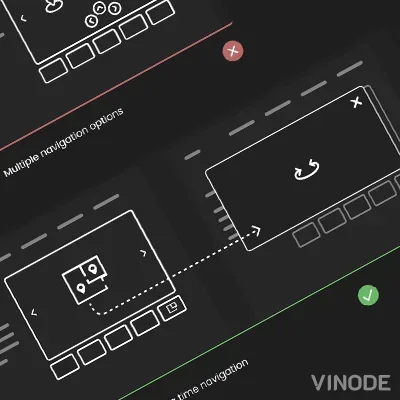
Real Estate Website Design Practices
Designing effective real estate web applications requires balancing user experience, performance and sales goals. In this article, we share practical insights based on user behavior analysis, covering site structure, navigation, content hierarchy, 3D tours and sales tools.

Why Hosting for Millions is Easier than Hosting for Thousands
Hosting scalable 3D web applications requires a carefully designed infrastructure. In this article, we explain how containerization, Kubernetes, reverse proxy solutions and Infrastructure as Code enable reliable, secure and cost-efficient hosting at scale.

How Did We Manage Serving Terabytes of Data to Our Customers Worldwide
Building a high-performance 3D web application requires more than just an advanced frontend. In this article, we explain how backend technologies such as CDN and caching significantly improve speed, scalability, availability and SEO.