
Between the brochure download and the first call

Image co-authored with help of AI for illustrative purposes
Key Takeaways
- Useful buyer activity changes the first call only when sales reads the contact record.
- Interactive collateral can capture unit views, saved choices, configurations, and return visits before a salesperson calls.
- Set the sales owner and the useful contact fields before you build more interaction.
- One client's lead-to-viewing rate moved from 9.0% to 18.8%, but the case does not prove cause.
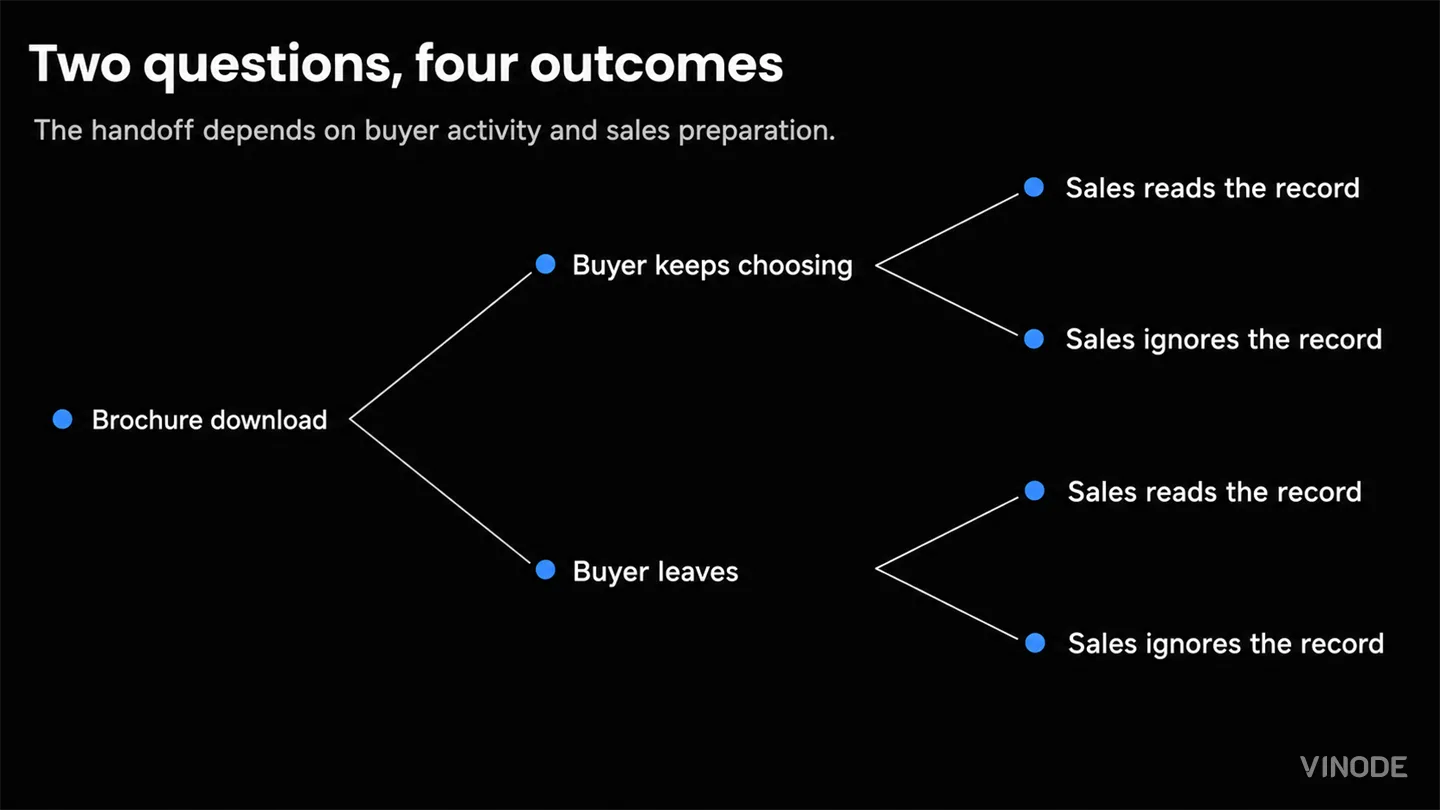
The gap before first call is shaped by two things: whether the buyer keeps choosing and whether sales reads the trail. Put those answers together and you get four futures: a useful handoff, unused intent, an honest empty record, or a dead gap. No aggregate tells you whether a specific buyer will keep choosing, or whether a specific salesperson will read the record.
When both happen, first call can start with a real apartment and continue a choice already in progress. An interactive experience can attach the buyer's activity to the contact record. Faster follow-up cannot recover context the sales material never collected.
Design the handoff before adding interaction
Give the buyer useful choices, decide which signals matter, and make someone responsible for reading them before the call.
Two uncertainties create four futures
Buyer engagement is the first uncertainty. A person may keep exploring after the first visit, or leave after taking the basic information. The second is sales use: a salesperson may check the contact record before calling, or start with the same broad questions as before.
These uncertainties are seperate. Good buyer activity does not guarantee a useful call, while a careful sales process cannot find detail the collateral never captured. Crossing them gives four clear outcomes.
The brochure-to-call scenario matrix
Buyer engages, sales reads
The call continues a choice already in progress. Early signal: the record shows a unit view, save, configuration, or return visit, and the call note names it.
Buyer engages, sales ignores
Useful intent sits unused while the call starts wide. Early signal: the record has unit activity, but the call note contains no unit or saved choice.
Buyer leaves, sales reads
The empty trail is still honest. Sales knows discovery must begin from zero. Early signal: there is a contact or download, but no later unit activity.
Buyer leaves, sales ignores
The gap stays dead. The buyer does no more choice work and sales learns nothing before dialling. Early signal: no return activity and no context in the call note.
Future one: the call continues the buyer's work
This is the useful handoff. Buyer narrows the development, saves a unit, then comes back; the assigned salesperson checks the record and opens with that unit. No restart. Nobody asks the buyer to rebuild the search from memory.
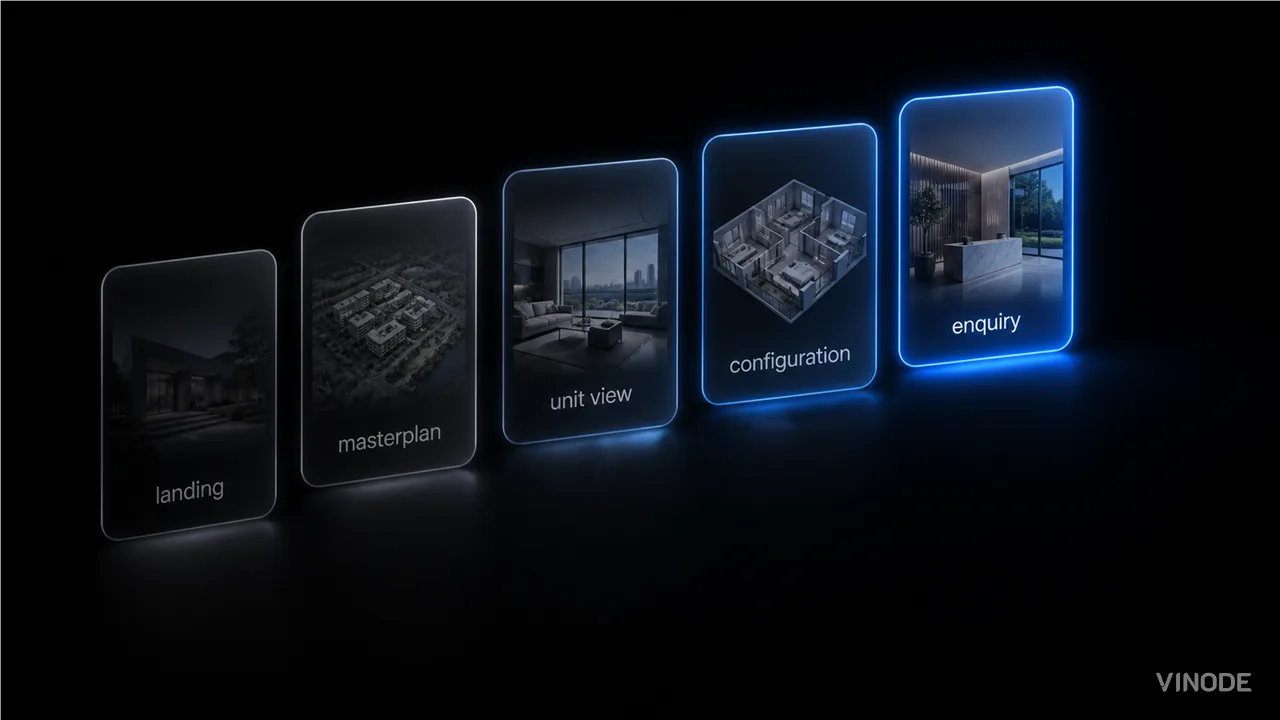
The record can carry more than a download event. Vinode tracks five stages: landing, opening the masterplan, opening a unit, configuring or favouriting, then enquiring or reserving. A contact can also carry unit views, time spent, saved status, and a configuration snapshot. Collecting every detail is not the point because sales only needs enough context to make first call specific.
Future two: the buyer leaves a trail nobody reads
This future looks healthy in an engagement report because buyers open units and return. Yet sales still asks, 'Are you interested in the project?' The interface did its work. The handoff failed.
The early check is simple: compare the contact activity with the first call note. If activity names a saved apartment but the note does not, the team has a process gap that another filter or tour will not fix. The no-regret move is a short pre-call check owned by the person who dials.
First call should continue the buyer's work. It should not ask them to start again.
Future three: sales reads an empty record
An empty record is not always a tracking fault: the buyer may have taken the PDF and stopped, leaving sales with no unit choice to continue. Normal discovery is the honest opening.
This outcome tells marketing where to look, starting with whether the experience gives a useful next action after the first page. A unit filter, interior view, saved choice, or personal PDF can extend the session, but more features cannot create intent by themselves. The buyer may be early, outside the target, or simply done.
Future four: nothing happens in the gap
A static file can show a development well, yet leave only one fact in the record: someone asked for information. If the buyer does not return and sales does not check context, first call begins wide every time.
This is the baseline to beat. Measure whether known contacts open units, save choices, configure options, or come back, then compare that activity with what sales uses. One measure without the other hides half the handoff.
Measured from July 2024 to July 2026. Sessions with no new or returning label were excluded. This does not prove a return causes a booking.
Source: Vinode measurement - as of
One campaign supports the mechanism, not a forecast
We have one before-and-after case where the handoff improved. It covers one developer, one development, and one Q2 2025 pre-sales campaign; the project, area, and price point stayed the same. The follow-up did not get a new script or faster dialling.
The client-reported result fits future one: collateral kept the buyer choosing, and sales had more context before a viewing or consultation. Other campaign changes could have helped. A viewing is not a sale, and this case says nothing about deal value or sales cycle length. We would not use it as a Vinode benchmark.
One development. This was not a controlled trial, and it does not prove the format caused the lift.
Source: Vinode measurement - as of
This is not for a team that will ignore the contact record. It also fits badly when the visual scope changes every week, because changed layouts need new rendering.
Scope the handoff and the experience
Start with the call. Decide which buyer action would change its opening, where that signal will appear, and who checks it. Only then choose the interaction that creates it. Building extra interaction before the sales process is ready wastes work across all four futures.
A scoping conversation should mark which buildings, layouts, and unit data are settled before launch. It should identify usable 3D assets and name who owns later updates. Project size, existing assets, and requested scope shape the implementation plan and custom quote. Get the ownership list, plan, and quote before changing a live campaign.
Check whether the first call note names the unit the buyer saved. If it does not, repair the path from activity record to call prep, then decide whether the experience needs more.
See what buyers can do before the first call
Explore how Vinode turns a development into one interactive sales experience.

The Unit-Specific PDF a Buyer Actually Asked For
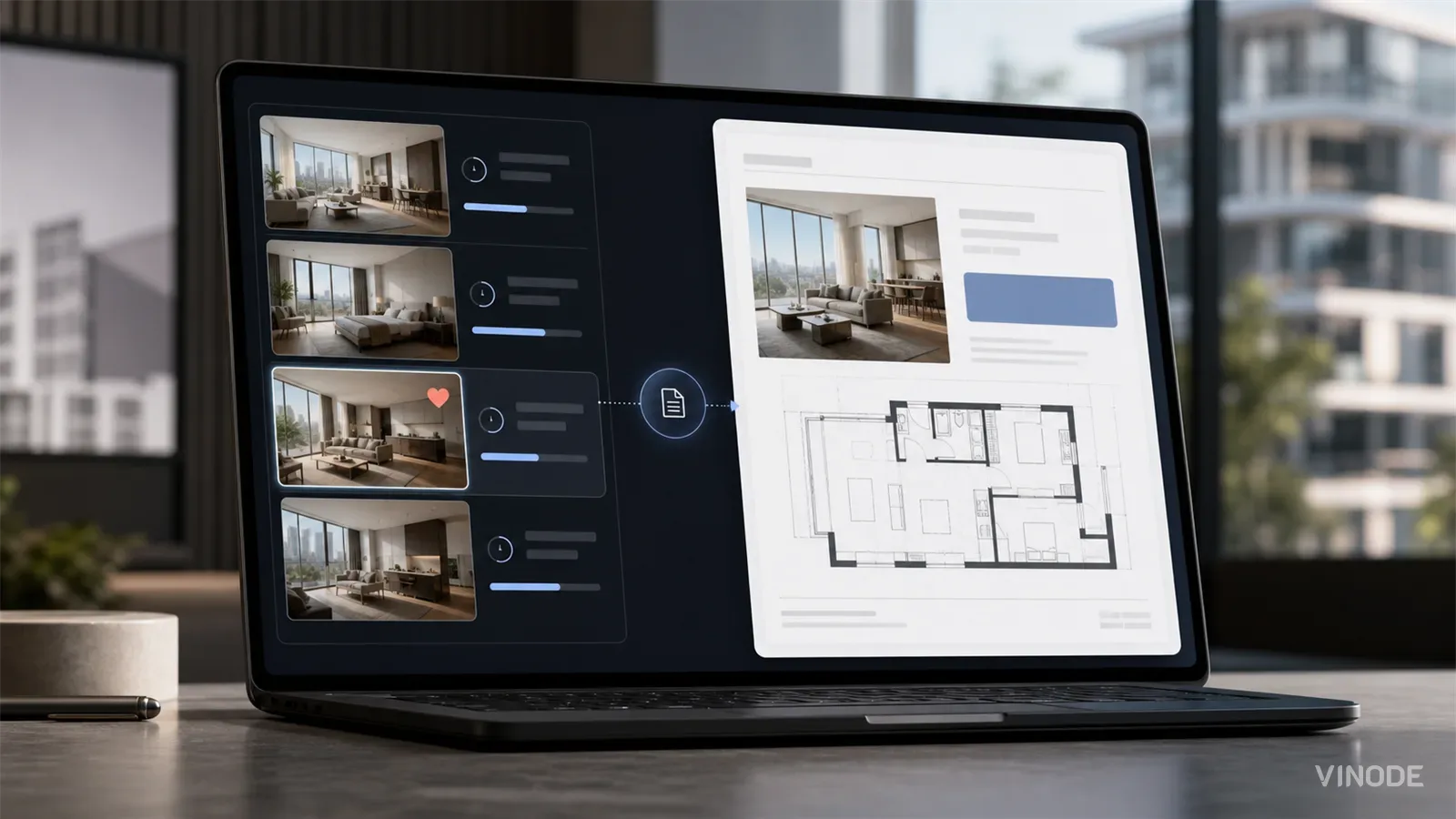
A buyer spends nineteen minutes on one two-bed, saves it, and gets the forty-one-page development brochure the next morning. Once a sales platform records the unit a buyer chose, the generic brochure becomes a decision to ignore that choice.

Expression of interest before release day: capture unit demand
640 names and no idea which side of the building they want. An expression of interest campaign pays off when the form is joined to the units each buyer explored, and each of these checks has a pass, a fail and a cost.

We measured when a pipeline crosses the presale line, not just whether it will
When GTHA opening-quarter absorption averaged 66%, the sold percentage was enough to forecast a presale crossing date. Then absorption fell to 17%. Three pipeline inputs produce the crossing date your lender asks for: stage-conversion rates, a cancellation haircut, and remaining inventory.