
How interactive floor plans shorten the sales cycle
Key Takeaways
- One connected surface that shows availability, pricing, orientation, and the interior lets buyers self-qualify and cuts the email round-trips.
- The live data connection is the whole risk: listing a reserved unit as available burns buyer trust and loses more deals than a spreadsheet.
- The tool pays off once inventory outgrows what one rep can recall; a six-unit project gains almost nothing from it.
The classic real estate sales cycle is a series of round-trips. A prospect asks which units are still available. A rep checks a spreadsheet and replies. The prospect asks about the corner unit on the fourth floor. The rep digs out a floor plan and a price. Each exchange adds a day.
An interactive floor plan collapses that loop.
One surface, every answer
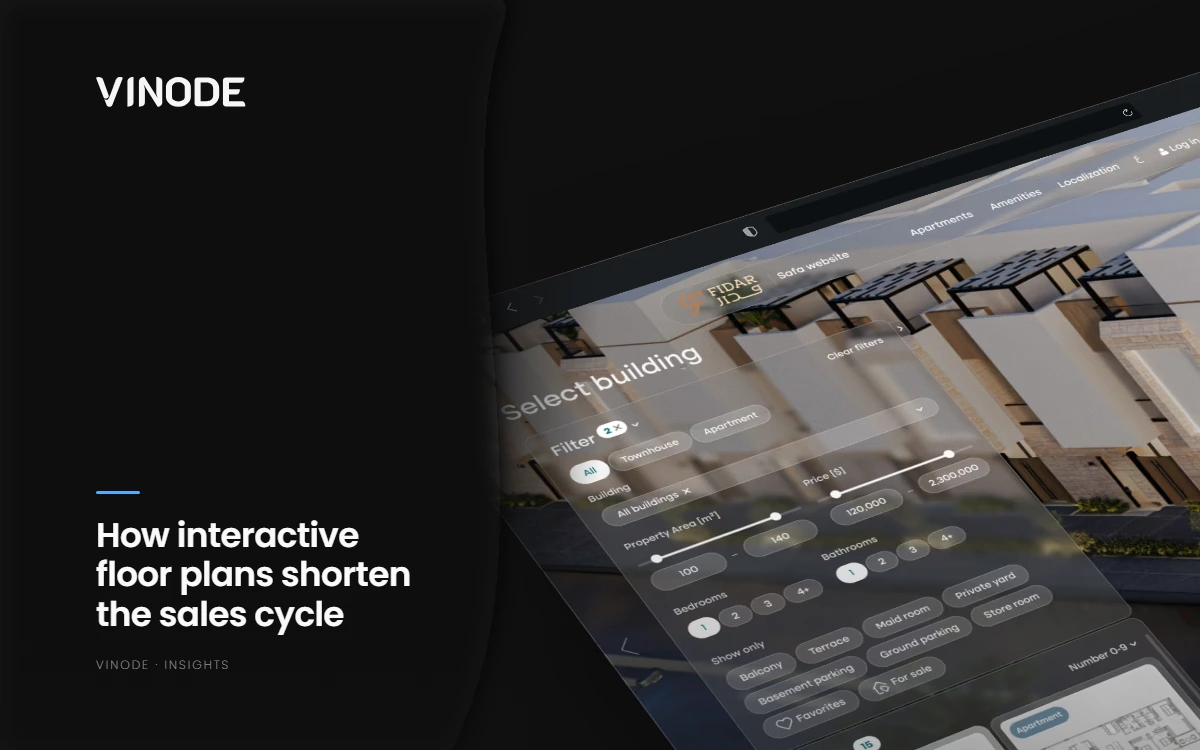
Instead of a flat drawing, an interactive plan is a live map of the development. Tapping a unit reveals everything a buyer needs to self-qualify:
- Availability: reserved units are visibly gone, in real time.
- Pricing: pulled from the same source the sales team edits.
- Orientation and floor: so buyers understand light and views.
- The actual interior: linked straight to a virtual tour of that unit.
Because it's all connected to the Vinode Back Panel, there is a single source of truth. When sales updates a price or marks a unit sold, the public plan updates too. That live connection is also the whole risk. A plan wired to a stale CRM is worse than a PDF: showing a sold unit as available burns trust at the exact moment a buyer is ready to reserve. The tool is only ever as honest as the data behind it.
This is where most developers get the spend backwards. They over-invest in render quality and under-invest in keeping availability live, when in our experience the projects that convert are the ones where the sales team trusts the plan enough to sell straight off it without double-checking a spreadsheet first.
So this isn't for everyone. On a six-unit development where one rep knows the remaining inventory from memory and can answer every question by hand, a phone call will always beat an interface, and the software earns its keep only once the inventory, or the pace of inquiries, outgrows what a person can hold in their head.
Buyers who arrive pre-qualified
When prospects can explore availability and pricing on their own, the conversations that reach your sales team are further down the funnel. They're not asking what's available. They're asking how do I reserve unit 4B.
The best sales tool is the one that answers the obvious questions before anyone has to ask them.
Fewer round-trips, faster decisions
Compressing a dozen email exchanges into one self-serve session doesn't just save your team time. It keeps the buyer in a state of momentum, the moment they're most likely to commit. That's the real return on an interactive floor plan: not prettier drawings, but a shorter path from interested to reserved.

The Unit-Specific PDF a Buyer Actually Asked For
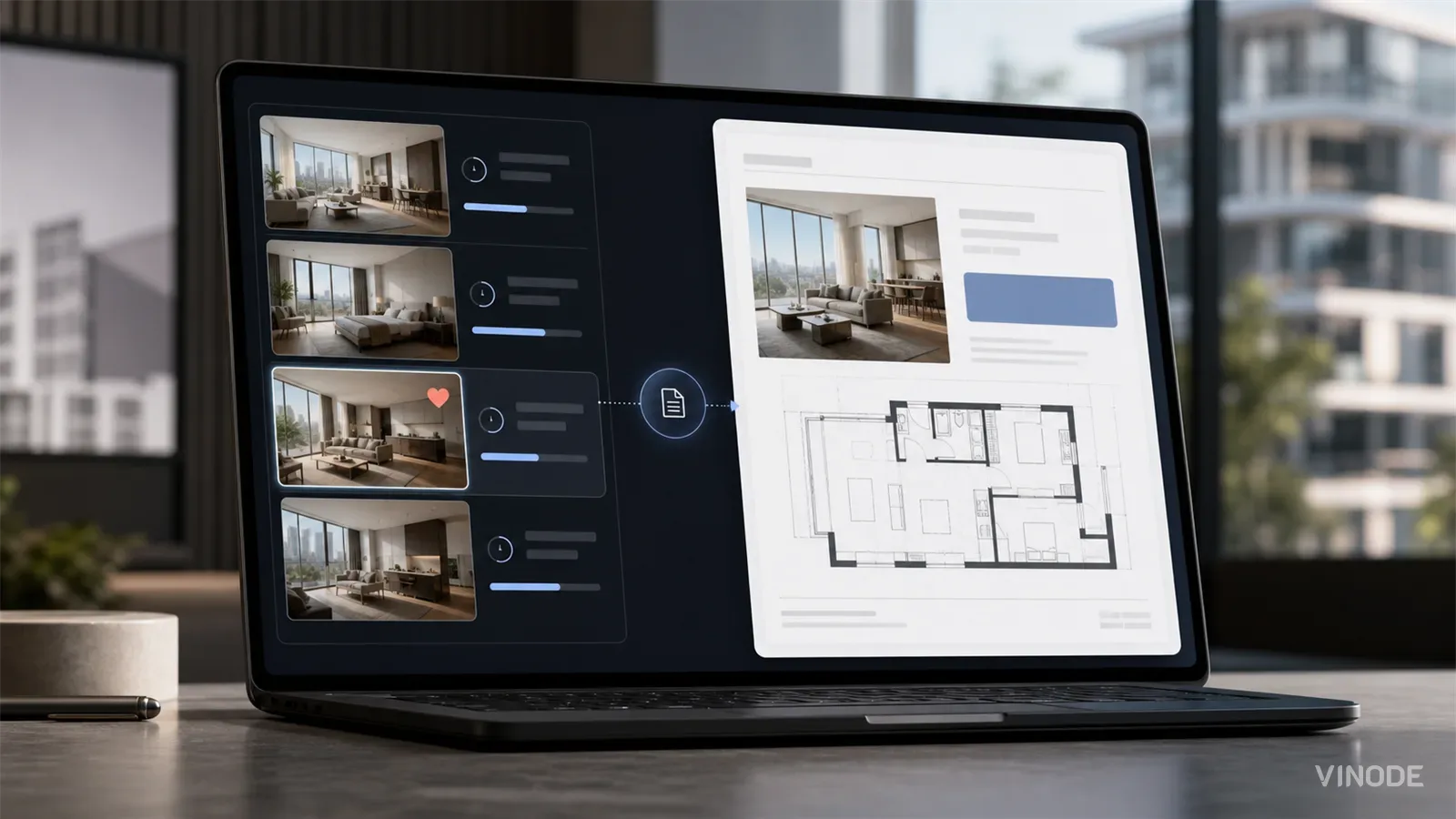
A buyer spends nineteen minutes on one two-bed, saves it, and gets the forty-one-page development brochure the next morning. Once a sales platform records the unit a buyer chose, the generic brochure becomes a decision to ignore that choice.

Expression of interest before release day: capture unit demand
640 names and no idea which side of the building they want. An expression of interest campaign pays off when the form is joined to the units each buyer explored, and each of these checks has a pass, a fail and a cost.

We measured when a pipeline crosses the presale line, not just whether it will
When GTHA opening-quarter absorption averaged 66%, the sold percentage was enough to forecast a presale crossing date. Then absorption fell to 17%. Three pipeline inputs produce the crossing date your lender asks for: stage-conversion rates, a cancellation haircut, and remaining inventory.