
Off-plan speed-to-lead when the buyer already toured your 3D development

Image co-authored with help of AI for illustrative purposes
Key Takeaways
- The five-minute callback rule was measured on cold, shared portal form-fills, so it misfires when a buyer self-serves an interactive 3D development before enquiring.
- Which units a buyer viewed and how long she lingered becomes the outreach trigger, replacing the enquiry form the classic playbook waits on.
- Off-plan reservations unfold over months, so speed now matters for catching a warm buyer before her attention fades.
- Once the page has qualified the buyer, the first call shifts from pitch to reservation logistics and delivery-timeline reassurance.
A buyer opens your development's 3D tour on a Tuesday night. She spends twenty minutes inside it, opens three floor plans, compares a two-bedroom against a corner three-bedroom, and downloads the brochure for the one she keeps returning to. Then she closes the tab. She never fills in the enquiry form.
The next morning your sales team looks at the CRM and sees nothing, because in the world the five-minute-callback rule was built for, a lead is a form submission and this buyer never submitted one. She is the most qualified person who touched your project all week, and the playbook has no record that she exists.
The five-minute rule was measured on a different buyer
Almost every speed-to-lead article rests on one statistic: contact a lead within five minutes instead of thirty and your odds of reaching them climb roughly a hundredfold, with the odds of qualifying them around twenty-one times higher. That finding is real. It comes from the MIT / InsideSales.com Lead Response Management study run by James Oldroyd in 2007, across six companies, three years, and more than fifteen thousand leads (the original 2007 report, hosted by MarketingSherpa). The part the vendor blogs quietly drop is what those leads were: cold web-form submissions, where the company is racing to make first contact with someone who filled in a form and is probably filling in three others.
An interactive 3D first touch inverts that premise. The buyer already made contact, with the product rather than a form. She has seen the units, the views, and the price on the one she wants. So the question that matters is whether you read the signal she already gave you.
The figure is for reaching a lead by phone, a narrower win than qualifying or closing one.
Engagement without enquiry is the lead
Treat the trail as the lead. Which units a buyer viewed, how long she spent on each, which floor plans she opened, whether she pulled the brochure: that is intent data, and it exists whether or not a form was ever filled. The classic nurture playbook cannot see it, because it waits for a record that only a form submission creates. So the highest-intent anonymous browser on your site is invisible to the exact process meant to catch high-intent buyers.
That has a direct consequence for scoring. Most lead grades are built on portal signals: form completeness, a budget field, whether a phone number was given. A buyer who toured three unit types, lingered four minutes on the penthouse floor plan, and never submitted scores as an F on that grade, because the form it reads is blank. On the behaviour she actually showed, she is an A. Rebuild the grade around the signals you own, and let the behaviour trigger the outreach: a contact who viewed one unit repeatedly and pulled its brochure gets a follow-up about that unit.
This is not a measurement wish. Vinode's Back Panel CRM keeps that viewing history per contact, and when a form is finally submitted it links back to the same person and attributes the enquiry to the specific unit and deal. So the salesperson opening the record sees what the buyer looked at before picking up the phone, and can build the call around it.
The trail isn't hypothetical. On one of our developments, visitors drilled down through zone, building and floor to open 70+ distinct units, none of it behind a form. That is the exact intent data the classic playbook can't see. Anonymized, from our own GA4.
Source: Vinode measurement - as of
Nobody spends twenty minutes comparing two specific units unless the decision is already down to those two. By the time she closes the tab the shortlist is made. She just hasn't told anyone yet.
Speed, repriced
Speed still matters; the reason changed. Where the first touch is a cold portal form-fill you are racing rival agents to reach, the old stopwatch playbook fits unchanged, so keep it running there. Where the first touch is your 3D page, an off-plan reservation instead plays out over weeks and months of deliberation, often against a handover a year or two away, so the buyer is not living inside a five-minute window.
What speed buys you there is catching a self-identified buyer while her session is still warm. There is no rival agent on the other end of a lead she left on a page you host, so the race is against her own attention rather than another firm's dialler. That attention cools after a browse like hers, and a follow-up that references what she actually looked at only lands while she still remembers looking. It helps that the page is genuinely reachable, loading in about two seconds on an ordinary phone, with no app to install. That is why buyers in markets where they cannot visit the site will sit inside it long enough to leave something worth reading.
Two first touches, two different assets
Portal enquiry
A name and a checkbox, routed the moment it arrives. You get no record of what the buyer looked at, because there was nothing to look at first. The history starts at the form.
Owned interactive page
The buyer self-selected in and browsed at her own pace, so the unit she kept returning to is already the one the follow-up leads with, graded on what she did rather than what she typed.
When the buyer has already seen everything, both the email and the call change
The standard off-plan nurture sequence exists to show the buyer the development: here are the renders, here is the amenity deck, here is a walkthrough. Send that to someone who already toured the whole project in 3D and you are offering less than she has seen. The show-me emails are spent. What earns a reply now is the delivery context a tour cannot carry: construction timeline, handover milestones, reservation mechanics, and how the price she saw holds.
The first phone call inherits the same problem. Once the page has walked a buyer through every unit and its price, opening with a pitch wastes her time and yours, because she has already sold herself on the product. What she is committing to is something that does not physically exist yet, so what she wants from a human is the part the page cannot settle: whether this unit is still available at this price, what the reservation costs and how the deposit works, and when the building actually completes.
That is the call worth making fast. On projects like Safa Al Fursan in Riyadh, Kozielska Park in Katowice, or the 515-hectare +Colonia development in Uruguay, many buyers cannot walk into a sales gallery at all, so the 3D page is the genuine first meeting and the phone call is the second. The Back Panel CRM already carries a discount-request and approval workflow for exactly this moment, because a qualified off-plan buyer wants to work through reservation logistics, having already explored the development herself. The salesperson who handles that competently, on a unit she has effectively pre-chosen, is closer to a reservation than any first-contact dialler racing a stranger to the phone.
The warm-lead motion converts. When one developer moved to Vinode, the share of leads that went on to book a viewing or consultation rose from 9.0% to 18.8%. One client, one campaign (n=1) - the whole platform changed, not the follow-up call alone.
Source: Vinode measurement - as of
What this changes on Monday
The reframe holds where the buyer's first contact is a page you host, and it comes down to one habit. Before returning the call, open the viewing record: which units she compared, where she lingered, what she pulled. The salesperson who dials without reading it is treating the best off-plan buyer of the week as if she were a stranger. A sales floor that grades itself on response time alone will keep scoring that buyer as a miss.
See the trail a buyer leaves
Explore a live Vinode development and the Back Panel CRM that records what each buyer views.

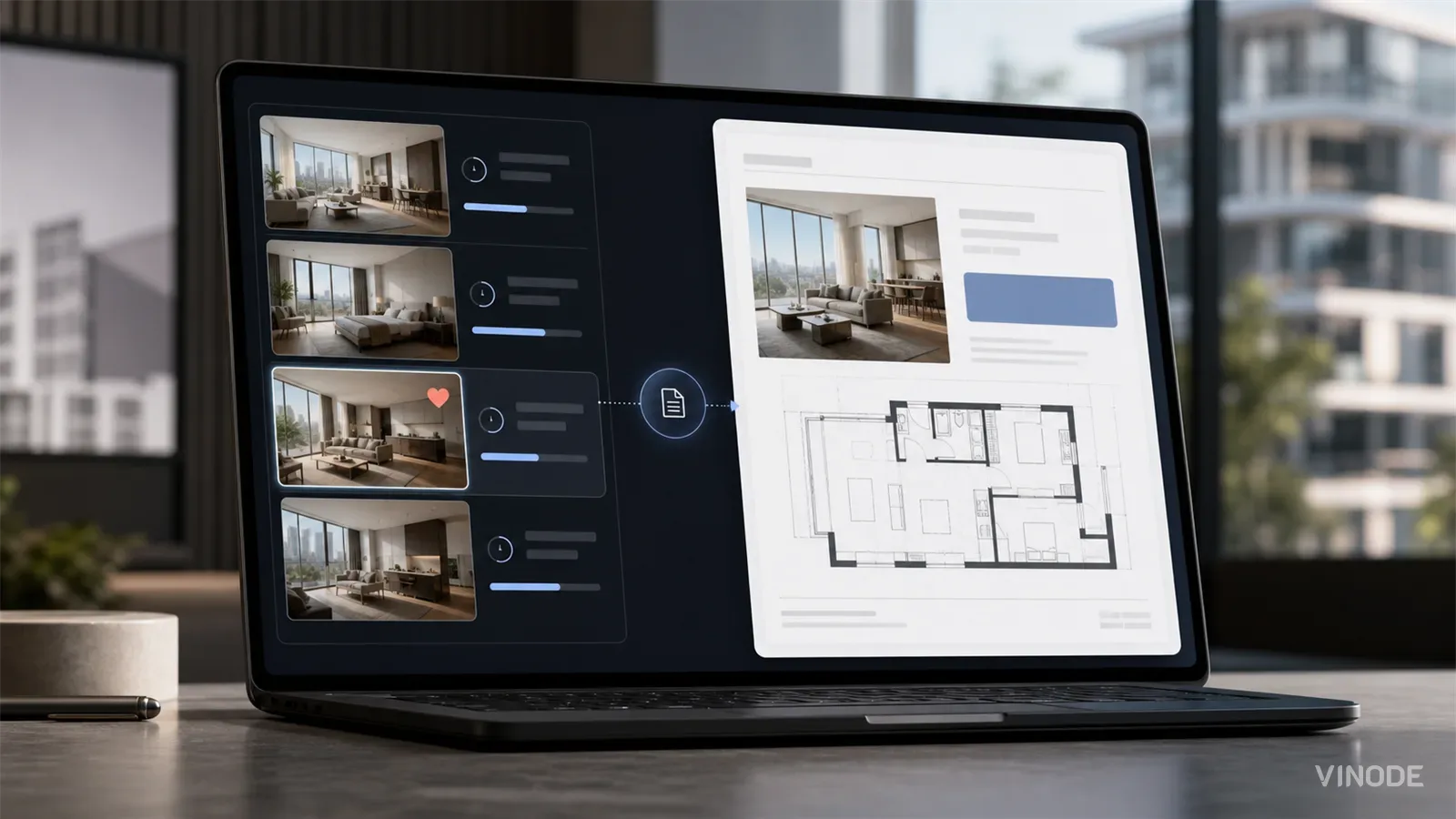
The Unit-Specific PDF a Buyer Actually Asked For
A buyer spends nineteen minutes on one two-bed, saves it, and gets the forty-one-page development brochure the next morning. Once a sales platform records the unit a buyer chose, the generic brochure becomes a decision to ignore that choice.

Expression of interest before release day: capture unit demand
640 names and no idea which side of the building they want. An expression of interest campaign pays off when the form is joined to the units each buyer explored, and each of these checks has a pass, a fail and a cost.

We measured when a pipeline crosses the presale line, not just whether it will
When GTHA opening-quarter absorption averaged 66%, the sold percentage was enough to forecast a presale crossing date. Then absorption fell to 17%. Three pipeline inputs produce the crossing date your lender asks for: stage-conversion rates, a cancellation haircut, and remaining inventory.