
Selling off-plan to overseas buyers: the reservation, deposit and KYC playbook

Image co-authored with help of AI for illustrative purposes
Key Takeaways
- An online off-plan reservation is warm intent capture, not a checkout; the click reserves your team's attention, and people close the deal.
- A refundable holding deposit and a binding subject-to-contract reservation carry different refund rules, and a remote buyer needs both named plainly before she acts.
- KYC and AML checks on a foreign buyer and their beneficial owner are your legal obligation, triggered by the transaction and run by people.
- The clean record you capture (unit, configuration, source, timestamp, currency) is what lets the async follow-up start from fact.
A buyer in Dubai clicks reserve on a two-bedroom off-plan unit in your Bulgarian scheme at 2:14 in the morning her time. She has never stood on the plot. She picked the layout, switched the interior to the warm palette, added a parking space, and now there is a record in your CRM with her name on it. What she has just done is tell you, precisely and at a timestamp, that she wants this one.
What she has not done is buy it. The mistake most teams make with remote off-plan buyers is treating that click as if she had, and it is the most expensive one on this list. This playbook picks up at that click and stays operational; the strategic case for how you earn a remote buyer's click in the first place, location context over prettier renders and honestly live availability, is the companion piece on selling off-plan to overseas buyers who can't visit.
The reservation button reserves attention, not the unit
The instinct, when a buyer can't fly in, is to remove friction by putting the whole transaction online: a deposit field, a card form, a binding "reserve now." It feels like the modern, buyer-friendly move. It is the wrong target. A remote off-plan sale is a high-value, cross-border, part-legal transaction, and none of the parts that actually de-risk it belong in a browser at 2 a.m.
The online step has exactly one job: record a clean intent. Who she is, the unit she chose, the layout and finish she configured, where the lead came from, the timestamp, and the currency on screen when she committed. Everything downstream (the follow-up call, the deposit conversation, the compliance checks) starts from that record. Get the record clean and the motion runs on fact. Get it muddy and your team is reconstructing what happened from a half-filled form and a guess.
Three commitments people conflate
Before your team can work the record, everyone has to agree on what a "reservation" even means, because the word is doing three different jobs at once. A remote buyer, who can't read the room and can't drop into the sales office, needs each one named plainly.
Enquiry, holding deposit, binding reservation
The enquiry
Warm intent, no money, no commitment. This is what the online "reserve" click actually is. Its output is a CRM record your team calls back.
The holding deposit
A soft, typically refundable payment that takes a unit off the market for a short window while paperwork proceeds. Money changes hands, but it is not a purchase.
The binding reservation
A signed reservation agreement, usually subject to contract, that formalises the intent to buy. This is where refund rules, cooling-off and legal advice belong.
The worked example that makes this concrete is the UK. Under the Consumer Code for Homebuilders, which applies to reservations from the fourth edition's effective date, a reservation agreement is expressly "subject to contract," the buyer gets a reservation fee back if she withdraws within the cooling-off period, and paying the fee does not commit her to the purchase. The Code sets out the reservation fee, the expiry date, and the buyer's right to a refund of that fee, in writing, before she signs. Read the actual reservation-agreement requirements on the Code's homebuyer guidance.
Here is the caveat, stated up front: those specifics are UK new-build rules. They are not a global default. A buyer in one jurisdiction reserving a unit in another is standing between two legal systems, and the refund treatment of her deposit is a fact about your project's territory, not about your website. Which is exactly why the deposit conversation is a human one.
If your online "reserve" flow takes a payment, you have quietly turned an enquiry into a holding deposit, and now you owe the buyer a written, jurisdiction-correct answer on whether it's refundable before she pays. Far simpler, and safer for a remote buyer, to keep the online step at enquiry and let a person handle the deposit with the refund terms attached in writing.
KYC and AML is your obligation, not the browser's
The part teams most want software to make disappear is the one it can't: knowing who you are actually selling to. On a high-value cross-border property sale, that is a legal duty that sits on you, the developer or agent, and it is not discharged by a click.
The Financial Action Task Force, the intergovernmental body that sets global anti-money-laundering standards, classifies real-estate agents as designated non-financial businesses and professions. Under FATF Recommendation 22, customer due diligence, including identifying the beneficial owner behind the buyer, is triggered when you are involved in the transaction. Any involvement in the deal triggers it regardless of the sum, and the duty falls on the professional handling it. A form never performs that duty. The primary source is FATF's own Recommendation 22 and its interpretive note, backed by FATF's risk-based-approach guidance for the real-estate sector.
This is where the cleanest online step actually earns its keep. Vinode's Back Panel records the source and attribution on every lead and lets a rep move a deal into an internal "reserved" stage. That is a fact base your compliance process runs on: you know when the intent landed, through which channel, for which unit, at what stated price. The software gives due diligence a clean starting record. It does not do due diligence. A human, or your compliance tooling, verifies the buyer and whoever really controls the purchase, checks the source of funds, and screens against sanctions and PEP lists. That work sits with you whether the buyer signed in person or clicked reserve from four thousand kilometres away.
The EU's single anti-money-laundering rulebook is already law: the AML package entered into force on 9 July 2024, most of the Regulation applies from 10 July 2027, it caps cash payments at €10,000, and a new authority (AMLA, seated in Frankfurt) will supervise it. Details and dates are on the European Commission's AML package page. Whatever your project's territory, write down which regime you're under and from when, because a foreign buyer's advisor will ask.
Currency and FX belong at the point of intent
A remote buyer earns and thinks in one currency and is buying in another. If the first time she confronts that gap is on a contract, you have a problem. So the record you capture should carry the currency that was on her screen, and the flow should be honest about which number is authoritative.
The rule of thumb: the contract currency is the number that binds; any local-currency figure is indicative and moves with the exchange rate between now and completion, which on an off-plan build can be two years out. Name that plainly at the point of intent rather than burying it. The mechanics of running a launch in several currencies, and why the contract currency has to be the source of truth, are worked out in the multi-language, multi-currency launch playbook; the point here is narrower: capture the currency on the record so the follow-up call opens on the buyer's real number.
The async gap is the real constraint
Everything above is shaped by one fact: you and the buyer are rarely awake at the same time. She reserved in the small hours of her night; your rep sees it after his morning coffee. A sales motion built for a walk-in doesn't survive that lag, so build for it deliberately.
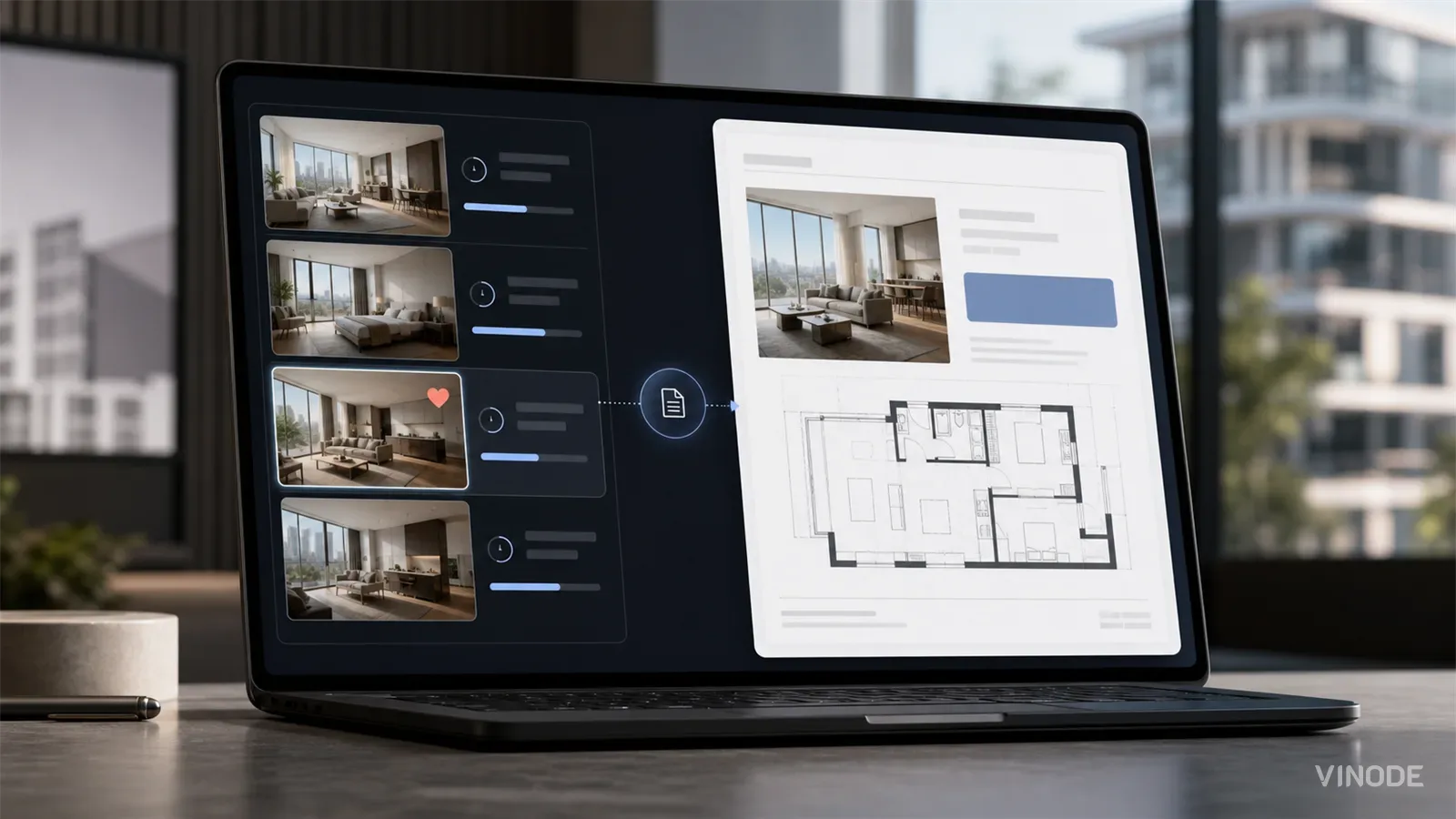
Give the follow-up an artifact the buyer can act on without you. Vinode generates a per-unit PDF, that apartment's floor plan, current price and her saved configuration, on the spot. That document is the thing she forwards to a spouse in one time zone and a mortgage advisor in another while your office sleeps. It keeps the deal moving through the hours you can't. And because the rep sets the internal "reserved" stage, not the buyer, your pipeline reflects real, qualified commitment rather than every idle 2 a.m. click.
Nobody reserves a unit by clicking a button. A unit gets reserved by a person who calls the buyer back, in her time zone, with her number and her floor plan already in hand.
Have your jurisdiction's answer ready before she asks
The through-line is that one clean record feeds every downstream obligation, and the obligations differ by deal. Three live patterns show the range.
On Safa Al Fursan in Riyadh, a 528-unit scheme aimed at high-net-worth international investors, availability shows as sold or free with no price or currency published at all. That is deliberate: at that buyer profile, price is a conversation and KYC is heavy. The site's role is to surface a serious enquiry cleanly, while qualification and due diligence happen off-site, with people. On River Residence in Bulgaria, the buyer configures and reviews financing without any money moving, the canonical "nothing changes hands online" flow. On Tropical Mirage in the Dominican Republic, buyers routinely commit without ever visiting, in a non-EU jurisdiction and across English and Spanish, so the FX and refund conversations sit under different rules again.
Different buyers, different territories, one operating principle: the software hands you a clean, attributed, unit-linked record, and your people run the deposit, the currency and the compliance from there. Before a foreign buyer asks you whether her deposit is refundable or which currency binds, have your project's answer written down. The website will never answer that for you. It was never supposed to.
See what a clean reservation record actually looks like
Walk a live Vinode project and the Back Panel behind it, then tell us how your off-plan sales team works a remote lead today.

The Unit-Specific PDF a Buyer Actually Asked For
A buyer spends nineteen minutes on one two-bed, saves it, and gets the forty-one-page development brochure the next morning. Once a sales platform records the unit a buyer chose, the generic brochure becomes a decision to ignore that choice.

Expression of interest before release day: capture unit demand
640 names and no idea which side of the building they want. An expression of interest campaign pays off when the form is joined to the units each buyer explored, and each of these checks has a pass, a fail and a cost.

We measured when a pipeline crosses the presale line, not just whether it will
When GTHA opening-quarter absorption averaged 66%, the sold percentage was enough to forecast a presale crossing date. Then absorption fell to 17%. Three pipeline inputs produce the crossing date your lender asks for: stage-conversion rates, a cancellation haircut, and remaining inventory.