
How to commission a development flythrough (and what to measure)
Key Takeaways
- A development flythrough earns its cost as a top-of-funnel attention asset and cannot answer which unit is right for a specific buyer.
- The camera path is baked into rendered frames, so a design change after delivery is a re-render of the 3D scene, not a video edit.
- Isolating the still-changing parts of a scheme into their own shots turns a later change into one re-rendered shot instead of the whole film.
- Measure the flythrough by completion rate and watch time, and hand the reservation to the interactive, unit-level assets that read live data.
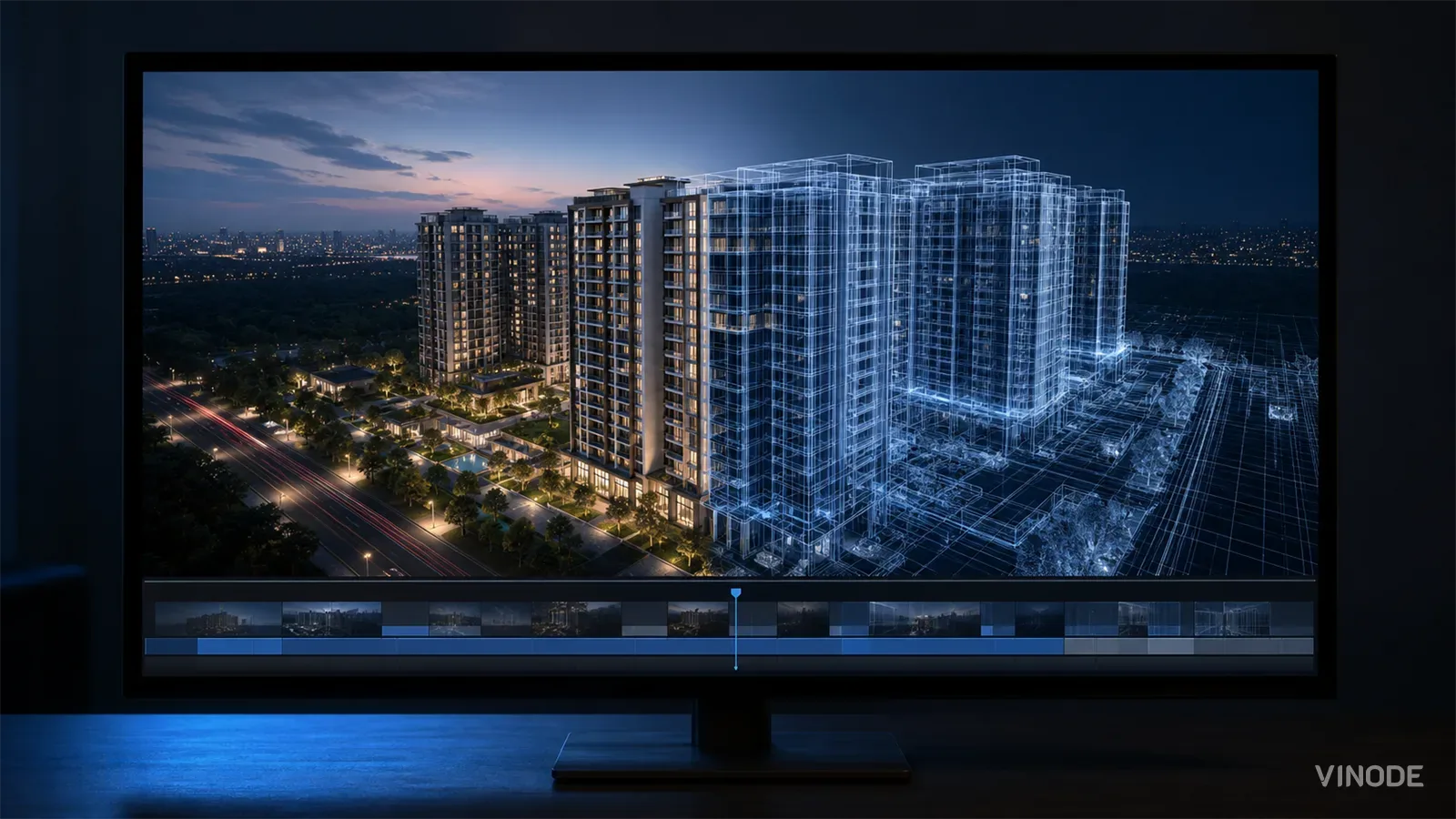
A sales director at a client rang me a quarter after his launch, because his board had asked him which reservations the film had brought in and he could not point to one. The film was a polished two minutes: a camera lifting off the coastline, gliding over the towers, settling on a terrace at golden hour. It had looked expensive, because it was. It had opened the sales event, run on the homepage and played on a loop in the show suite, and he had, I think, been hoping I would give him a number to take back.
The film had done its job, and its job was never the reservation. A flythrough is very good at making a stranger feel something about a place that does not exist yet, and it has no way of walking a specific buyer toward a specific unit. That mismatch is why the hero film so rarely traces to a sale, and the studio's craft has little to do with it. The fix is to buy it shorter, place it earlier in the funnel, and stop asking it to close.
What a flythrough is genuinely good at
We render these ourselves, so the generous version comes first. Our 3D is pre-rendered ahead of time, primarily in Unreal Engine, and exported video is one of the things a Vinode project ships alongside the interactive model and the sales back office. So when I defend the flythrough I am describing our own product.
A moving camera through a building nobody can visit yet does something a still render cannot. It gives scale, approach, the way light falls on a facade as you come round it. It is the closest a person gets to standing on a balcony that is still a hole in the ground. We have argued elsewhere that photorealism sells the feeling of a place rather than the spec sheet, so I will not repeat it here. The narrower point for this post is that the feeling is an attention asset. It earns its budget at the top of the funnel, on the channels where a moving image out-pulls a still, and it earns very little further down.
A quick distinction, since the terms blur in briefs: a flythrough is the aerial, exterior camera path over the scheme; a walkthrough is the eye-level path through an interior. This post is about the flythrough, though nearly all of it applies to both.

Why a flythrough cannot narrow to one unit
The flythrough falls short for a structural reason, and it is worth being precise about it. Play the same film for a first-time buyer, an investor comparing yields, and a downsizer who cares only about single-level access, and all three watch the identical two minutes.
Four things are missing, and none can be added in the edit. There is no buyer input: the viewer cannot choose where the camera goes. There is no state: the film does not know which units are still available. There is no current pricing: the number a buyer needs lives in your CRM, not in a frame rendered three months ago. And there is one camera path for everyone, so the film cannot narrow from the development to the apartment this particular person should reserve. The sales floor's whole job is that last move, and the flythrough has no mechanism for it.
So judge the two assets with different rulers. The flythrough earns its cost at the top; everything downstream of the click is a different asset's job. This is also the answer to the recurring question of whether the flythrough belongs on the homepage as the centrepiece. Usually not. It belongs where attention is won, one step earlier than most launches place it.
The re-render cliff: what is cheap to change, and what is not
One budget property rarely gets priced in at commissioning time. A flythrough is a camera path rendered frame by frame, and pre-rendering is what lets our pages open in about two seconds on an ordinary phone - the heavy computation finished long before the buyer tapped the link. The same property has a cost on the other side: once those frames exist, they are finished. Some changes after that are trivial and some send you back to the start.
The dividing line is worth memorising before you brief anyone. Post-production is cheap, because none of it touches the 3D: a recut, a different music bed, a line of on-screen text. Anything inside the scene is a re-render. Alter the facade and you are back in the render queue, running the job again. The two buckets below are the whole economics of a later change request.
We cover the stills version of this argument in a piece on updating renders when plans change mid-construction. For video the stakes are higher, because a still is one frame and a flythrough is thousands, and the shot that has to change may be the one the whole film is built around.
After delivery, two buckets
Cheap: post-production
Colour grade, music, the cut and pacing, on-screen text, aspect-ratio crops, length trims. None of these return to the 3D scene.
Expensive: a re-render
A revised facade, new landscaping, a moved building, a re-phased masterplan, or the camera path itself. Anything geometric or material goes back to the render.
Put one line in the brief before anyone signs off, asking which foreseeable changes on this scheme are post-production, which are re-renders, and whether the unsettled ones can each get their own shot. The 'small tweak' that comes back as a quote and a multi-week turnaround is almost always geometric - a facade, a building position, a landscaping scheme - and asking after the shots are finalised is asking too late.
Build the shot list around what can still change
This is the part that changes what you ask for.
A caveat first: this section assumes a development with enough scale and enough moving parts that the shot list is a genuine decision. A six-unit infill with a locked planning consent does not need isolated shots or channel-specific cuts. Commission the film, run it everywhere, move on. The advice below earns its keep when the scheme is large enough or early enough that something will change before construction finishes.
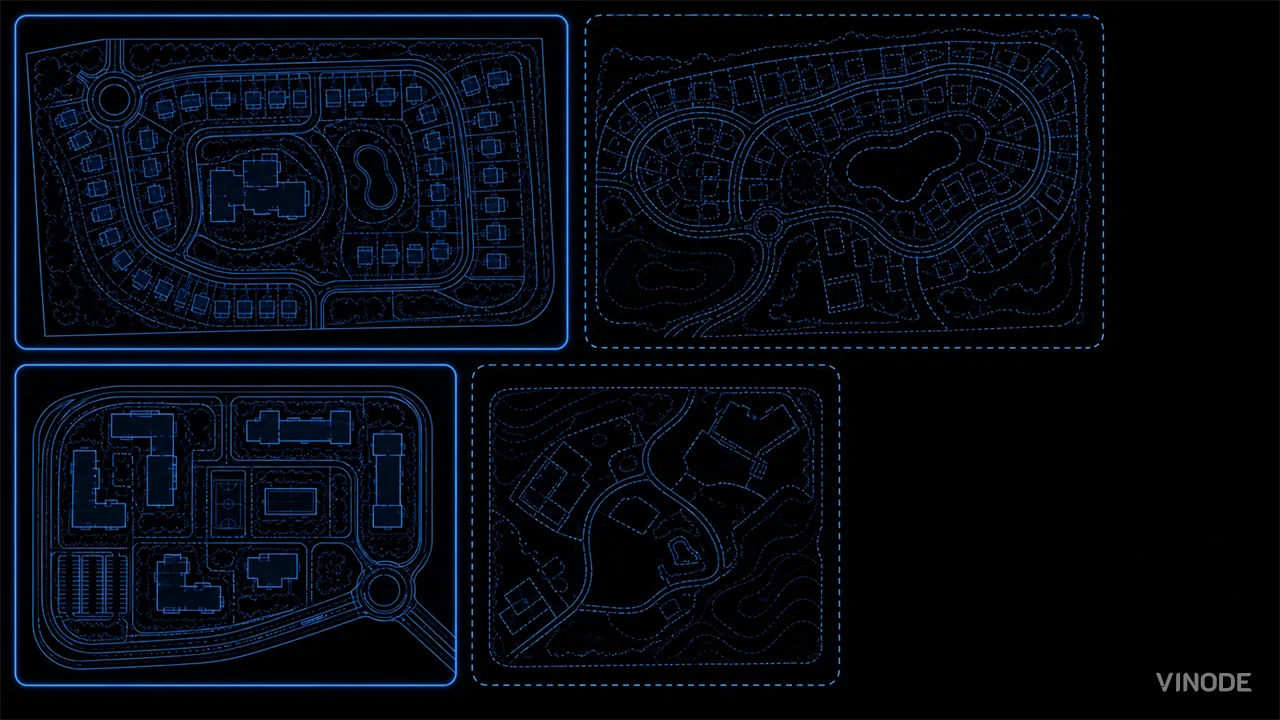
Design the shot list around what can still move. On any scheme in motion, and most are at launch, some elements are locked down and some are still in play. Render the settled ones once and forget them: the approach over the coastline, the completed first phase, the landscaping already signed off. The volatile ones need different handling. The later blocks still in massing, the facade treatment sitting with the planners, the amenity building whose programme keeps being rewritten: give each its own shot, with a clean cut in and out. Put the unconfirmed facade in a dedicated ten-second shot, and when it changes you re-render those ten seconds while the rest of the film stays untouched. That single choice at briefing time is what keeps a later change cheap instead of sending it back to the render queue. The shot menus you find online never mention it, because a studio selling animation by the minute has no reason to help you buy less of it.
This matters most on the large, phased schemes. Take a development on the scale of +Colonia, the 515-hectare masterplan near Colonia del Sacramento in Uruguay that we work on: a phased build where later blocks will genuinely change before they are constructed. On something that size, a flythrough shot as one continuous pass over the whole plan is a liability, because the first re-phasing turns it into a re-commission. The same film, shot as isolated phases, survives the change.
Second, cut one master into channel versions. The cut and the crop are post-production, so there is no reason every channel gets the same two-minute film. A viewer scrolling a feed and a viewer who deliberately opened your project microsite are in different states of attention. Per-channel length guidance from Reel-E's March 2026 study on real-estate video puts feed channels (Reels, TikTok, Facebook) at 30-90 seconds and intent channels (YouTube, property websites) at 60-180 seconds, but the specific numbers will shift. The structural rule will not: platforms where people scroll reward completion, so they reward a short cut; platforms people click into deliberately tolerate a fuller edit.
And 'one master' undersells it. What you are really commissioning is a shot library you can recut, of which the launch hero is only the first assembly. The next campaign becomes a recut rather than a re-shoot, and the asset keeps paying out well past the launch.
Measure completion rate, watch time and drop-off
If the flythrough's job is attention, measure attention. The view count is a visibility headline. It tells you the film was served. It does not tell you whether anyone watched past the second second. The signals that mean something for a top-of-funnel asset are completion rate, average watch time, and the point in the timeline where viewers drop off. A film that loses half its audience at eight seconds has a first-eight-seconds problem, and the view count will never surface it. The drop-off curve will.
That drop-off curve is worth dwelling on, because it marks the exact frame at which the story stopped being worth someone's time, and it does not care how much that shot cost to render. The most expensive shot in the film is frequently the one people abandon it on, which is a humbling thing to watch the first time. The sales director with the board question was tempted, as most are, to reach for a single number that proves the video drove sales. Resist it. Any conversion figure you pin to the flythrough is borrowed from an asset it did not control. A borrowed number falls apart the first time a sceptical CFO pulls the thread.
Attribution should look downstream. In our own Back Panel a lead is tied through to the deal and the specific unit it concerned, so the useful question is which asset moved a buyer toward the unit they reserved. The view count cannot answer that. Watch the flythrough on completion and retention, and leave the reservation to the part of the funnel where a buyer actually chose a unit.
Hand the reservation to the interactive unit experience
So where does the buyer actually get walked to a unit? Often it is the very same rendered clips, arranged differently. The shots the flythrough is cut from can be rebuilt into an interactive experience where the buyer chooses the path, tapping down from the wider scheme to a single building and then to a single apartment. The film cannot branch like that. What decides a sale is the live data underneath: the unit a buyer lands on shows its current availability and price, pulled from the sales system at the moment they look.
That is the division of labour worth commissioning toward. The flythrough wins attention; the interactive, unit-level experience earns the reservation. If you are weighing the format question for the off-plan case itself, we have sorted interactive 3D against a virtual tour and a video elsewhere. You can own more than one, as long as each is doing the job it is built for.
So commission the flythrough. We make them, we think they are worth making, and a launch without one is usually missing its best top-of-funnel asset. Buy it the way above and it stops being the expensive film nobody can trace a reservation to and keeps paying out long after launch day. What I told the sales director was to take the completion curve to his board instead of a reservation count, and to point at the unit-level experience for the reservations. That was the answer his film could give.
See where the reservation gets earned
Open a live Vinode project on your own phone and watch the flythrough hand off to the unit-level experience.


"3D showroom software": are you buying a product or a project?
Search "3D showroom software" and you get two things that can't be compared: a product you configure yourself and a project a studio builds for you. Tell them apart by who changes the content after launch, and how long that takes.
Cost per lead vs. cost per reserved unit: the two numbers that defend a marketing budget
A slide with two cost-per-lead figures lost a marketing manager a third of her budget. Below a 2% lead-to-reservation rate, cutting cost per lead barely moves what each reserved unit costs, and cost per reserved unit is the number a board will fund.
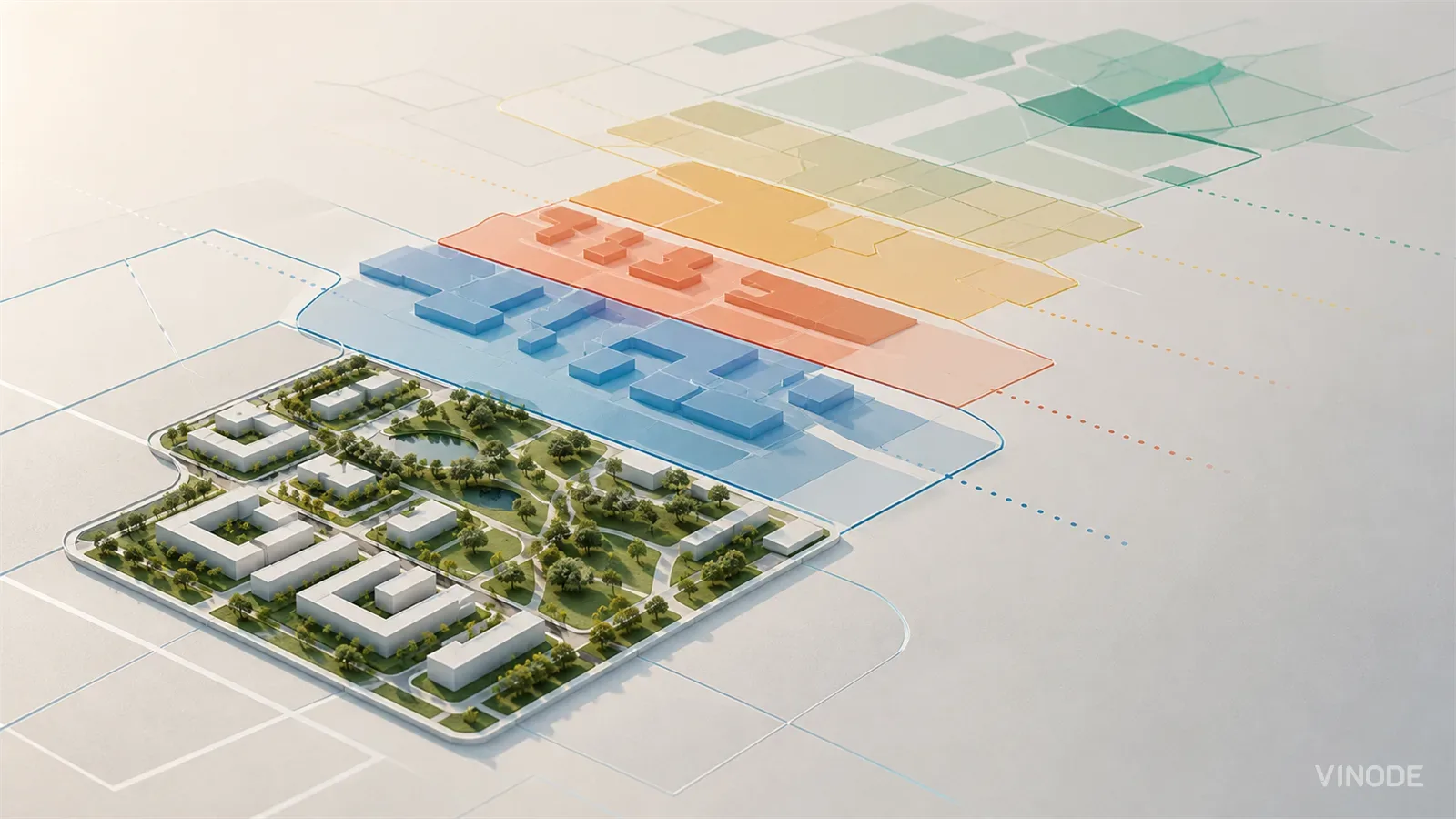
Masterplan 3D for Phased Estates: How to Show Phase One Without Overselling Later Phases
A phased estate contains several levels of certainty at once. The masterplan should make that difference visible, then absorb a later-zone redesign without discrediting the phase-one material buyers already saw.