
AI Was Supposed to Make Property Marketing Cheaper. So Why Is the Hardware Getting So Expensive?
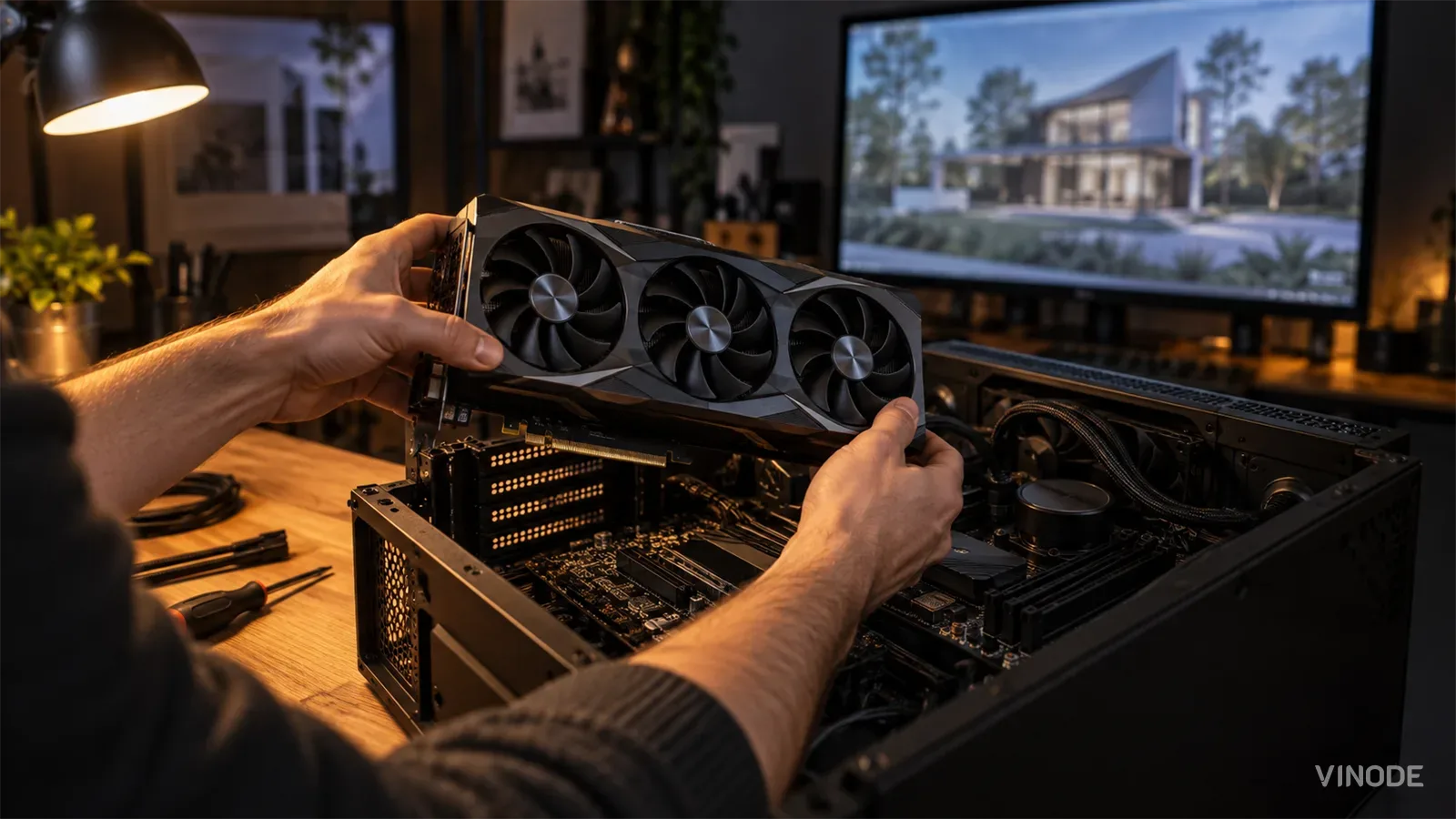
Image co-authored with help of AI for illustrative purposes
Key Takeaways
- The price of generating an image is falling while the hardware that renders one is getting dearer, both driven by the same AI demand.
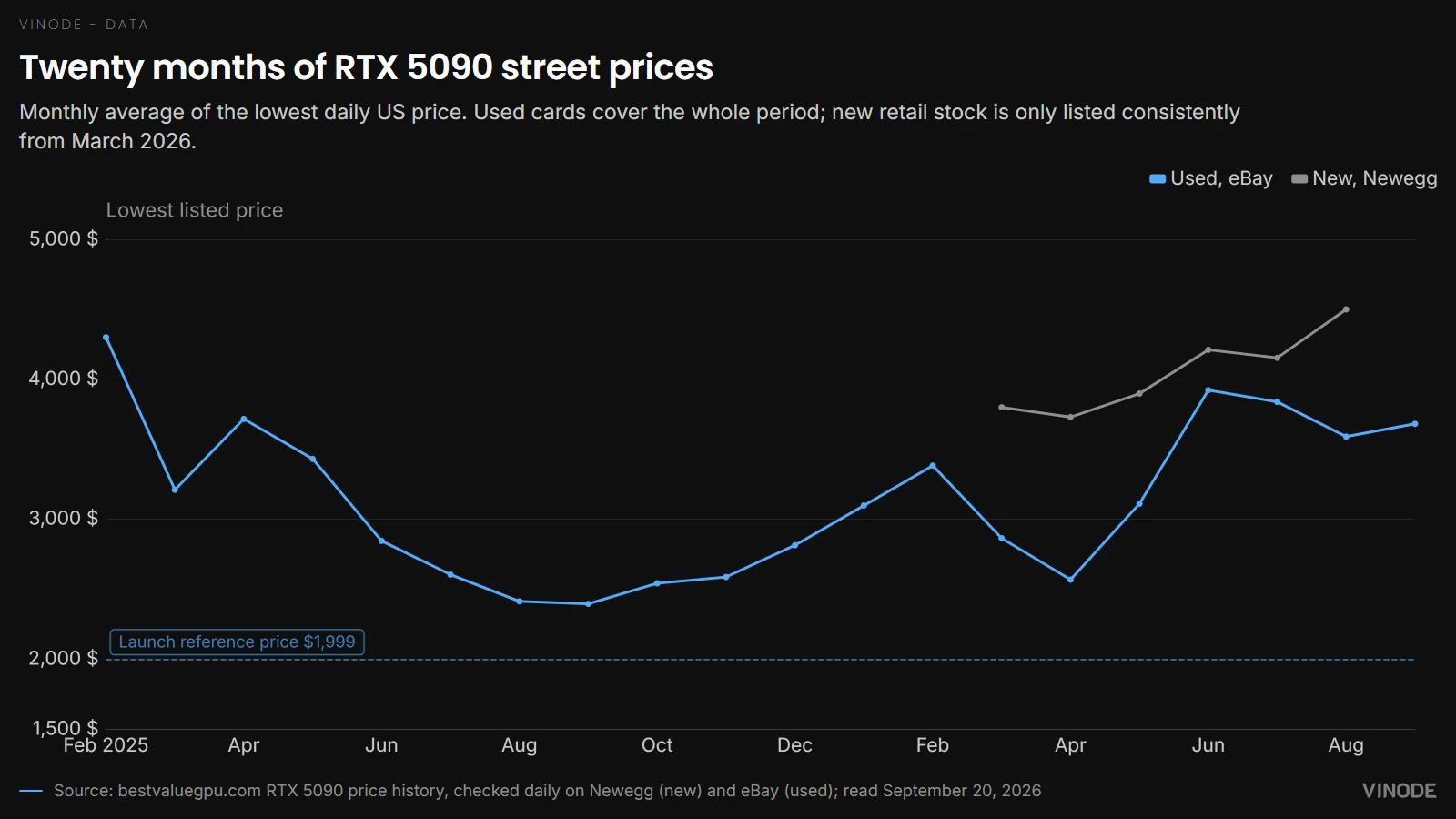
- Twenty months after launch, RTX 5090 cards cost about PLN 30,000 in Poland, more than three times NVIDIA's suggested price, and £4,300 to £4,680 at UK retailer Scan.
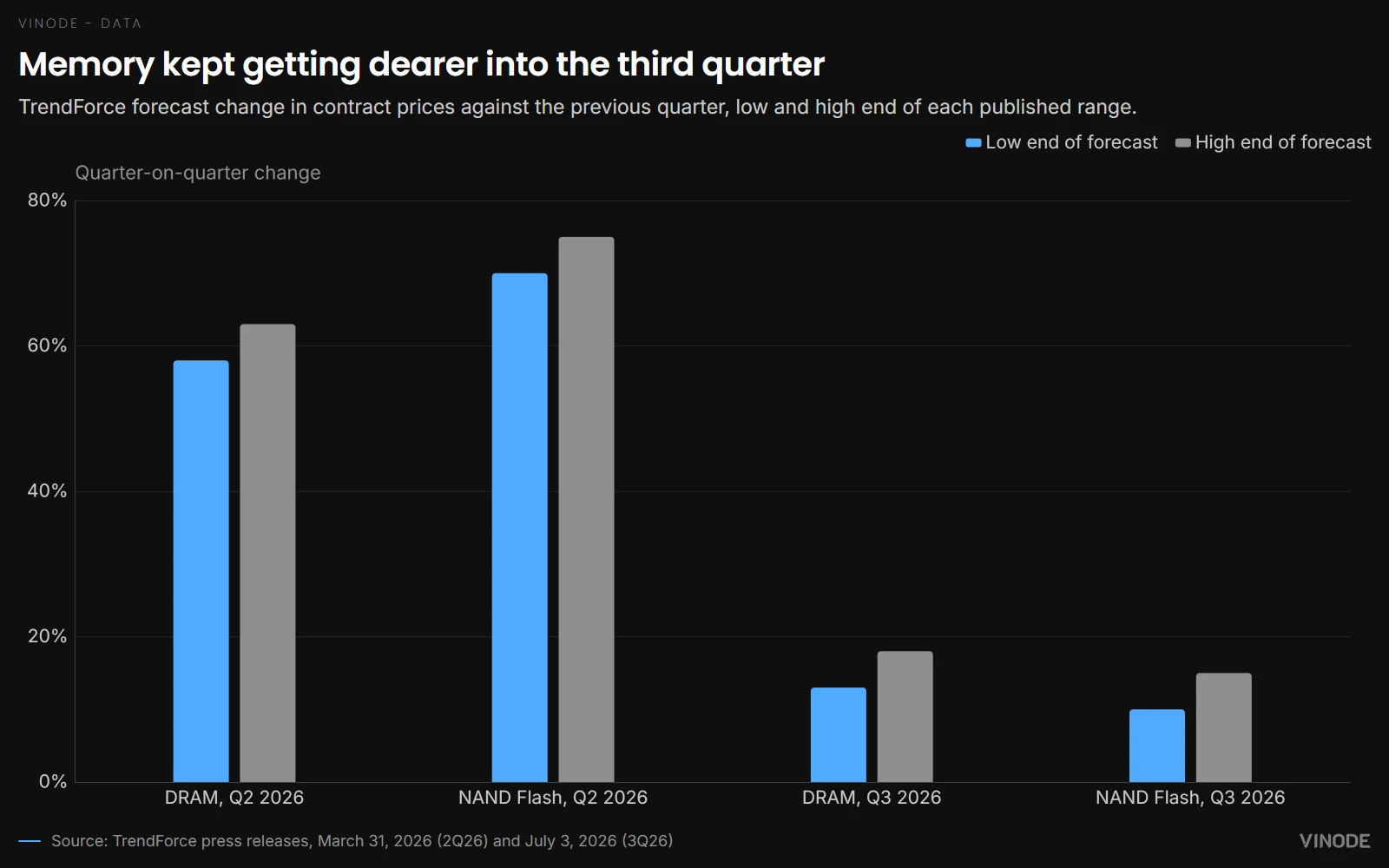
- DRAM contract prices were forecast up 58-63% in Q2 2026 and a further 13-18% in Q3, the second rise landing on top of the first.
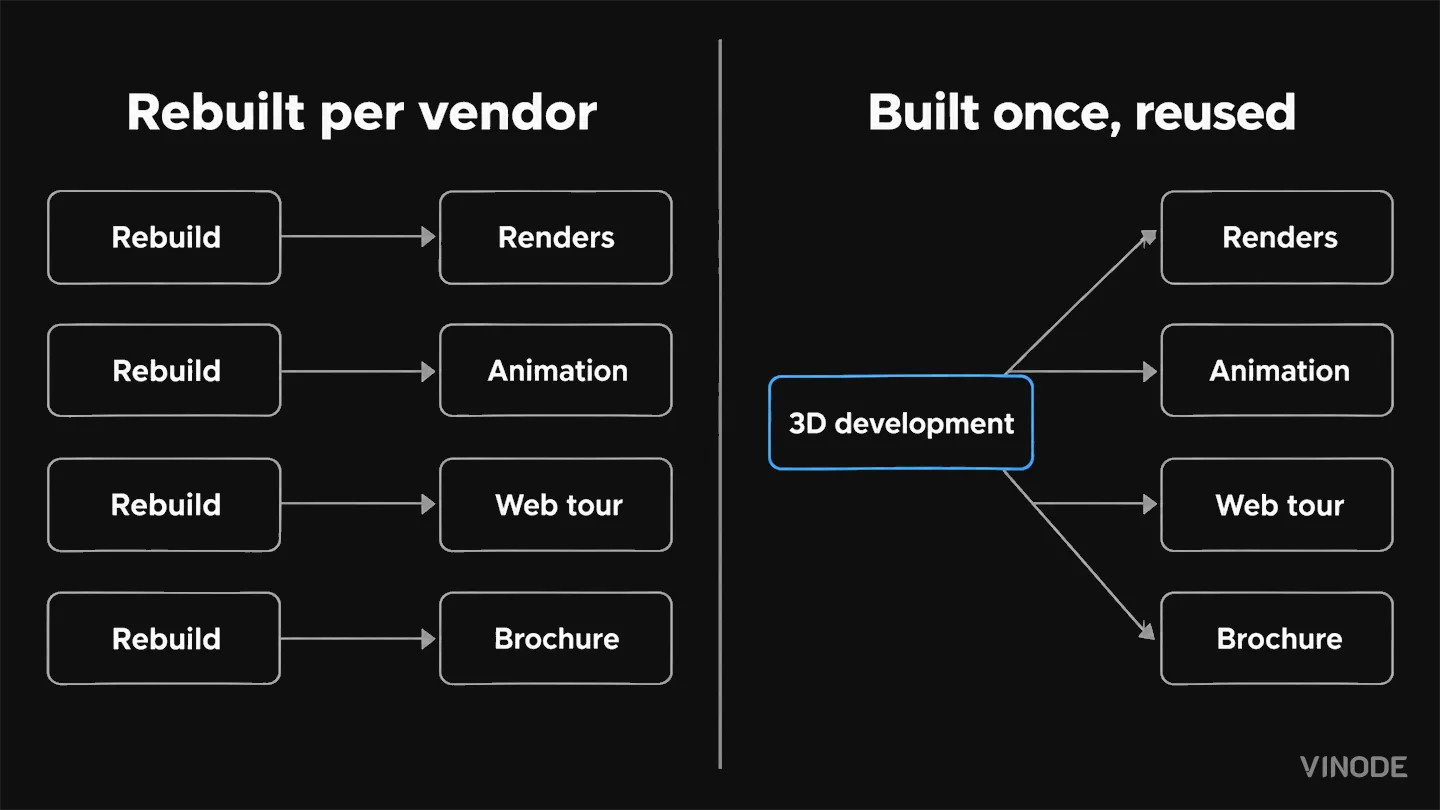
- Build one 3D development and feed every channel from it, and expensive compute is paid for once instead of once per vendor.
There is a strange contradiction unfolding in visual marketing. We are told that AI is making content cheap. And in some ways, it is.
You can generate concepts in seconds. Test directions faster. Automate tedious pieces of production. Produce more variations. The cost of getting something visual onto a screen has collapsed.
But underneath that apparent abundance is a much less comfortable story. The machines that create high-end visual work are getting expensive.
Very expensive.
For anyone marketing an unbuilt property, that matters more than it may seem. Because before a buyer sees the final image, video, virtual tour or interactive development, somebody has to build the geometry, prepare the materials, light it, calculate millions or billions of rays, render frames, encode media, store it, deliver it, and then often do part of the process again when the architect changes something.
AI does not remove that infrastructure. In some cases, AI is competing for it.
Look at the RTX 5090
NVIDIA built the GeForce RTX 5090 with 32 GB of GDDR7 memory and a 575 W total graphics-power specification, positioning it not only as a gaming flagship but as a GPU for demanding creator and AI workloads. (NVIDIA)
For professional rendering, that performance is not theoretical. In Puget Systems' launch testing, the RTX 5090 rendered around 38% faster than the RTX 4090 in V-Ray RTX and around 35% faster in its Blender GPU benchmark. Results differ between applications and versions, of course, but this is exactly why visualisation studios want hardware like it. (Puget Systems)
Then look at what it costs to actually buy one.
On September 20, 2026, German retailer Alternate had RTX 5090 models listed at €5,731, €5,872 and €6,999. UK specialist Scan had several in-stock models between approximately £4,300 and £4,680. In Poland, Benchmark.pl reported cards around PLN 30,000. (Scan; Benchmark.pl, September 20, 2026)
These are not identical cards, and it would be misleading to turn different board-partner models into a perfect price index. But you do not need a perfect index to see the problem.
The fastest production hardware has become a serious capital purchase again.
AI is pulling on the rest of the PC supply chain too
And it is not just GPUs. In March, TrendForce forecast that conventional DRAM contract prices would increase 58-63% quarter-on-quarter in Q2 2026, with NAND Flash up 70-75%. The research company specifically described suppliers reallocating DRAM capacity towards HBM and server applications while data-centre demand supported enterprise storage. (TrendForce, March 31, 2026)
By the third quarter, the rate of increase was slowing, but prices were still going up. TrendForce forecast another 13-18% rise for conventional DRAM and 10-15% for NAND Flash. It also said capacity reallocations towards server applications were reducing the supply available for PC DRAM. (TrendForce, July 3, 2026)
Reuters reported in September that smaller computer and phone manufacturers were already planning around memory scarcity continuing through at least 2027. (Reuters, September 16, 2026)
That is the part of the AI story that is easy to miss. A visualisation studio does not need to train a language model to feel the AI boom.
It can feel it when buying a GPU. It can feel it when upgrading RAM. It can feel it when expanding fast storage. And increasingly, it can feel it when renting compute instead.
Cloud is not an automatic escape hatch
On September 17, Reuters reported that AI-cloud provider Nebius would increase pay-as-you-go prices for selected NVIDIA GPUs by 17-21% from October 1. It was the company's second increase in three months. Some CPU-only instances were rising by 25%, while some memory offerings were increasing by roughly 41%. (Reuters, September 17, 2026)
The reason is straightforward: demand for the computing capacity used to train and run AI systems has surged.
This does not mean every website-hosting bill is about to rise by 20%. That distinction matters. A CRM database is not an RTX 5090. A normal property website is not an AI training cluster.
The pressure is strongest where GPUs, large amounts of memory and high-performance compute are actually required: rendering, AI inference, certain real-time 3D experiences, pixel streaming and production workloads. But property marketing increasingly contains more of those workloads. And that changes the economics.
A development may need hero renders. Then interior renders. Then an animation. Then a 360 tour. Then an interactive masterplan. Then a sales-office presentation. Then social crops. Then brochures. Then somebody changes the façade material three months before launch.
The expensive part is not always making the first image. It is maintaining the whole system of images afterwards.
This is why we think the industry's biggest opportunity is not cheaper rendering. It is less duplicated rendering.
At Vinode, we increasingly think about the 3D development as an asset rather than a deliverable.
A model can be supplied by the developer, or built from plans and CAD. It can then support the interactive presentation, virtual tours, marketing imagery, animation and the wider sales experience rather than disappearing after somebody exports the final JPEG.
That distinction becomes much more valuable when compute is expensive. Build something once and reuse it five ways, and a more expensive GPU hurts less.
Build essentially the same development five times for five different vendors, and you pay repeatedly, for machines and people.
We are not anti-AI. Quite the opposite.
This is also where AI becomes genuinely useful. We want AI to eliminate every piece of unnecessary work it reasonably can. Where it helps us explore faster, automate repetitive work or reduce time spent on low-value production, we should use it.
But there is a line between generating an attractive image and representing a property that somebody is being asked to buy.
Generative-image research has repeatedly found that spatial relationships and complex compositional consistency are difficult problems, while specialised research has been required specifically to improve consistency between multiple views of the same generated subject. (T2I-CompBench; MVDream)
The models will keep improving. Rapidly. That does not make control irrelevant.
For off-plan property, a beautiful mistake is still a mistake. If AI adds a window where the approved elevation has none, changes the kitchen between two views, quietly enlarges a terrace or turns one specified stone into another, the fact that the image took twenty seconds to generate is not much consolation.
A buyer does not purchase "a plausible apartment". They purchase this apartment.
That is why we think human work becomes more valuable in a world where images become easier to create. Not necessarily more manual work.
Better work.
Someone still needs to understand the architecture. Someone needs to decide which views matter. Someone needs to keep finishes consistent. Someone needs to interpret revisions. Someone needs to notice that the architect moved a wall but the sales plan did not. Someone needs to decide whether an AI shortcut is harmless, or whether it just created tomorrow's correction invoice.
AI can produce options. Humans remain responsible for consequences.
There is another way to reduce the compute bill: do not render more than the customer actually needs.
Vinode's web approach is based on pre-rendering the development into photorealistic, streamable media ahead of time. The buyer can then explore it in a browser or on a phone without the property being rendered locally on their device.
That design decision matters. There are situations where true real-time rendering and pixel streaming make sense, and Vinode supports pixel-streaming scenarios too. But paying for high-end GPU compute continuously is not automatically better simply because it is technically possible.
Sometimes the smartest use of an expensive GPU is to use it once, deliberately, optimise what it produces, and then serve that result efficiently thousands of times. That is the philosophy we expect to matter more as compute becomes a larger part of the marketing budget.
So, will property marketing become more expensive?
Some of its inputs already have.
We cannot promise that a GPU selling for €5,000 today will suddenly cost €2,000 tomorrow. We cannot control DRAM factories, semiconductor allocation, electricity markets or what the world's AI companies are willing to pay for another rack of accelerators. Current evidence shows genuine pressure in high-end GPUs, memory markets and GPU-cloud capacity.
What we can control is what we do with those inputs. At Vinode, our response will be to fight unnecessary cost before asking our customers to absorb it.
Reuse the model. Avoid rebuilding assets that already exist. Use AI where it genuinely saves time. Keep humans where accuracy, judgement and consistency matter. Pre-render where pre-rendering is enough. Reserve expensive compute for the moments where buyers can actually see the difference. And build one connected marketing system instead of commissioning the same development again and again in slightly different forms.
Because ultimately a developer does not care how many GPU-hours went into a campaign. They care whether the project looks right. Whether buyers understand it. Whether the sales team can use it. Whether it stays current. And whether the marketing budget produces more value than it consumes.
The machines behind that work may be getting more expensive.
Our job is to make every hour on them count.


The Unit-Specific PDF a Buyer Actually Asked For
A buyer spends nineteen minutes on one two-bed, saves it, and gets the forty-one-page development brochure the next morning. Once a sales platform records the unit a buyer chose, the generic brochure becomes a decision to ignore that choice.

Expression of interest before release day: capture unit demand
640 names and no idea which side of the building they want. An expression of interest campaign pays off when the form is joined to the units each buyer explored, and each of these checks has a pass, a fail and a cost.

We measured when a pipeline crosses the presale line, not just whether it will
When GTHA opening-quarter absorption averaged 66%, the sold percentage was enough to forecast a presale crossing date. Then absorption fell to 17%. Three pipeline inputs produce the crossing date your lender asks for: stage-conversion rates, a cancellation haircut, and remaining inventory.