
Digital vs physical show apartment: when to build the room
Key Takeaways
- A furnished model unit can only ever show one configuration, and a bigger budget makes that room nicer, never a second one.
- The choice that matters is capital timing: whether phase 1 needs the built model unit, and when to commit that spend.
- A photoreal digital experience carries every unit and finish, runs off-plan sales, and staffs the sales office before ground breaks.
- Cardinality bites hardest at scale, where most buyers are shopping a unit no single furnished room represents.
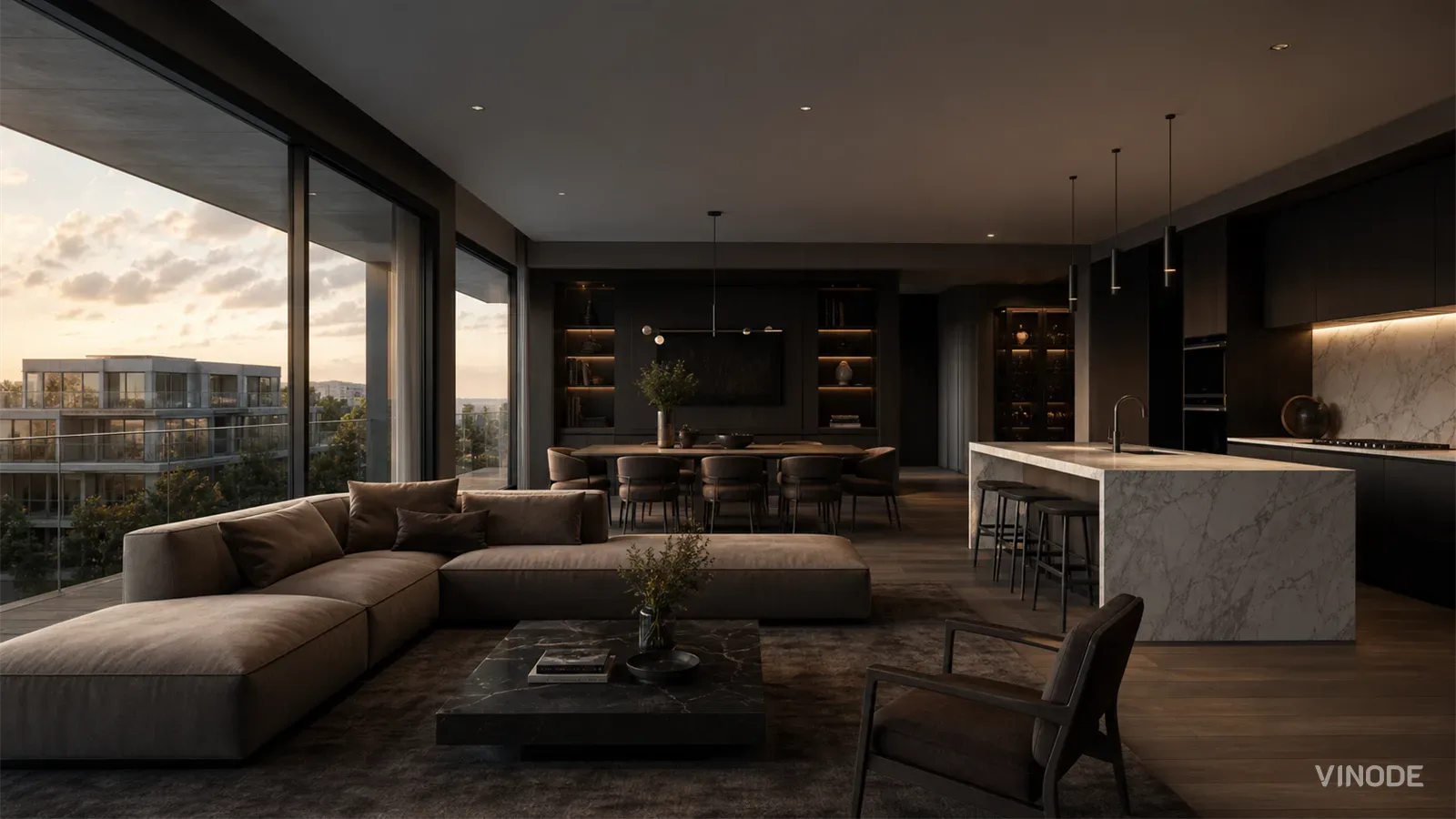
A client's sales director walked me through their furnished model unit eight months before the first building topped out. Marble in the kitchen, styled bookshelves, a bed made up for a photo shoot nobody had booked yet. It had eaten a real slice of the phase-1 budget. It committed the developer to one layout and one finish palette while the scheme still had twenty of each on the drawing board, and once the units it was built to sell had all sold, it sat dark, an asset with nothing left to represent. He was proud of it, and I understood why, and it was still the wrong month to have built it.
Most teams treat that spend as fixed. The received wisdom is to finish a show home as early as possible, and the instinct behind it is real: buyers want to stand in a room. But finish it early answers a question nobody said out loud. The question worth asking is when you commit that capital, and whether the first phase needs a built model unit at all.
The model unit and the sales office are two decisions
Start by separating two things most briefs fuse together. The built, furnished model unit is a single-purpose capital commitment, made early, that can show a buyer exactly one configuration. The sales office, the place a rep sits a buyer down and walks them through the scheme, is a different thing, and it stays regardless of what you decide about the model unit.
Once you pull those apart, the digital build runs the sales office from day one, and the built room becomes a separate line item you can schedule against cash flow. A team that shelves the phase-1 show flat still has a full sales presence. The trap is treating those as one decision and committing the whole budget early, before the launch has told you anything.
One furnished room can show only one configuration
This part does not turn on taste. A physical show apartment can represent exactly one configuration. Call that limit cardinality: how many versions of the product one thing can stand for. Spend more and that configuration gets nicer; it still can't buy a second. Every extra layout you want a buyer to stand in is another room to build, so the cost climbs with the variety of the scheme. The digital experience, built from the same models your architects already work in (Revit, ArchiCAD, 3ds Max), pays for the build once and then carries the full catalogue of types and finishes at once, before there is a building to walk. That gap isn't a marketing claim you can argue down with a better render or a bigger stand.
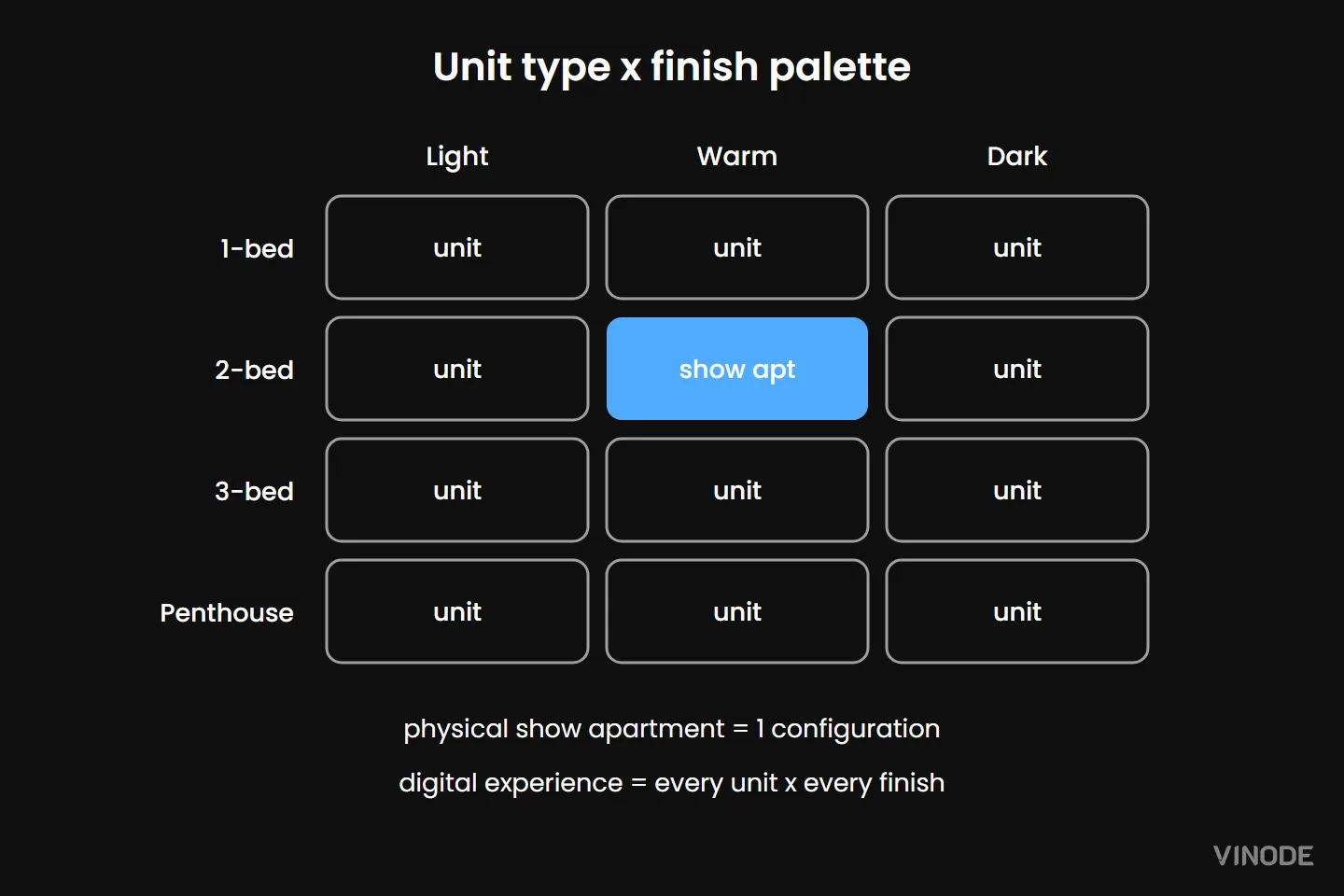
On a small block with one unit type, cardinality barely bites; the model unit more or less is the product. The pressure shows up at scale, and scale is where the numbers get vivid.
Safa Al Fursan's whole scheme navigates under one thumb on a phone. No development that size could build a representative show unit for every type.
No single furnished apartment tells a buyer much about a different layout two floors up facing the other way, and at that inventory count the person in front of you is usually weighing something the model room never shows. +Colonia stretches across a 515-hectare coastal masterplan, and there is no physical stand-in for a sense of place at that scale.
So on any multi-unit, multi-finish scheme the question is what one built apartment can actually show the buyer standing in front of it, and how often that buyer is even looking at their own unit. On most schemes they are looking at a proxy. The binding constraint is how little one furnished apartment can represent, and that holds no matter how much you spend building it.
What actually carries the launch before the model unit exists
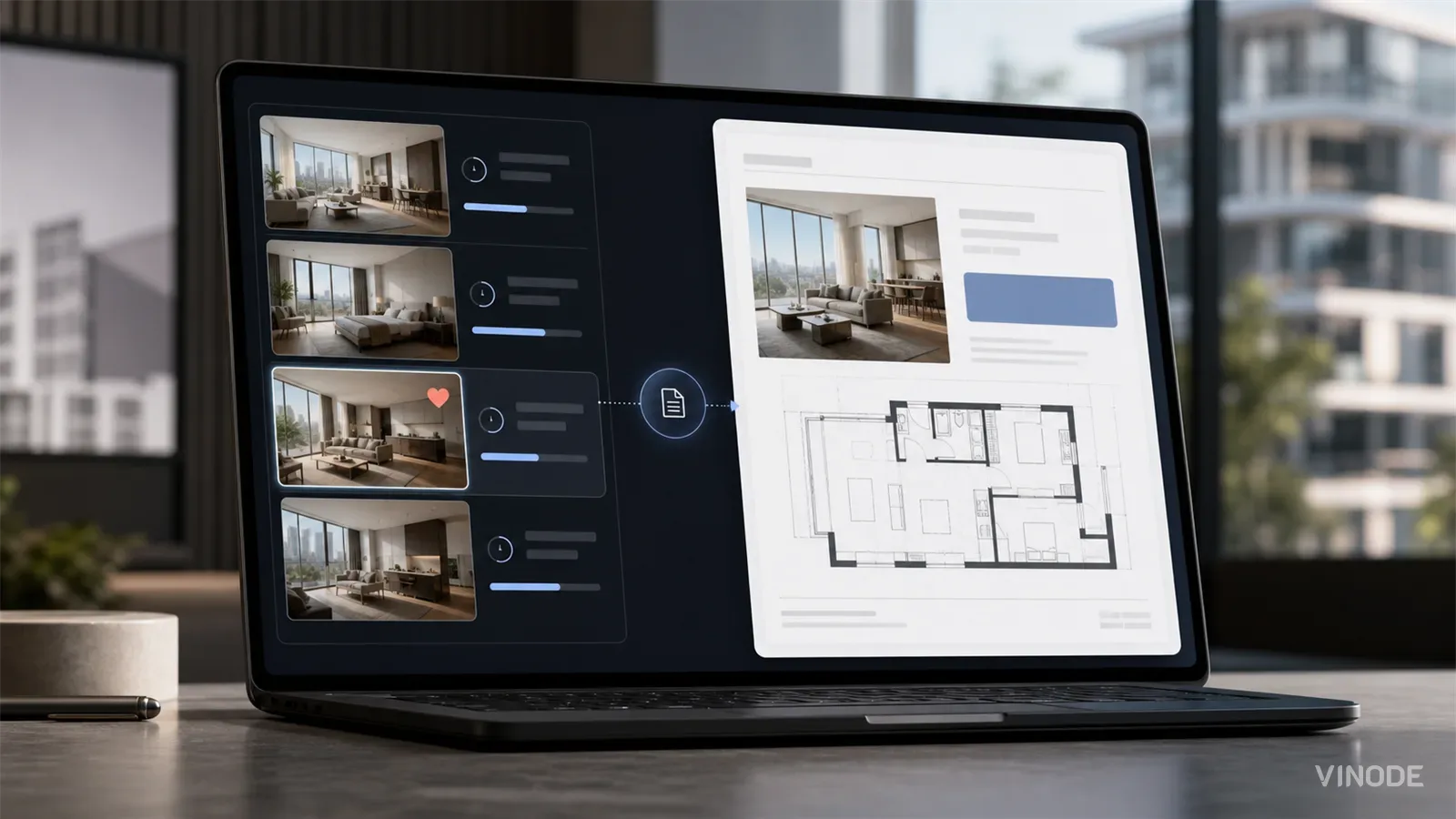
'Defer' only helps if something real sells in the meantime. Off-plan sales can run off the digital experience from the first day of the campaign: every layout and finish navigable, live availability wired to the CMS so a sold unit never resurfaces as available, and a per-unit PDF that generates on the spot with that apartment's floor plan, current price and the buyer's saved choices. That brochure is the take-home a show-flat visit never leaves you holding, and it travels to buyers who can't fly in.
Kozielska Park was commissioned for off-plan sales, with an explicit requirement to double as the high-end presentation tool in the physical sales office. One limit to state plainly: the buyer's step is lead capture into the CRM, not an in-browser reservation. There is no checkout. River Residence lets a buyer review financing options inside the tour; it does not take their deposit.
The kiosk that runs the sales office
While the model unit waits, the same build runs as an offline kiosk on a large screen in the sales office, so an advisor flies a client over the whole development without depending on the venue's wifi. Safa Al Fursan's sales office runs exactly this, turning one screen into a full-inventory demo. Why streamed, pre-rendered 3D stays lag-free where on-device rendering stalls is settled in earlier posts on pre-rendered versus real-time.
The offline kiosk ships in Vinode's Standard tier (up to 250 units) and above; the Basic tier, for developments of six units or fewer, doesn't list it. For a genuinely boutique block that changes the maths: a single furnished unit that doubles as sellable stock, plus a phone call and a good floor-plan tool, can beat a kiosk you aren't provisioned for. Cardinality only bites when you have many configurations to represent.
When a furnished show apartment still earns its cost
None of this erases what a furnished room does that a screen only approximates. True scale read by your own body, the weight of real materials, the way light falls at four in the afternoon, the acoustics of a space, the pull of a room that feels like somewhere you could live. Some buyers won't sign without that, and in some markets and at some price points a room is simply the cost of doing business. This is not for the genuinely boutique block. With six units and one layout, cardinality never bites, and one built apartment you can also sell will beat a deferral.
When you do build it, build it later, and make it earn more than one walk-through by pairing it with the kiosk that turns it into a demo for the whole inventory. This argument reasons from how cardinality and off-plan delivery work, and stops there. I cannot point you to a developer who skipped the show flat and sold out on the strength of it, so the call is one you make on your own numbers.
So change the order. Leave the model unit out of the phase-1 budget, launch off-plan from the digital experience, and schedule the built room for later, once the campaign has firmed up the plans and shown you which layout and finish the market is actually buying.
See every unit and finish in one experience
Walk a live Vinode project the way a buyer would, then tell us where a show flat still fits your scheme.

The Unit-Specific PDF a Buyer Actually Asked For
A buyer spends nineteen minutes on one two-bed, saves it, and gets the forty-one-page development brochure the next morning. Once a sales platform records the unit a buyer chose, the generic brochure becomes a decision to ignore that choice.

Expression of interest before release day: capture unit demand
640 names and no idea which side of the building they want. An expression of interest campaign pays off when the form is joined to the units each buyer explored, and each of these checks has a pass, a fail and a cost.

We measured when a pipeline crosses the presale line, not just whether it will
When GTHA opening-quarter absorption averaged 66%, the sold percentage was enough to forecast a presale crossing date. Then absorption fell to 17%. Three pipeline inputs produce the crossing date your lender asks for: stage-conversion rates, a cancellation haircut, and remaining inventory.